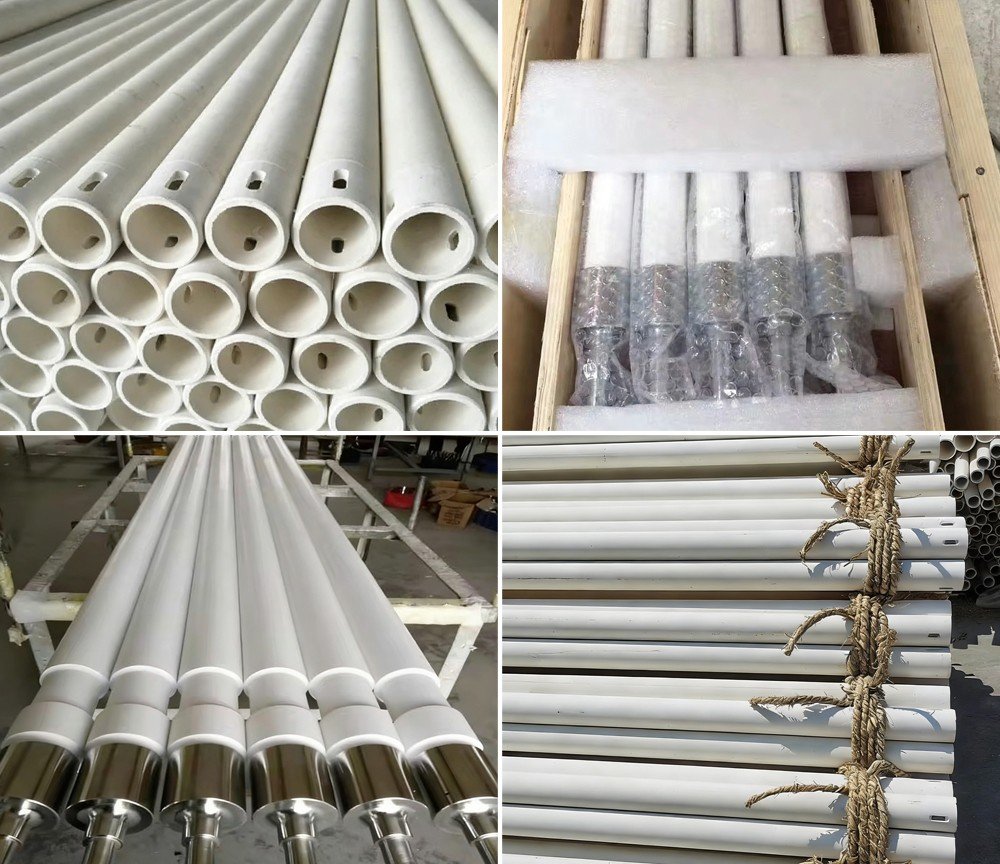
Kiln rollers are typically installed in roller hearth kilns to support and transport ceramic products through high-temperature zones. The silicon carbide kiln rollers we produce are made from high-purity SiC materials, formed through controlled pressing and high-temperature sintering.
Compared with traditional alumina or mullite rollers, kiln rollers made of silicon carbide offer significantly higher strength, better thermal conductivity, and superior creep resistance. This makes them especially suitable for fast-firing kilns where temperature fluctuation is frequent.
As experienced suppliers of Kiln Furniture Rollers, we understand that roller straightness, thermal shock resistance, and surface finish directly influence kiln stability. Each kiln roller undergoes strict straightness inspection and dynamic balance testing before delivery.
| Material Type | Main Composition | Al₂O₃ (%) | SiO₂ (%) | SiC (%) | Bulk Density (g/cm³) | Max Service Temp (°C) |
| Cordierite-Mullite | Cordierite + Mullite | 35–45 | 45–55 | — | 1.9–2.2 | 1250–1300 |
| Mullite | 3Al₂O₃·2SiO₂ | 60–75 | 25–35 | — | 2.3–2.6 | 1500 |
| High Alumina | Alumina refractory | 70–95 | 5–25 | — | 2.6–3.0 | 1600–1700 |
| Silicon Carbide (SiC) | SiC refractory | — | — | 80–98 | 2.7–3.1 | 1600–1650 |
In real kiln operation, many roller failures are not caused by material itself, but by mismatched thermal expansion or improper installation alignment. We have observed that kiln rollers used in fast-firing ceramic tile lines often fail early due to uneven heat distribution across kiln width.
To solve this, our silicon carbide kiln rollers are designed with controlled grain structure and improved thermal conductivity, helping to balance temperature gradients across the roller body.
For long kiln campaigns, proper spacing and roller alignment are as important as material selection. As a supplier of Kiln Furniture Rollers, we often provide installation guidance based on kiln length, firing curve, and load conditions.