How to Choose the Right Refractory Ceramic Fiber Blanket for Industrial Furnaces
Choosing a refractory ceramic fiber blanket for an industrial furnace is not just a choice between 1260°C and 1430°C. One of the most common mistakes is treating the rated temperature as the actual long-term operating temperature. In practice, furnace temperature, continuous run time, thermal cycling, and installation position all matter.
The table below shows typical published data for common ceramic fiber blanket grades. Actual values vary by formulation and and refractory ceramic fiber manufacturer.
| Grade | Classification Temperature | Typical Continuous Use Temperature | Density | Typical Permanent Linear Shrinkage |
|---|---|---|---|---|
| 1260°C Standard | 1260°C | About 1050–1100°C | 64–160 kg/m³ | About 1.5–3% after 24 h at 1000–1200°C |
| 1260°C High Purity | 1260°C | About 1100–1150°C | 64–160 kg/m³ | About 1.5–3% after 24 h at 1000–1200°C |
| 1430°C Zirconia Grade | 1430°C | About 1350°C | 64–164 kg/m³ | Typically below 4% after 24 h at 1350°C |
The figures above are typical published values and should be confirmed against the technical data sheet of the selected product.
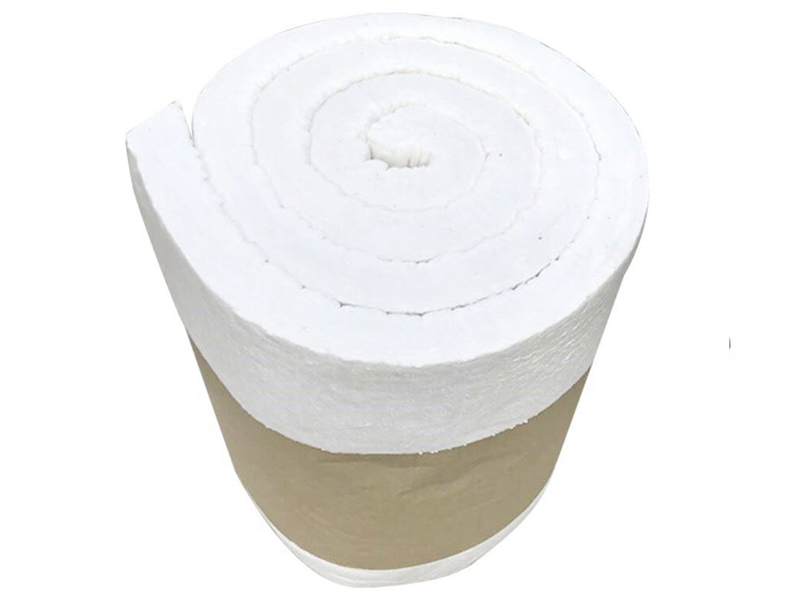
A 1260°C refractory ceramic fiber blanket can be a practical choice when the actual long-term temperature stays within its working range.
For example, published technical data for standard 1260°C blankets often shows continuous use around 1050°C. High-purity 1260°C grades may reach about 1100--1150°C.
A short peak of 1200°C does not automatically mean you need a 1430°C blanket. If the blanket sits behind a hot-face lining and its service temperature is much lower, a 1260°C grade may be enough.
A 1430°C refractory ceramic fiber blanket is better for hotter zones, higher continuous temperatures, and jobs that need more temperature margin.
Published data for 1430°C zirconia blankets often lists continuous use around 1350°C. Permanent linear shrinkage is usually tested after exposure at about 1350°C.
In one furnace project, the customer first chose one insulation grade for the whole furnace. After we reviewed each installation point, we found that the upper hot zone and burner area ran under much harsher conditions than the outer wall. Using the same material everywhere would have raised costs without adding value.
The better approach was to choose the ++refractory ceramic fiber++ for each installation area.
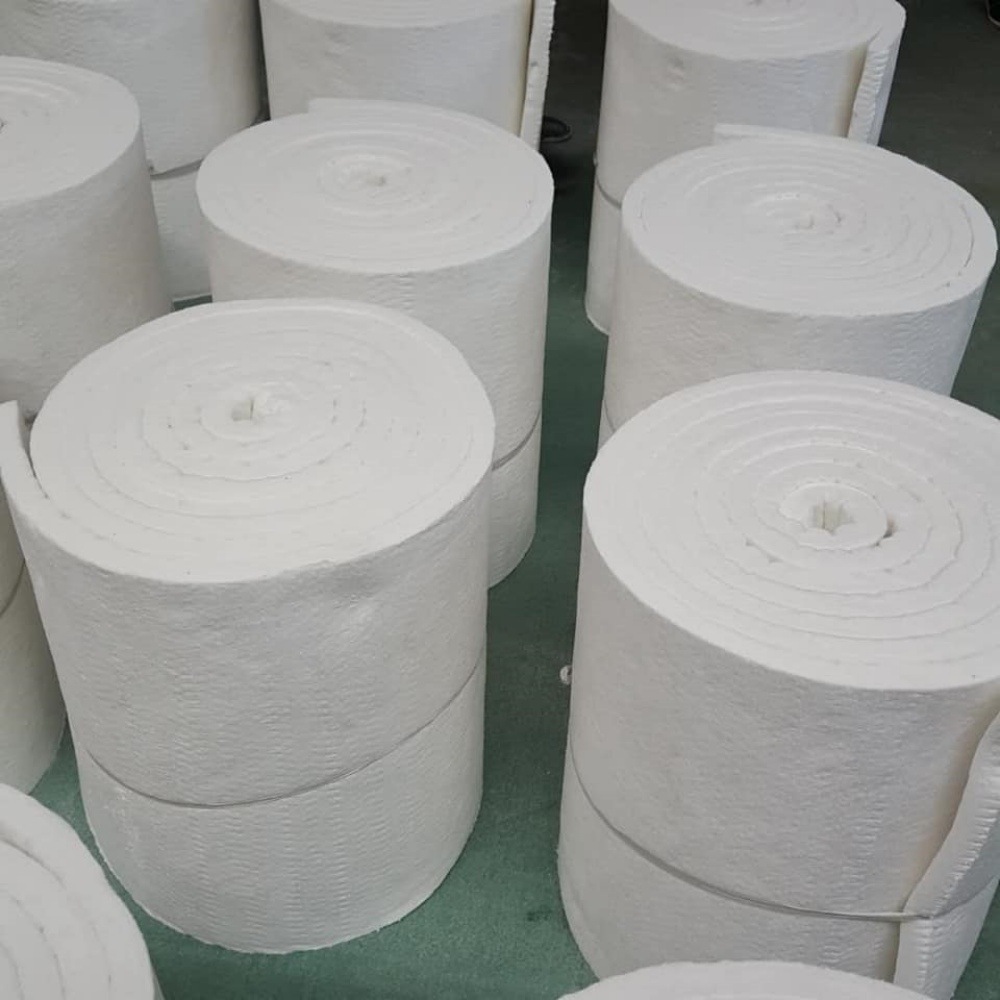
Before buying a ++refractory ceramic fiber blanket++, customers should confirm:
Actual continuous operating temperature
Maximum temperature and hold time
Heating and cooling frequency
Installation position
Direct or indirect heat exposure
Required thickness and density
Expected service life
Thermal cycling matters a lot. A blanket used in a furnace that heats and cools several times each week faces different stress from one used in steady production.
When you contact a refractory ceramic fiber manufacturer, do not give only the furnace's maximum temperature.
Share the temperature at the installation point, the operating cycle, blanket thickness, density target, and the furnace drawing when you have it.
The right choice is not always the highest temperature grade. A well chosen refractory ceramic fiber blanket can deliver the needed insulation, reduce heat loss, and help control cost.
For industrial furnace jobs, 1260°C and 1430°C materials should be selected by actual long-term working conditions, not only by the highest furnace spec.
Share your furnace operating details with our technical team to get a suitable refractory ceramic fiber blanket recommendation for your working conditions.
Related Products
Inquiry Now
Please leave your e-mail and we will contact you as soon as possible
+86-15264257623 Jacky Liu
1003, Building 1,The Fortune Zone, No.17 Lian yungang Road,Qingdao,China
For more details, welcome to message us.
Copyright © 2025 Qingdao laurent new materials co.,ltd.All Rights Reserved.
 Powered by HiCheng
contact us
Your satisfaction is our top priority. Whether you have questions, need support, or want to share feedback, our dedicated team is ready to assist you every step of the way.