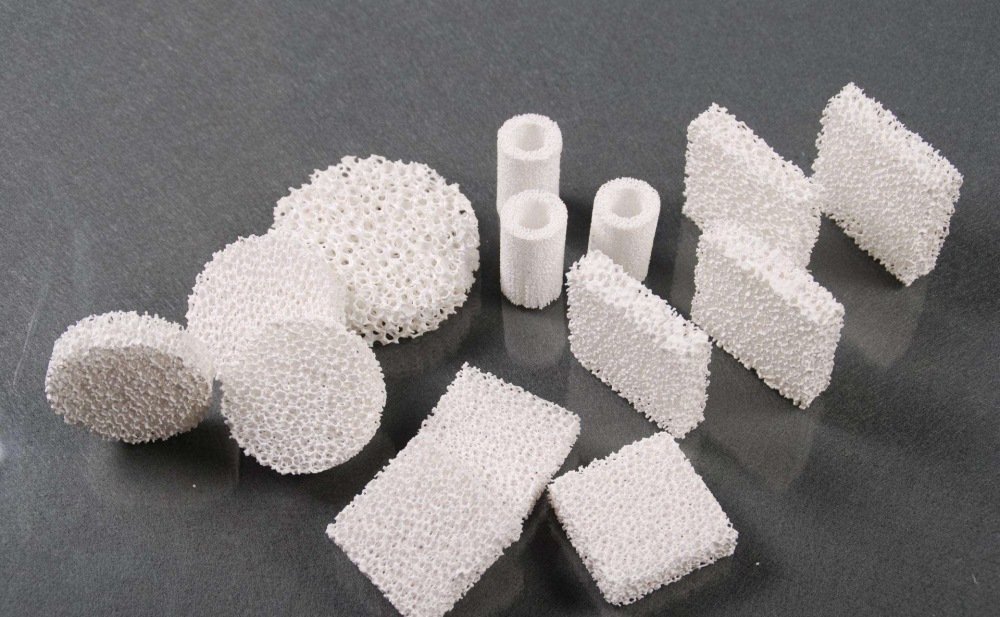
Ceramic Foam Filter Materials
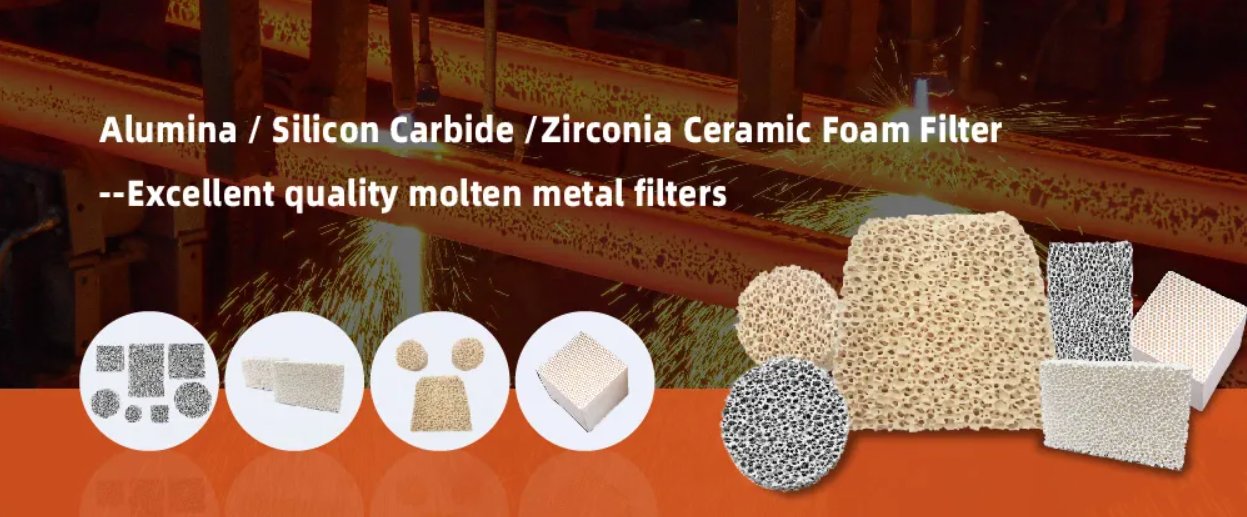
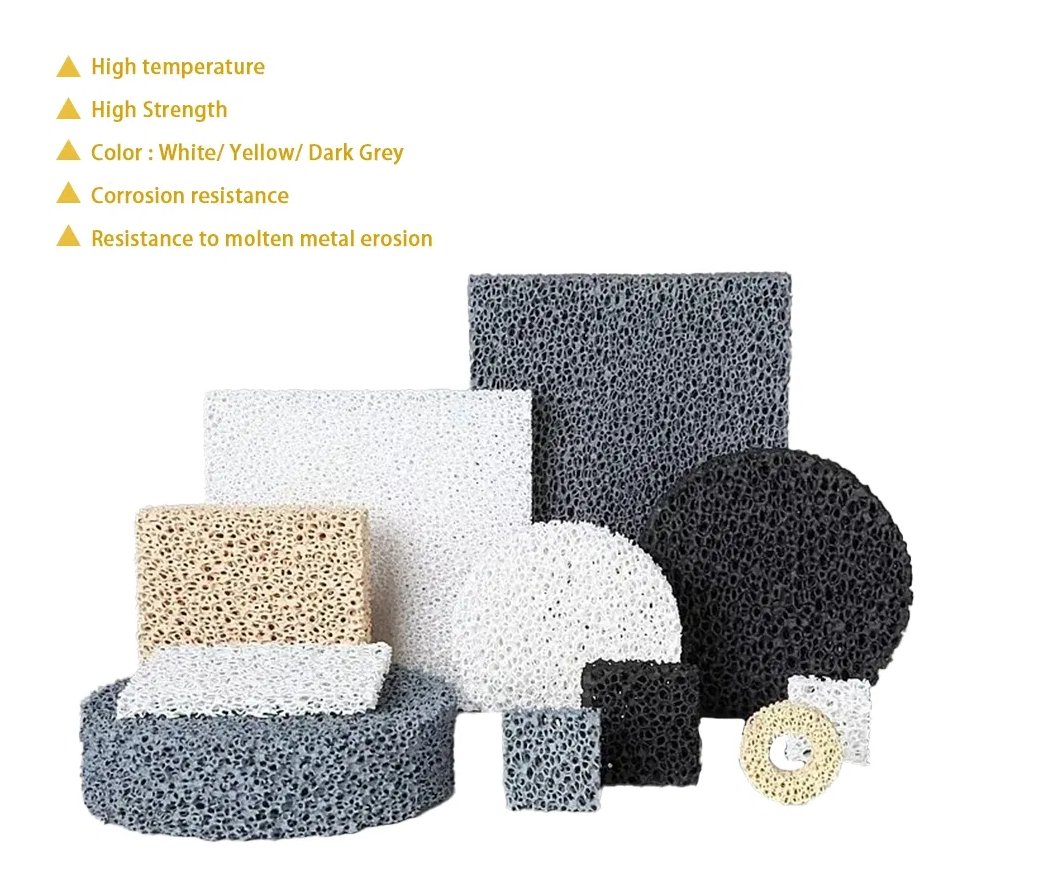
Laurel provides three principal ceramic materials for molten metal filtration.
Alumina Ceramic Foam Filter
Alumina Ceramic Foam Filter is primarily used for aluminum, aluminum alloys, and other non-ferrous alloys. It combines low density, good chemical stability, and suitable thermal shock resistance for common aluminum casting processes.
Typical Laurel data lists an operating temperature of approximately 1100°C, porosity of 80–90%, and pore density of 8–60 PPI. Bulk density is approximately 0.40–0.55 g/cm³, with compressive strength of ≥0.9 MPa.
For aluminum casting, a finer PPI is not automatically better. If the melt contains considerable oxide film or slag, an excessively fine filter can restrict flow and become blocked prematurely. In practical casting work, filter selection should balance filtration requirements with the required metal throughput.
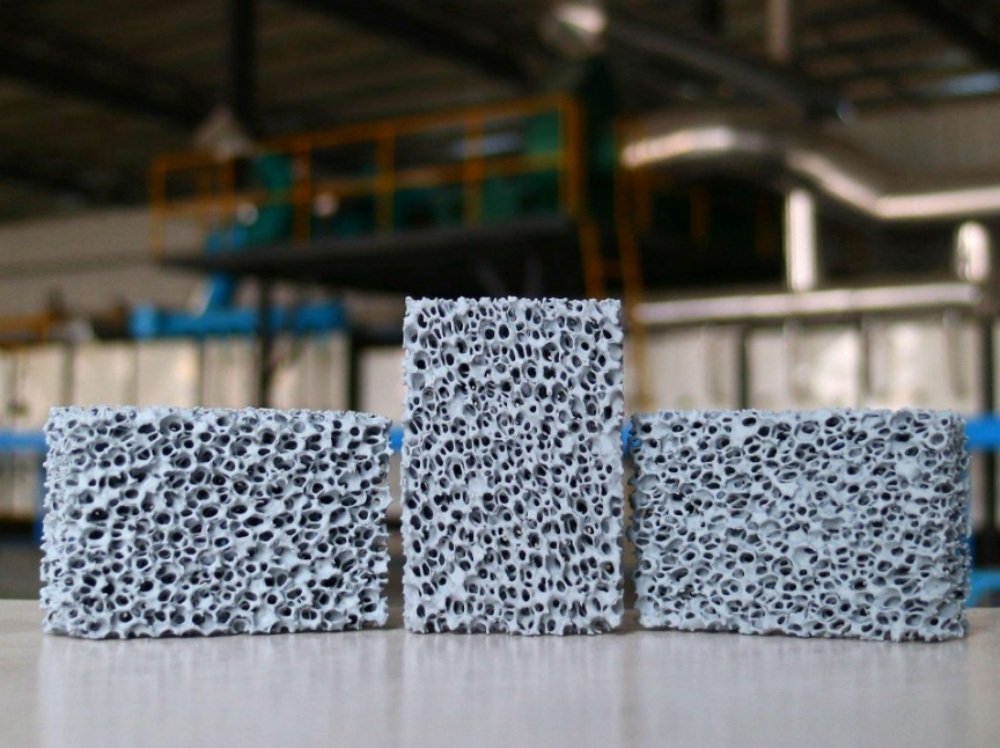
Silicon Carbide Ceramic Foam Filter
Silicon Carbide Ceramic Foam Filter is commonly selected for cast iron and ductile iron applications because of its high-temperature capability, mechanical strength, and resistance to the conditions encountered during iron casting.
Laurel's reference data gives a temperature rating of approximately 1500°C, porosity of 80–90%, pore density of 8–60 PPI, bulk density of 0.45–0.65 g/cm³, and compressive strength of ≥1.0 MPa.
Silicon carbide filters are particularly useful when the filter must withstand the thermal and mechanical demands associated with iron melts. Filter dimensions should be increased when the pouring rate is high to prevent excessive flow resistance.
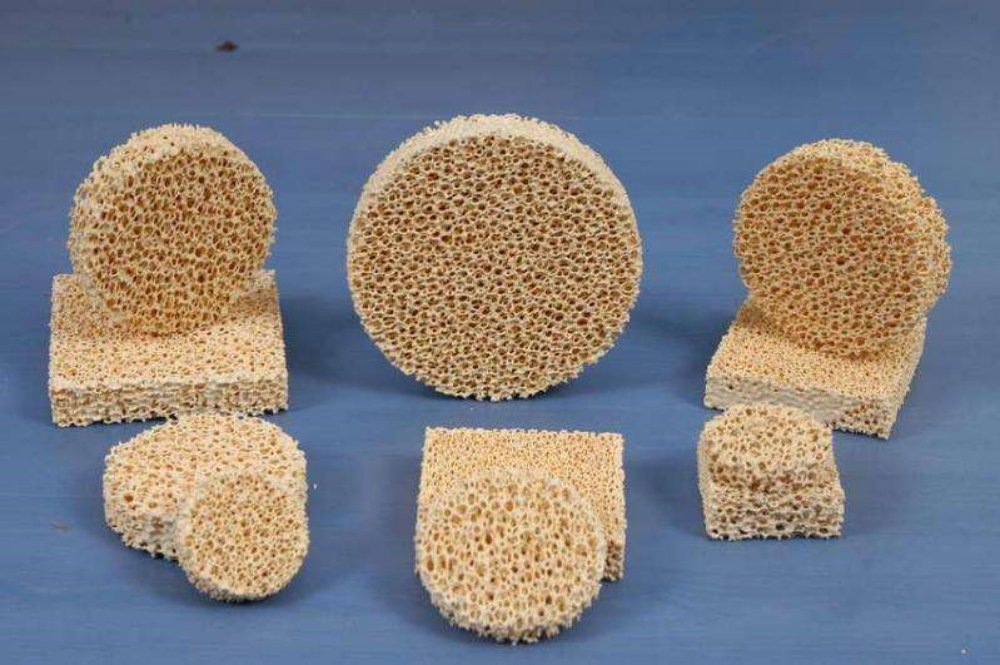
Zirconia Ceramic Foam Filter
Zirconia Ceramic Foam Filter is designed for higher-temperature and more demanding casting applications. Zirconia offers higher refractoriness and chemical stability than alumina, making it suitable for applications involving steel and other high-temperature alloys.
Laurel's reference specification gives an operating temperature of approximately 1680°C, porosity of 80–90%, pore density of 8–60 PPI, bulk density of 0.9–1.5 g/cm³, and compressive strength of ≥1.2 MPa.
Because zirconia filters are intended for demanding high-temperature applications, selection should be based on actual molten-metal temperature, alloy chemistry, pouring method, and required filtration performance rather than temperature rating alone.