Performance and Application Analysis of Novel Bio Soluble Fiber Blanket for High-Temperature Insulation
Bio soluble fiber blanket technology has emerged as an important development in high-temperature industrial insulation materials in recent years. The novel soluble hydrophobic magnesium silicate fiber blanket, developed based on soluble calcium magnesium silicate ceramic fibers, combines high-temperature stability, biodegradability, and excellent hydrophobic performance. With a maximum service temperature of up to 1260℃, the bio soluble fiber blanket provides a viable alternative to traditional aluminosilicate ceramic fibers and mineral wool insulation materials, contributing to improved industrial energy efficiency and environmental safety.
Current Status and Limitations of Traditional Ceramic Fiber Materials
Bio soluble fiber blanket solutions are gaining attention as traditional ceramic fiber insulation materials face increasing environmental and health concerns. Conventional ceramic fiber products are widely applied in metallurgy, petrochemical processing, and building insulation because of their high porosity and low thermal conductivity. With porosity exceeding 90%, static air trapped within the fibers ensures strong thermal insulation performance and Class A non-combustibility.
However, traditional aluminosilicate ceramic fibers and associated mineral dust are inert inorganic materials that degrade slowly in the environment. Microparticles may interact with biological cells and contribute to long-term environmental risks. As regulations in Europe and North America gradually restrict their use, industries are accelerating the transition toward safer alternatives such as bio soluble fiber blanket materials.
Industry Focus on Soluble Calcium Magnesium Silicate Fibers
Bio soluble fiber blanket materials derived from soluble calcium magnesium silicate ceramic fibers have become a major research focus in refractory insulation technology. These fibers combine excellent fire resistance, thermal insulation capability, and mechanical strength with improved environmental compatibility.
Experimental data indicates that vacuum-formed products made from this fiber can operate continuously at 1260℃ for 24 hours with a shrinkage rate below 3.5%, demonstrating reliable high-temperature performance. Due to rapid biodegradation and minimal potential impact on human health, the material is commonly referred to as soluble ceramic fiber, green ceramic fiber, or biodegradable ceramic fiber.
The production process typically uses magnesite and wollastonite as raw materials, which are melted, quenched, and fiberized to manufacture fiber blankets and boards suitable for industrial insulation systems.
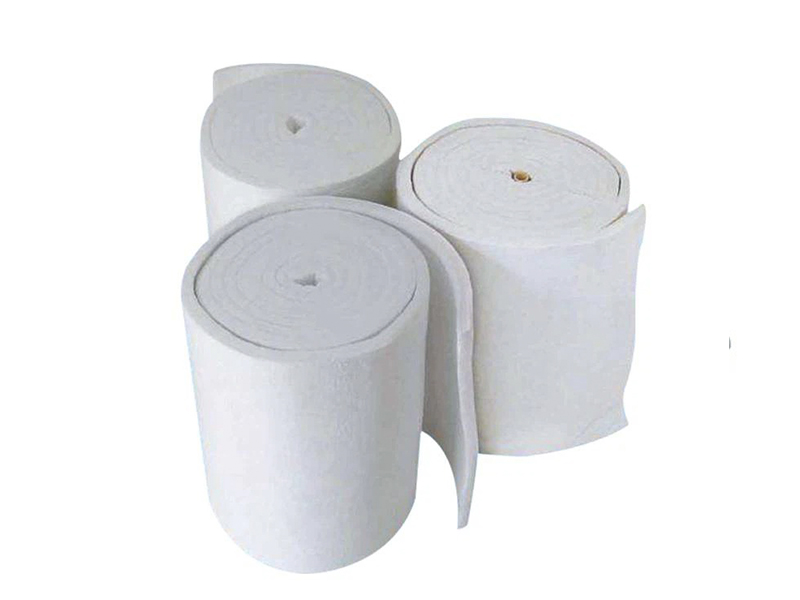
Technical Characteristics of the Novel Bio Soluble Fiber Blanket
The bio soluble fiber blanket developed with hydrophobic treatment is a flexible insulation material designed specifically for industrial thermal management applications. The product offers a refractory temperature of up to 1260℃ and demonstrates several key characteristics:
Low thermal conductivity with high insulation efficiency;
Wide operating temperature range;
Low bulk density enabling easy installation;
Long operational service life;
Excellent hydrophobic performance preventing moisture penetration.
In industrial insulation systems, the bio soluble fiber blanket improves thermal energy utilization while reducing operational energy consumption and associated costs.
Performance Comparison with Traditional Mineral Wool Materials
Bio soluble fiber blanket insulation provides improved long-term stability compared with traditional mineral wool materials. Industrial insulation applications commonly require stable operation between 200℃ and 900℃. Glass wool and rock wool products typically operate near 200℃ and experience grain growth under prolonged heating, which increases thermal conductivity and reduces insulation efficiency.
Field observations have shown rock wool detachment on preheating furnace outer walls, highlighting limitations in high-temperature environments. By comparison, bio soluble fiber blanket materials demonstrate superior thermal stability and mechanical reliability, effectively addressing these performance deficiencies.
Key performance advantages include:
Low halide ion content (≤10 ppm) with reduced corrosivity;
Good mechanical strength and flexibility;
Biosolubility with rapid degradation after disposal and reduced environmental impact.
Testing results show:
Linear change rate of only 0.5% after 24 hours at 800℃;
Permanent linear change rate of 0.6%–1.3% at 1000℃, supporting long-term operational safety.
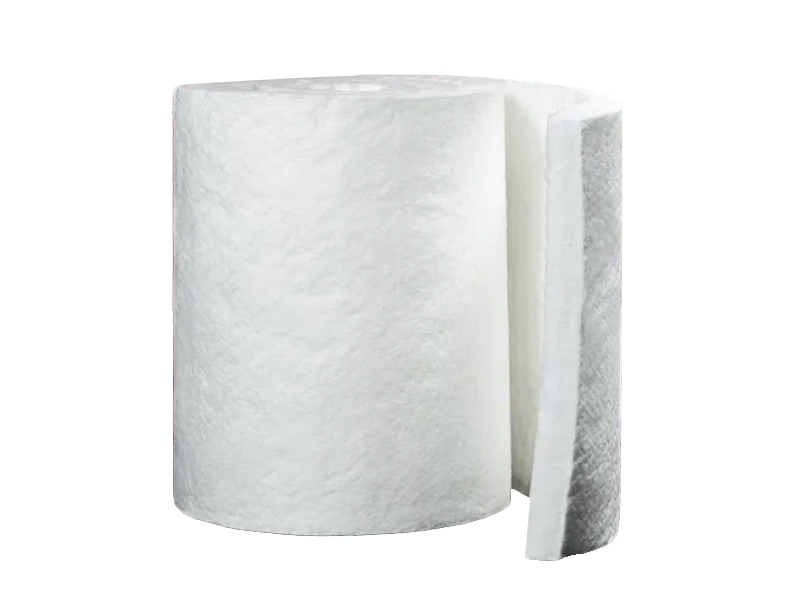
Hydrophobic Performance and Installation Advantages
Bio soluble fiber blanket products achieve nearly 100% water repellency after hydrophobic surface treatment, preventing moisture absorption and maintaining stable insulation performance under varying environmental conditions.
Mechanical performance testing indicates:
Tensile strength ≥0.045 MPa for density 96 kg/m³ products;
Tensile strength ≥0.05 MPa for density 128 kg/m³ products.
Higher tensile strength enhances installation stability and construction efficiency. Additionally, the bio soluble fiber blanket produces no smoke or irritating odor during use, maintains a clean white appearance, exhibits strong chemical stability, and contains less than 25 ppm chloride ions, improving industrial safety performance.
Application Areas and Development Prospects
Bio soluble fiber blanket insulation materials are widely applicable across multiple high-temperature industries, including:
Metallurgical equipment and pipeline insulation;
Backing insulation in power generation and ceramic manufacturing;
Shipbuilding fire protection systems;
Building and civil fireproof insulation applications.
As global requirements for industrial energy efficiency and environmental protection continue to increase, bio soluble fiber blanket materials combining high-temperature performance with biodegradability are expected to achieve broader adoption, supporting sustainable manufacturing and low-carbon industrial development.
Related Products
Inquiry Now
Please leave your e-mail and we will contact you as soon as possible
+86-15264257623 Jacky Liu
1003, Building 1,The Fortune Zone, No.17 Lian yungang Road,Qingdao,China
For more details, welcome to message us.
Copyright © 2025 Qingdao laurent new materials co.,ltd.All Rights Reserved.
 Powered by HiCheng
contact us
Your satisfaction is our top priority. Whether you have questions, need support, or want to share feedback, our dedicated team is ready to assist you every step of the way.