Ceramic Fiber Board for Blast Furnace Hot Blast Stove Backlining Insulation: High-Temperature Energy-Saving Solution
Ceramic fiber board has become an important insulation material for blast furnace hot blast stove systems, supporting high-temperature air supply operations exceeding 1000°C in ironmaking processes. As a high-temperature insulation solution rated up to 1260°C, ceramic fiber board provides effective thermal protection, reduces heat loss, and improves energy efficiency in hot blast stove backlining applications. The growing demand for energy-saving refractory materials has further expanded the adoption of ceramic fiber board in metallurgical industries.
Role of Ceramic Fiber Board in Hot Blast Stove Systems
Ceramic fiber board is widely applied as a backlining insulation material in blast furnace hot blast stoves, which serve as key auxiliary equipment in ironmaking plants. Typically, each blast furnace operates with three to four hot blast stoves that continuously deliver high-temperature air required for stable smelting operations.
The use of ceramic fiber board as insulation backing enables reliable thermal resistance while maintaining structural stability under prolonged exposure to elevated temperatures. Standard 1260-grade ceramic fiber board is commonly selected to ensure consistent insulation performance.
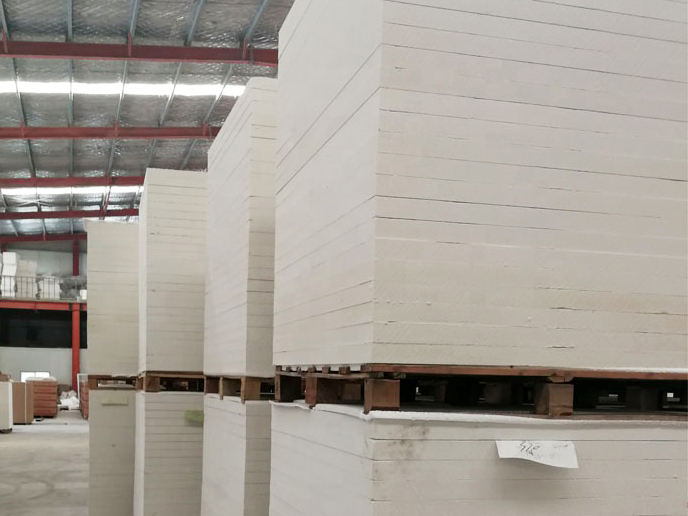
Performance Advantages of Ceramic Fiber Board
Ceramic fiber board offers several thermal and mechanical advantages that make it suitable for demanding industrial environments:
Low thermal conductivity — ceramic fiber board provides thermal conductivity only one-third to one-sixth of conventional insulation materials, significantly reducing insulation thickness requirements.
Excellent thermal properties — ceramic fiber board exhibits low heat storage, high thermal resistance, low expansion coefficient, and minimal thermal shrinkage.
High temperature resistance — ceramic fiber board supports long-term operation at temperatures up to 1000°C.
Self-supporting structure — ceramic fiber board panels maintain mechanical integrity without additional structural reinforcement.
Wide equipment compatibility — ceramic fiber board is suitable for industrial furnaces, electric furnaces, and high-temperature processing equipment.
Machinability — ceramic fiber board can be easily cut, drilled, milled, and shaped during installation.
Long service life — ceramic fiber board reduces maintenance frequency and operational costs.
Ceramic Fiber Board Applications in Blast Furnace Operations
Ceramic fiber board plays a key role in improving insulation efficiency within blast furnace hot blast stove systems. Typical applications include:
Blast furnace hot blast stove backlining insulation;
Metallurgical heat treatment furnaces;
High-temperature incineration insulation systems;
Thermal backing insulation for mining refuge chambers.
The lightweight structure and thermal stability of ceramic fiber board allow it to maintain insulation performance under continuous high-temperature airflow conditions.
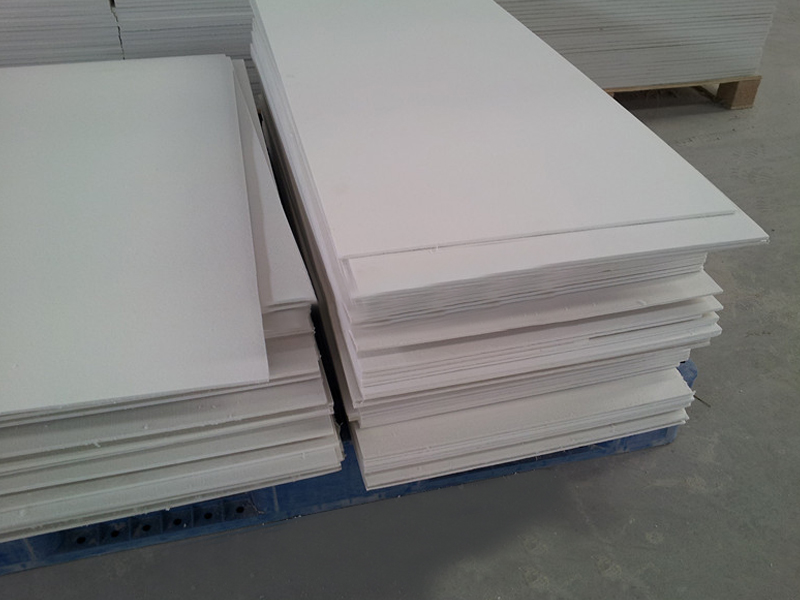
Technical Characteristics of Ceramic Fiber Board Insulation
Ceramic fiber board combines low density with stable thermal resistance, enabling efficient insulation performance without excessive structural load. The dimensional stability of ceramic fiber board ensures reliable operation in continuous heating environments where temperature fluctuations are common.
Because ceramic fiber board maintains low thermal mass, heating systems can achieve faster thermal response and improved energy utilization efficiency.
Extended Industrial Applications of Ceramic Fiber Board
Ceramic fiber board is widely used beyond blast furnace systems across multiple industrial sectors:
Marine engine thermal insulation protection;
Steel industry equipment including ladles, tundishes, electric furnaces, reheating furnaces, annealing furnaces, and sintering furnaces;
Petrochemical cracking furnaces, heaters, and pipelines;
Ceramic industry kilns such as rotary kilns, shuttle kilns, and tunnel kilns;
Industrial furnace lining and insulation systems;
Power industry steam turbine and boiler piping insulation;
Household heating appliances including ovens, heaters, and fireplaces;
Building fireproof insulation and high-temperature engineering projects.
Ceramic fiber board continues to support energy-saving upgrades in modern high-temperature industries by providing reliable insulation performance, reduced heat loss, and long operational service life. With its combination of high-temperature resistance, machinability, and structural stability, ceramic fiber board remains a key insulation material for blast furnace hot blast stove applications and a wide range of industrial thermal systems.
Related Products
Inquiry Now
Please leave your e-mail and we will contact you as soon as possible
+86-15264257623 Jacky Liu
1003, Building 1,The Fortune Zone, No.17 Lian yungang Road,Qingdao,China
For more details, welcome to message us.
Copyright © 2025 Qingdao laurent new materials co.,ltd.All Rights Reserved.
 Powered by HiCheng
contact us
Your satisfaction is our top priority. Whether you have questions, need support, or want to share feedback, our dedicated team is ready to assist you every step of the way.