Do Insulating Bricks with Different Densities Have Different Insulation Performance?
The primary function of insulating bricks is thermal insulation and energy conservation. Their insulation performance is closely related to density. In general, the lower the density of insulating bricks, the lower the thermal conductivity and the better the insulation effect. However, reduced density also means lower mechanical strength. Therefore, selecting insulating bricks is not simply a matter of choosing the lightest option, but rather finding the right balance between thermal performance and structural stability.
Types and Density Ranges of Insulating Bricks
Depending on raw materials and service temperature, insulating bricks are commonly classified into the following categories:
Lightweight Clay Insulating Bricks
Bulk density: 0.6–1.2 g/cm³
Suitable for applications up to around 1000°C. These are the most widely used insulating bricks for medium- and low-temperature furnace linings.
High Alumina Insulating Bricks
Bulk density: 0.6–1.2 g/cm³
Designed for service temperatures up to approximately 1300°C.
Mullite Lightweight Insulating Bricks
Bulk density: 0.8–1.2 g/cm³
Suitable for high-temperature insulation above 1350°C.
Alumina Hollow Ball Insulating Bricks
Bulk density: 1.0–1.2 g/cm³
Offer both insulation and high-temperature resistance, and in some lightweight kiln structures, they can even serve as part of the working lining.
In practical furnace design, the material type of insulating bricks should first be determined according to operating temperature, and then the density should be selected to optimize insulation performance.
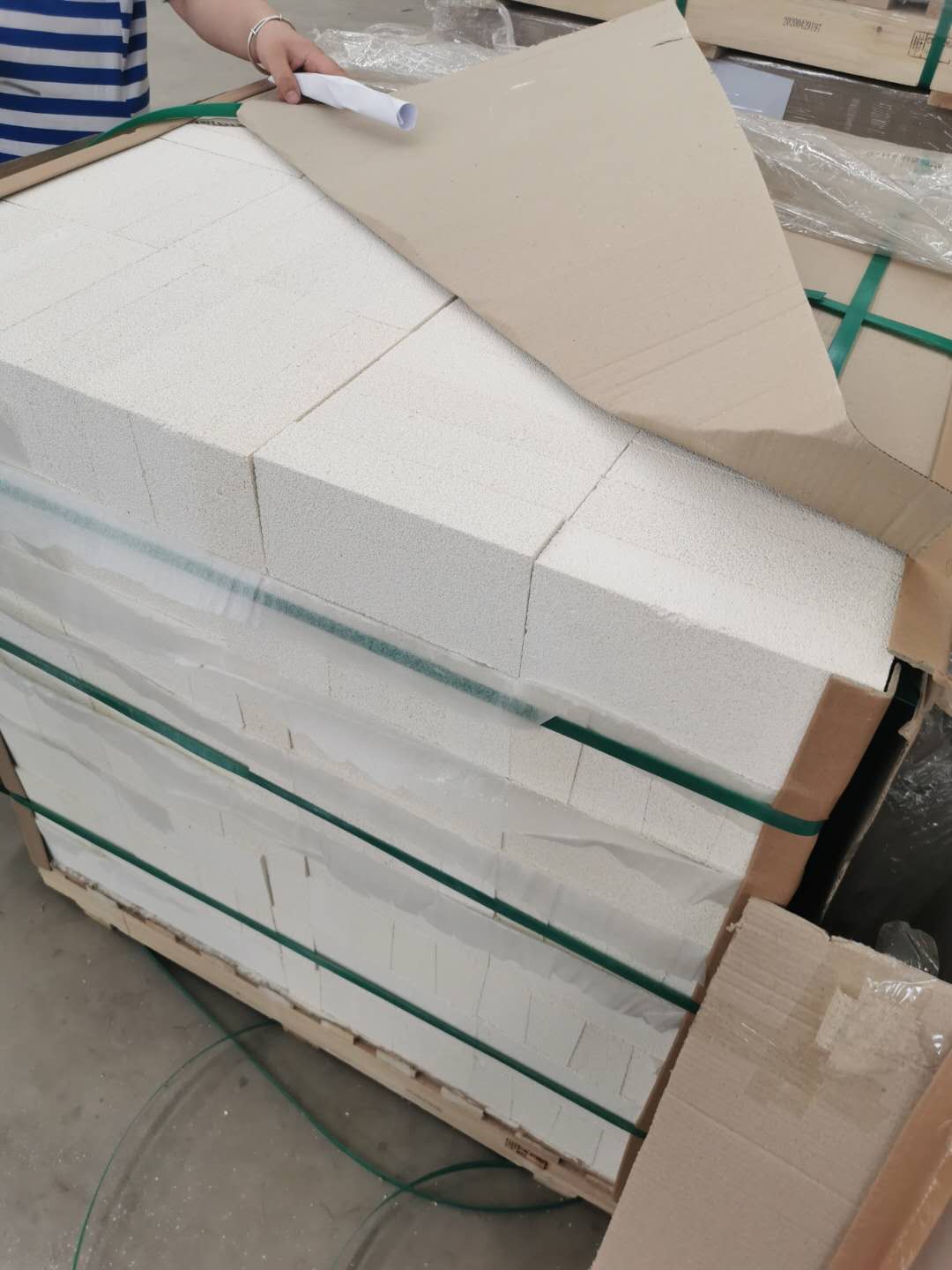
How Density Affects the Thermal Performance of Insulating Bricks
Insulating bricks contain a large number of closed or semi-closed pores filled with air. Since air has a much lower thermal conductivity than solid refractory materials, the porous structure is the key to achieving low thermal conductivity.
When the density of insulating bricks decreases:
Porosity increases
Solid heat conduction paths are reduced
Overall thermal conductivity decreases
Insulation performance improves
However, this relationship has limits. If the density becomes too low, compressive strength drops significantly, increasing the risk of crushing or structural failure under load. On the other hand, if density is too high, the solid phase conduction increases, reducing the insulation effect. Therefore, there is always an optimal density range for insulating bricks under specific operating conditions.
Selecting Insulating Bricks Based on Temperature Requirements
The selection of insulating bricks should match the furnace operating temperature:
Around 1000°C → Lightweight clay insulating bricks
Around 1300°C → High alumina insulating bricks
Above 1350°C → Mullite insulating bricks
Lightweight kiln structures → Alumina hollow ball insulating bricks
For backup insulation layers, lower-density insulating bricks are generally preferred for better energy efficiency. However, when heavy dense refractory bricks are used as the working layer, higher-density insulating bricks may be required to provide sufficient mechanical strength.
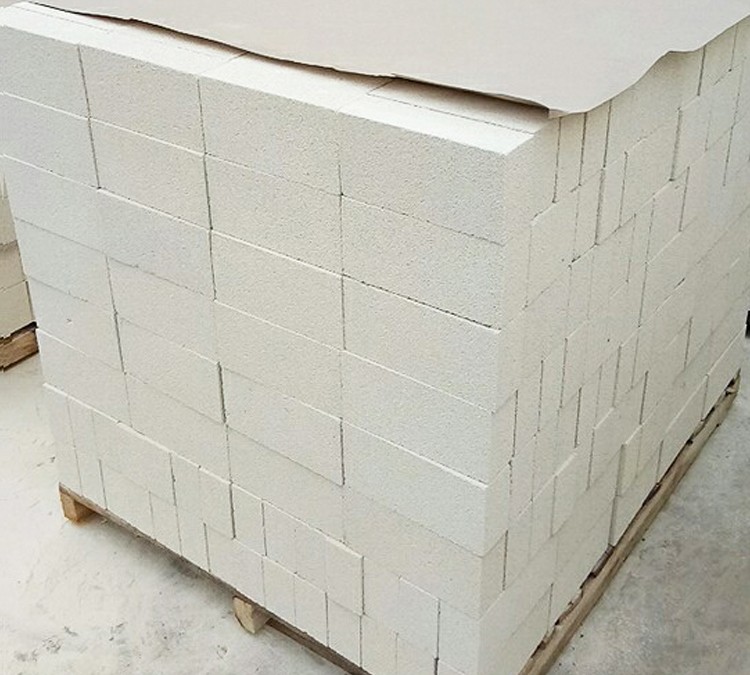
Balancing Density and Strength in Furnace Design
Lower-density insulating bricks provide better thermal insulation but lower strength. If heavy-duty refractory bricks are installed above low-density insulating bricks, long-term thermal stress and mechanical load may cause crushing or powdering of the insulation layer, leading to:
Reduced insulation performance
Movement or misalignment of the working lining
Structural instability
Increased maintenance costs
Therefore, in multi-layer furnace lining systems, the density of insulating bricks must be selected based on both thermal requirements and structural load considerations.
Alumina hollow ball insulating bricks offer an advantage in this regard. With higher strength and excellent high-temperature performance, they can sometimes function as both working lining and insulation layer, simplifying furnace structure design.
Density, Cost, and Energy Efficiency
Lower-density insulating bricks generally require more precise raw material control and advanced production processes, resulting in higher unit prices. However, their lower thermal conductivity reduces heat loss and fuel consumption during furnace operation, improving long-term energy efficiency and reducing overall operating costs.
Yes, the insulation performance of insulating bricks varies significantly with density. Lower density typically means lower thermal conductivity and better insulation, but also lower mechanical strength. The optimal choice depends on:
Operating temperature
Furnace lining structure
Load from the working layer
Installation and service conditions
By carefully selecting the appropriate type and density of insulating bricks, furnace designers can achieve the best balance between energy efficiency, durability, and cost-effectiveness.
Related Products
Inquiry Now
Please leave your e-mail and we will contact you as soon as possible
+86-15264257623 Jacky Liu
1003, Building 1,The Fortune Zone, No.17 Lian yungang Road,Qingdao,China
For more details, welcome to message us.
Copyright © 2025 Qingdao laurent new materials co.,ltd.All Rights Reserved.
 Powered by HiCheng
contact us
Your satisfaction is our top priority. Whether you have questions, need support, or want to share feedback, our dedicated team is ready to assist you every step of the way.