Refractory Materials for Cement Rotary Kilns: A Dual Breakthrough in Environmental Protection and Performance
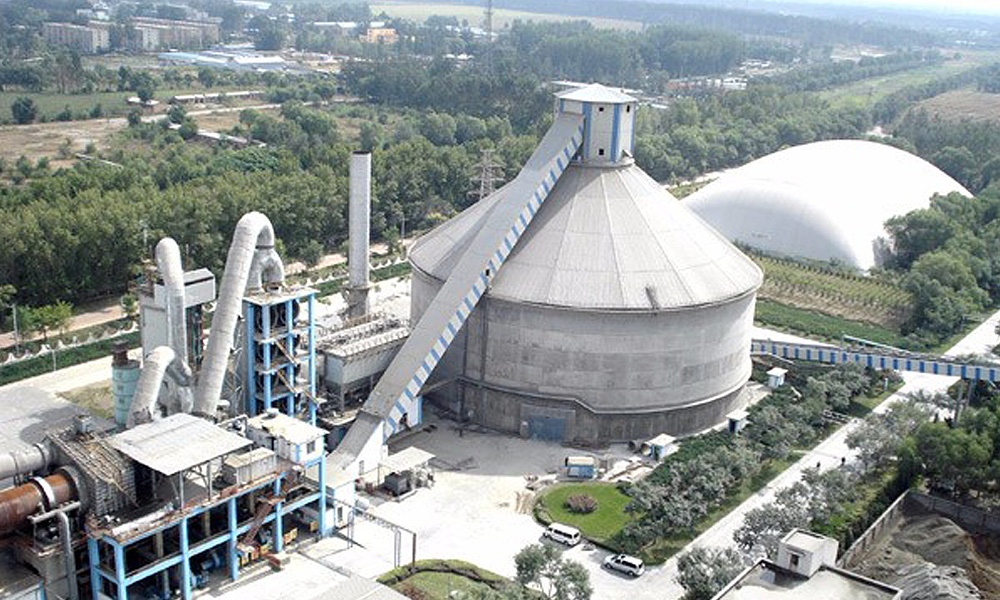
The cement rotary kiln is the core thermal equipment in cement production systems, and its long-term stable operation highly depends on the comprehensive performance of refractory materials. As the cement industry moves towards green development, rotary kilns, while performing clinker calcination, also undertake the co-processing of solid waste such as municipal solid waste, waste tires, and sludge. Although the high-temperature environment is conducive to the harmless treatment of solid waste, the alkali vapors, chloride salts, and complex slag systems generated during combustion significantly exacerbate the erosion and thermal load on the refractory lining, placing higher demands on its corrosion resistance, thermal stability, and thermal insulation and energy-saving performance.
The "Environmental Revolution" of Refractory Materials: From Chromium-Containing to Chromium-Free
Traditional magnesia-chrome refractory materials, due to their excellent high-temperature resistance and corrosion resistance, have long been the mainstream material for critical parts of cement rotary kilns. However, the hexavalent chromium (Cr⁶⁺) they contain is highly toxic, posing environmental and health risks during production, use, and disposal. With increasingly stringent environmental regulations, refractory materials in the cement industry are rapidly entering the **"chromium-free" era**, with magnesia-alumina spinel, magnesia-iron-alumina spinel, and magnesia-calcium materials gradually becoming alternative options, each with its own advantages and limitations in performance and application.
Magnesia-alumina spinel refractory materials are known for their high melting point, high hardness, and low thermal expansion coefficient, and have good corrosion resistance to both acidic and alkaline slags, making them one of the commonly used materials for cement kiln linings. However, their clinker coating performance is weak, making it difficult to form a stable "natural protective layer," and their thermal conductivity is relatively high, which is not conducive to kiln insulation and energy saving. Future improvement directions focus on stabilizing the crystal phase by adding rare earth oxides and constructing a microporous structure to reduce thermal conductivity, while maintaining high-temperature performance and improving energy efficiency and service life.
Magnesia-iron-alumina spinel refractory materials, by introducing iron elements, have achieved performance optimization based on the magnesia-alumina spinel system. Their clinker coating ability, alkali corrosion resistance, and thermal shock resistance are significantly improved, and their thermal conductivity is relatively reduced, making them an important application material in the burning zone. However, this system still faces challenges such as high raw material costs and limited room for further optimization of thermal properties. Future research will focus on using industrial by-products to replace some raw materials, simplifying the sintering process, and reducing thermal conductivity and thermal expansion coefficients through multi-component doping.
Magnesia-calcium refractory materials are considered one of the most promising chromium-free basic refractory materials. Their free CaO readily reacts with cement clinker, exhibiting excellent kiln lining performance and outstanding resistance to high-temperature alkaline media, while also benefiting from abundant raw material sources and significant cost advantages. However, their poor hydration resistance has long hindered their engineering applications. Current research shows that introducing ZrO₂ and nano-iron oxide to form a stable protective phase can significantly reduce the hydration rate. However, how to suppress hydration without weakening the kiln lining ability remains a key technical challenge for the large-scale application of this system.
Future Outlook: Building an "All-around" Refractory Material System
As the cement industry continues to advance towards low-carbon, intelligent, and solid waste co-processing directions, the research and development of refractory materials for rotary kilns is shifting from single-performance optimization to multi-dimensional comprehensive design. Future research will focus on:
First, using numerical simulation and mechanistic research to deeply reveal the formation and evolution mechanisms of kiln lining, providing a theoretical basis for material formula design;
Second, promoting interdisciplinary technological integration, introducing nanotechnology and biomimetic structural design methods to systematically improve corrosion resistance and thermal stability;
Third, coordinating performance, cost, and environmental attributes to develop specialized refractory material systems that are more suitable for complex working conditions and solid waste co-processing needs.
From chromium-containing to chromium-free, from single corrosion resistance to comprehensive energy saving and environmental protection, the technological evolution of refractory materials for cement rotary kilns is profoundly impacting the sustainable development path of the cement industry. With the continuous progress of material design concepts and manufacturing technologies, high-performance, low-environmental-impact refractory materials will continue to provide a more reliable "thermal protection barrier" for cement rotary kilns.
Related Products
Inquiry Now
Please leave your e-mail and we will contact you as soon as possible
+86-15264257623 Jacky Liu
1003, Building 1,The Fortune Zone, No.17 Lian yungang Road,Qingdao,China
For more details, welcome to message us.
Copyright © 2025 Qingdao laurent new materials co.,ltd.All Rights Reserved.
 Powered by HiCheng
contact us
Your satisfaction is our top priority. Whether you have questions, need support, or want to share feedback, our dedicated team is ready to assist you every step of the way.