The Crucial Step from Green Body to Finished Brick: A Comprehensive Analysis of the Firing and Unloading Process of High-Quality Refractory Bricks
The transformation of refractory bricks from formed green bodies to finished products hinges on the firing and unloading processes. The entire firing process typically includes three main stages: kiln loading, high-temperature firing, and kiln unloading. This process not only determines the density, strength, and volume stability of the product but also directly affects dimensional accuracy, appearance quality, and yield rate, making it the most technically demanding core stage in refractory product manufacturing.
I. Kiln Loading: The Foundational Stage Determining Firing Quality
The industry adage "seven parts stacking, three parts firing" emphasizes the decisive influence of kiln loading quality on firing results. Kiln loading involves scientifically arranging the brick green bodies in the kiln according to the kiln structure and thermal regime. The core objective is to optimize airflow distribution, ensure uniform heat transfer, and achieve a balance between quality, yield, and energy consumption.
Kiln loading first requires determining a reasonable stacking method based on the type and shape of the bricks. The stacking height varies for different brick materials; for example, magnesia bricks and high-alumina bricks are usually stacked to a height of 1-1.1 meters, silica bricks can reach 1-1.7 meters, and clay bricks are between the two. Most brick types use flat stacking, while silica bricks are often stacked vertically, and clay bricks can be stacked on their sides. The ratio of standard bricks to special-shaped bricks on the kiln car is generally 6:4, with standard bricks placed at the bottom and special-shaped bricks at the top. For special brick types prone to cracking, a "brick-in-brick" protection method should be used.
While ensuring quality, the stacking density should be increased as much as possible to improve single-kiln output and reduce unit fuel consumption. However, the stacking density must conform to the airflow distribution principles, with two key parameters to control: the K value and the m value. The K value is the ratio of the outer channel area to the inner channel area. For clay bricks and silica bricks, it is usually controlled at 1.3-1.6, and for high-alumina bricks and magnesia products, it is 1.3-1.4. A K value that is too small will affect flame distribution, while a value that is too large may lead to under-firing in the center. The m value is the percentage of the effective channel area to the kiln cross-sectional area. For clay bricks and silica bricks, it is generally 25-35%, and for high-alumina bricks and magnesia bricks, it is 35-50%. The larger the m-value, the lower the airflow resistance, but the amount of bricks loaded will decrease accordingly.
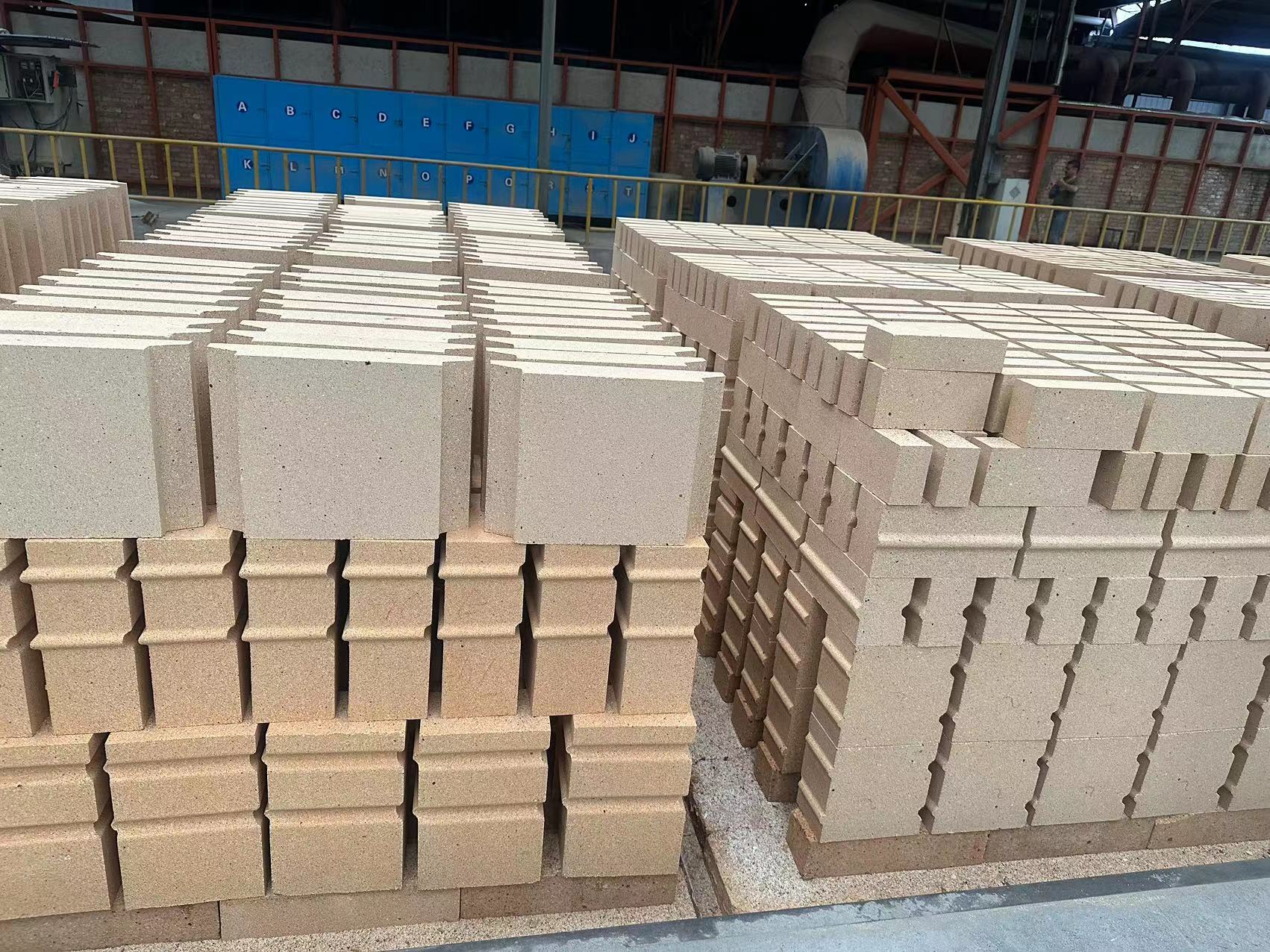
In addition, the kiln loading operation must ensure that the brick stacks are "flat, stable, and straight" to prevent deformation at high temperatures. To avoid brick adhesion and reduce deformation, 0.5-3mm of filler sand should be evenly spread between each layer of bricks. Different types of bricks use different filler sand materials, such as silica sand or bauxite for clay bricks and high-alumina bricks, waste silica brick sand for silica bricks, and magnesia or chromite sand for magnesia bricks.
II. High-Temperature Firing: The Core Process of Structural Densification
Firing is a critical stage in the formation of the final structure and performance of refractory bricks. Under high-temperature conditions, the brick blanks undergo a series of physical and chemical changes, including moisture removal, mineral decomposition, new phase formation, liquid phase formation, and sintering densification.
The entire firing process is usually divided into a heating stage, a maximum temperature holding stage, and a cooling stage.
During the heating stage, residual moisture and crystalline water are removed, organic matter burns and decomposes, and some minerals undergo phase transitions, causing a temporary decrease in the strength of the brick body. When the temperature reaches the liquid phase formation temperature, liquid phase diffusion and mass transfer are enhanced, and the particles move closer together under the action of surface tension, achieving sintering densification.
During the holding stage at the maximum firing temperature, various reactions tend to be completed, the crystalline phases fully grow, and the internal and surface temperatures of the product tend to be consistent, achieving structural homogenization. The larger the brick size and the higher the kiln loading density, the longer the holding time required.
The cooling stage is a process of stabilization of structure and phase transformation. During this stage, phenomena such as crystal transformation, glass phase solidification, and microcrack formation occur. The cooling regime directly affects the strength and thermal shock resistance of the product.
The firing regime includes the maximum temperature, heating rate, holding time, cooling rate, and kiln atmosphere control. The firing temperature mainly depends on the properties and purity of the raw materials. The general reference temperature is approximately 0.8 times the melting point of the main minerals, and high-purity raw materials usually require higher firing temperatures. Fine powder materials, due to their large specific surface area, can promote sintering and moderately reduce the firing temperature.
The kiln atmosphere also affects the performance of the product. Clay bricks are mostly fired in an oxidizing atmosphere to improve their refractoriness; silica bricks often use a reducing atmosphere to enhance mineralization; and carbon-containing products need to be fired in an air-isolated or controlled nitrogen atmosphere to prevent carbon oxidation. The firing regime is also closely related to the type of kiln. Large downdraft kilns usually require slow heating and longer holding times to ensure uniform temperature.
A reasonable firing regime is based on theoretical calculations and production experience, and is key to controlling the reject rate and stabilizing product quality.
III. Unloading from the Kiln: The Final Link in Ensuring Product Yield
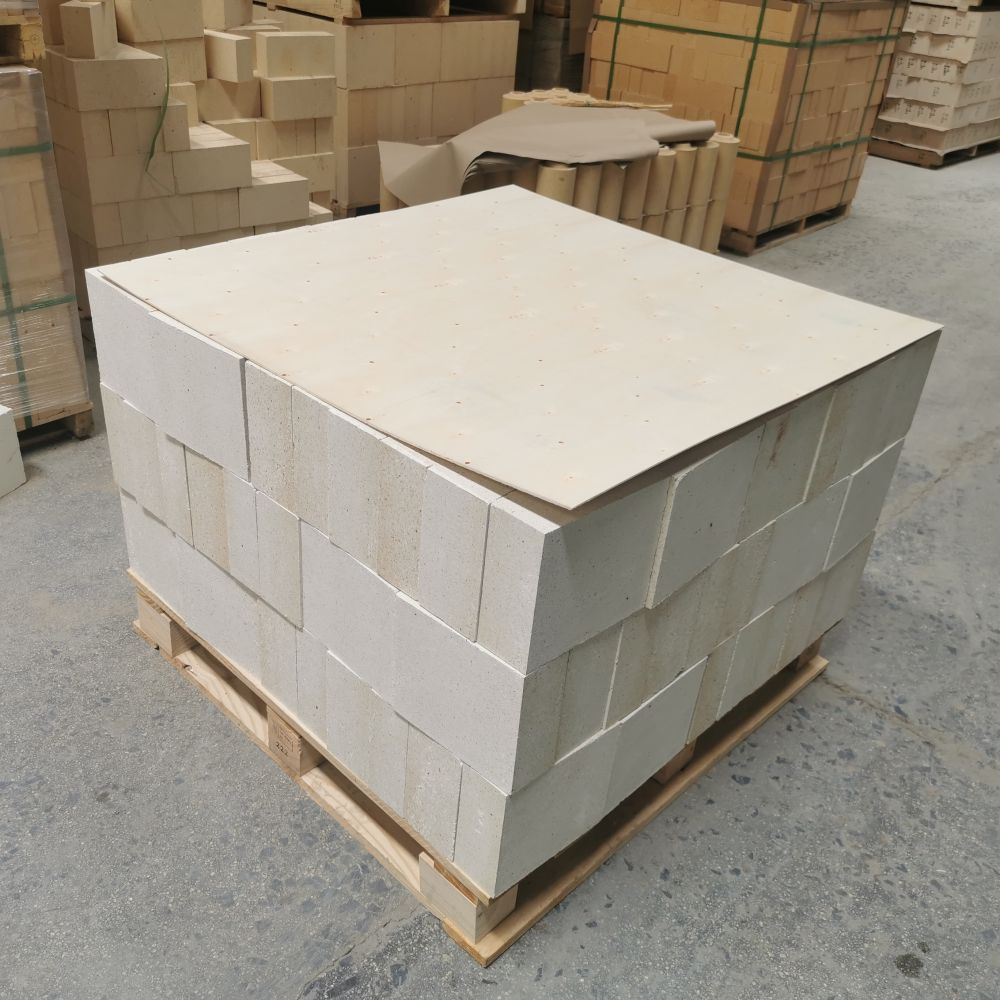
Unloading from the kiln is the process of removing fully cooled products from the kiln or kiln car. Although this step has a low technical difficulty, the degree of operational standardization directly affects the appearance quality of the finished product.
During unloading, products should be handled gently to avoid defects such as chipping and cracking caused by collision. Different brick types must be stacked separately and clearly labeled to avoid confusion during subsequent inspection due to subtle differences in size. Tool bricks need to be sorted separately for reuse in subsequent kiln loading. At the same time, safety operating procedures must be strictly followed, and labor protection measures must be implemented.
The firing and unloading of refractory bricks are the most critical technical links in the transformation process from green body to finished product. Scientific kiln loading ensures uniform heat distribution, high-temperature firing achieves structural densification, and standardized unloading guarantees appearance quality. These three aspects are interconnected and jointly determine the comprehensive performance and stability of the product. Reasonable control of each process is the core foundation for achieving large-scale and stable production of high-quality refractory products.
Related Products
Inquiry Now
Please leave your e-mail and we will contact you as soon as possible
+86-15264257623 Jacky Liu
1003, Building 1,The Fortune Zone, No.17 Lian yungang Road,Qingdao,China
For more details, welcome to message us.
Copyright © 2025 Qingdao laurent new materials co.,ltd.All Rights Reserved.
 Powered by HiCheng
contact us
Your satisfaction is our top priority. Whether you have questions, need support, or want to share feedback, our dedicated team is ready to assist you every step of the way.