Comparative Analysis of Industrial High-Temperature Insulation Materials: Differences in Engineering Applications of Nanoporous Insulation Boards and Ceramic Fiber Boards
In the energy-saving design and safety protection of industrial high-temperature equipment, the selection of insulation materials directly affects system energy consumption, structural dimensions, and long-term operational stability. Nano microporous boards and ceramic fiber boards are two of the most typical materials currently used in the field of high-temperature insulation. They have fundamental differences in thermal conductivity, temperature resistance, structural characteristics, and engineering applicability, making them more suitable for complementary applications in different temperature ranges and operating conditions, rather than being interchangeable.
Differences in Thermal Conductivity and Energy Efficiency
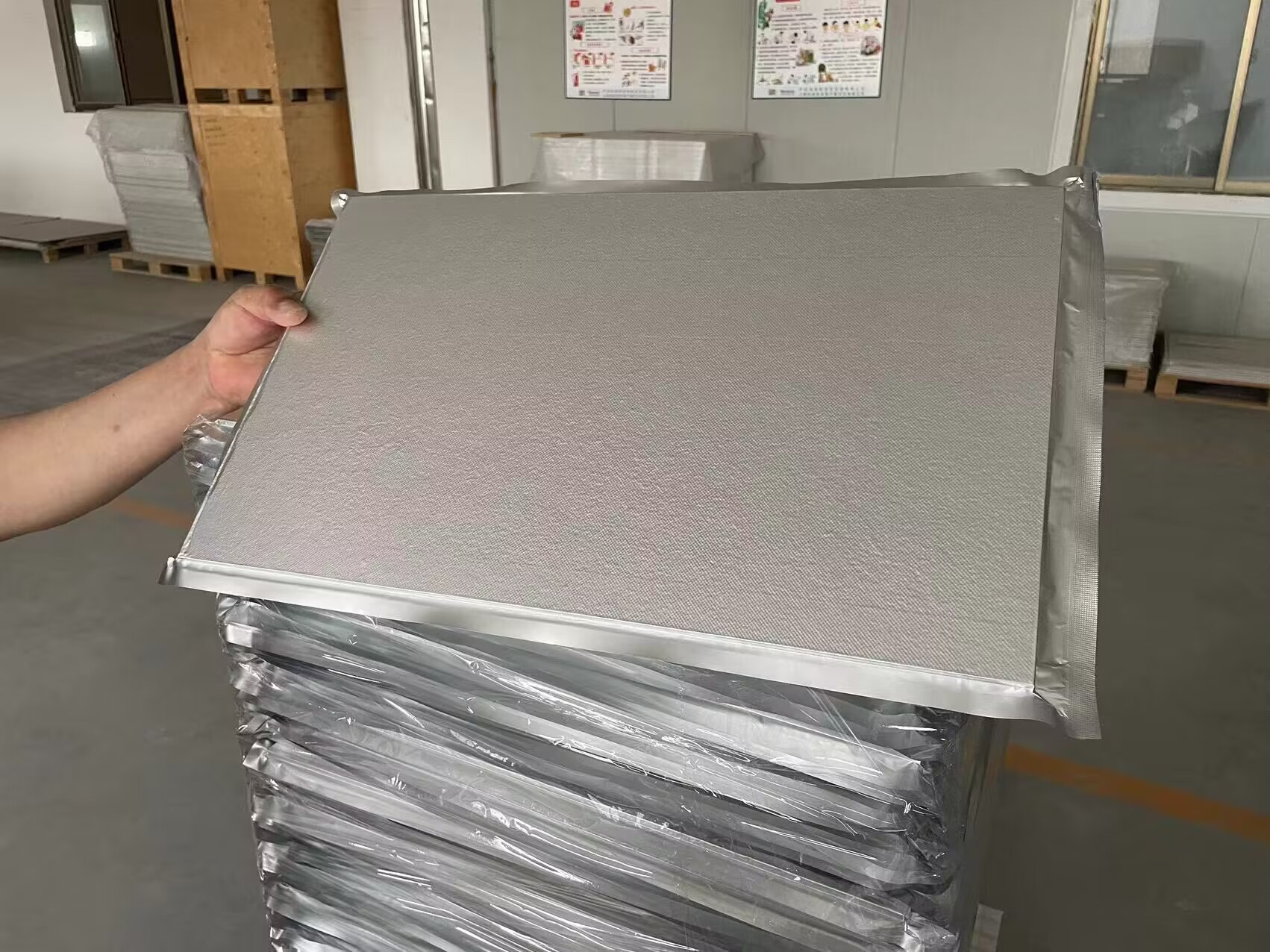
Thermal conductivity is a core parameter for measuring the energy-saving capacity of insulation materials. At room temperature, the thermal conductivity of microporous insulation board is approximately 0.022–0.042 W/(m·K), while that of ceramic fiber boards is typically 0.13–0.23 W/(m·K), with the former being only about 1/4 to 1/5 of the latter. Under the same insulation target, microporous board can significantly reduce the rate of heat transfer, thereby reducing heat loss and energy consumption. This characteristic gives them a significant advantage in industrial equipment where energy saving and consumption reduction are the core objectives, especially for back-up insulation and multi-layer composite insulation structures.
Temperature Range and Application Limits
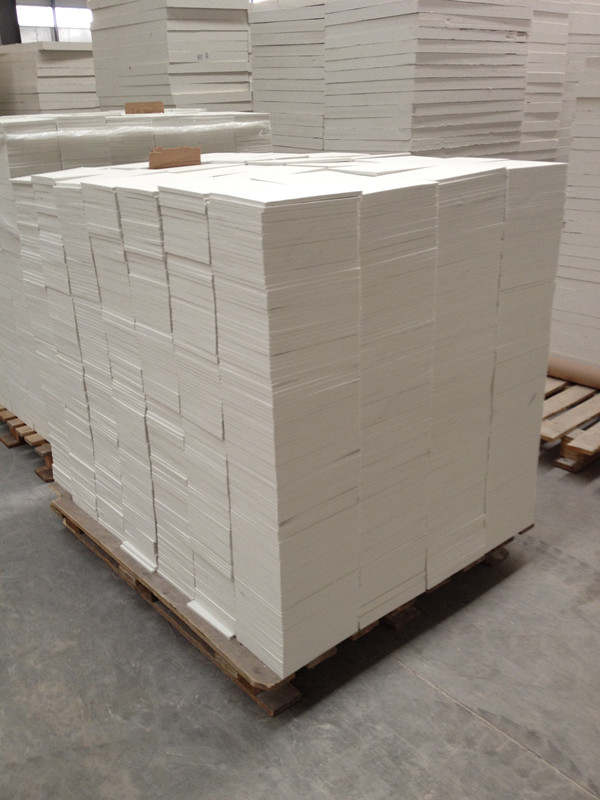
The two types of materials have clear distinctions in their applicable temperature ranges. The optimal working temperature range for microporous insulation board is 400–1000℃, with a maximum temperature resistance of approximately 1200℃, enabling efficient insulation in the medium-to-high temperature range; the long-term operating temperature range for ceramic fiber boards is 800–1600℃, with a maximum temperature resistance of up to 1800℃, maintaining structural and performance stability under ultra-high temperature conditions. Therefore, in operating conditions below 1000℃, microporous insulation board are more conducive to improving energy efficiency; while in environments exceeding 1000℃, especially when directly used as a hot surface, ceramic fiber boards remain an irreplaceable basic refractory insulation material.
Material Structure Mechanism and Engineering Performance
The microstructure of the material determines the insulation mechanism and engineering performance. microporous insulation board, primarily composed of nanoscale SiO₂, achieve multiple thermal insulation effects by simultaneously suppressing solid heat conduction, gas convection, and weakening thermal radiation through their extremely fine pore structure. Ceramic fiber boards, on the other hand, use high-temperature resistant ceramic fibers as a framework, relying mainly on the fiber network and the air layers between them for insulation. They exhibit better structural stability and thermal shock resistance in high-temperature environments. From an engineering perspective, microporous insulation board can reduce the thickness of the insulation layer by approximately 50% to 70% for the same insulation effect, making them suitable for space-constrained equipment. Ceramic fiber boards typically have a compressive strength of no less than 2.0 MPa, making them more suitable for bearing certain mechanical loads or for direct use as high-temperature linings.
Typical Application Scenarios and Selection Guidelines
The two types of materials have different application focuses in industrial systems. microporous board are mainly used in energy-saving and space-constrained applications, such as ladle and metallurgical equipment linings, petrochemical devices, new energy batteries, and compact reaction equipment. Their core value lies in reducing system energy consumption and improving overall thermal efficiency. Ceramic fiber boards are widely used in industrial furnace hot surfaces, high-temperature melting furnaces, and high-temperature flue gas channels, providing both thermal insulation and structural protection in ultra-high-temperature environments.
Conclusion
microporous board and ceramic fiber boards represent two different technological paths in the field of industrial high-temperature insulation. In practical engineering design, the material type should be reasonably matched based on the operating temperature, space constraints, and mechanical requirements, achieving comprehensive optimization of energy saving and operational safety through differentiated selection.
Related Products
Inquiry Now
Please leave your e-mail and we will contact you as soon as possible
+86-15264257623 Jacky Liu
1003, Building 1,The Fortune Zone, No.17 Lian yungang Road,Qingdao,China
For more details, welcome to message us.
Copyright © 2025 Qingdao laurent new materials co.,ltd.All Rights Reserved.
 Powered by HiCheng
contact us
Your satisfaction is our top priority. Whether you have questions, need support, or want to share feedback, our dedicated team is ready to assist you every step of the way.