Calcium Silicate Board: A Comprehensive Guide from Material Properties to Application Scenarios
Calcium silicate board is a mature, new type of environmentally friendly inorganic board material. It is primarily composed of quartz sand, quicklime, cement, wollastonite, wood fibers, and various additives, manufactured through processes such as pulping, molding, high-pressure compaction, and autoclaving. This material combines the fire-resistant and durable characteristics of inorganic minerals with a fiber-reinforced structure, possessing both excellent mechanical properties and stable thermal insulation performance. It is widely used in building decoration, industrial insulation, and fire protection systems.
Calcium Silicate Board Production Process
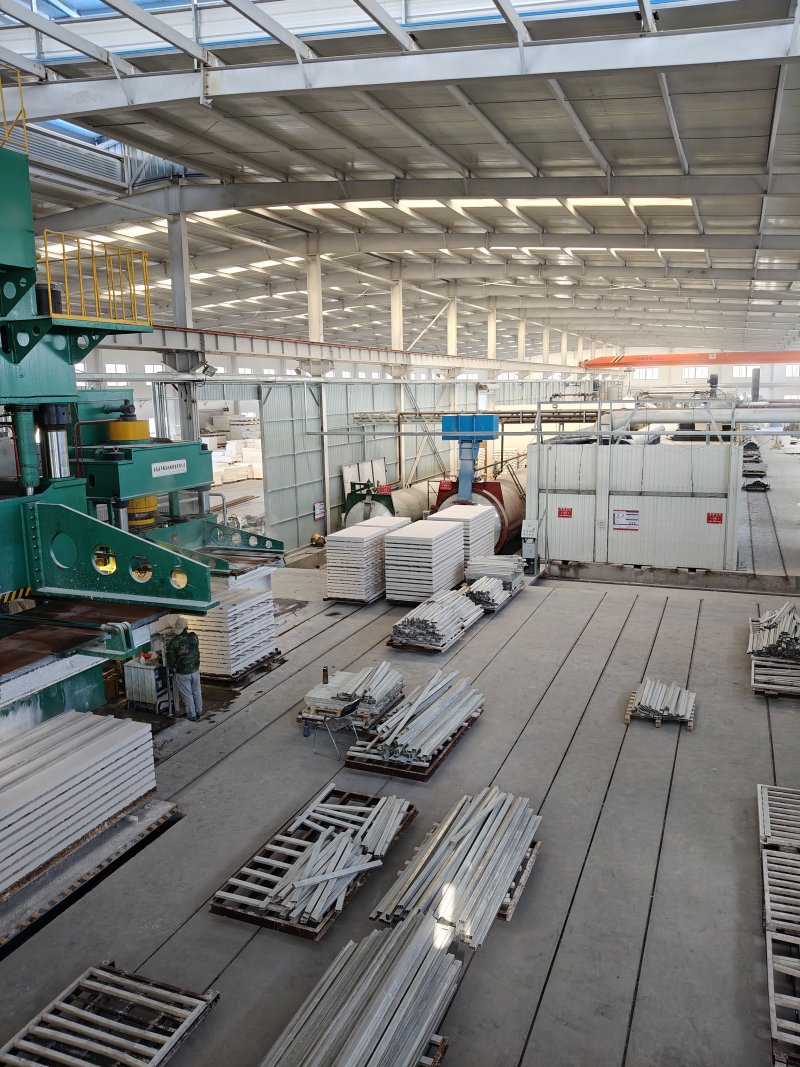
The manufacturing process of calcium silicate board is highly industrialized, with the core objective of obtaining a dense, uniform, and stable board structure. Production begins with raw material preparation, including wet grinding of quartz sand into pulp, crushing and digestion of quicklime, and pulping of wood fibers, ensuring that the particle size and activity of the raw materials meet the reaction requirements. This is followed by the pulping stage, where the fiber pulp is mixed with slaked lime, cement, and quartz powder in proportion. High-speed stirring and secondary grinding create a uniform slurry, which is then continuously transported to the board-making system at a stable concentration.
In the slurry molding stage, the slurry is evenly spread onto an industrial felt through a slurry box. After vacuum dewatering, it is layered and wound into a board blank, and then cut to standard dimensions. The formed board blank then enters the high-pressure compaction process, where it is dewatered and densified under a pressure of approximately 23.5 MPa, stabilizing the board's bulk density at 1.8–2.0 g/cm³. After compaction, the wet board blank undergoes pre-curing to obtain initial strength, and then enters an autoclave, where the stable formation of the calcium silicate crystal structure is completed in a high-temperature, high-pressure steam environment. Finally, after drying, double-sided sanding, precision trimming, and performance testing, the finished product is shipped.
Core Performance and Material Advantages
The performance advantages of calcium silicate board are reflected in multiple dimensions. Depending on the density, the product can be divided into low-density (0.95–1.2 g/cm³), medium-density (1.2–1.4 g/cm³), and high-density (>1.4 g/cm³). Higher density results in stronger load-bearing capacity and impact resistance. Calcium silicate boards have a generally low thermal conductivity, typically between 0.25 and 0.35 W/(m·K), with low-density products offering the best insulation performance.
In terms of mechanical properties and stability, calcium silicate boards have a flexural strength of over 10–16 MPa, a moisture content of ≤10%, a wet expansion rate of ≤0.25%, and a thermal shrinkage rate of ≤0.50%. They maintain good dimensional stability even in humid or high-temperature environments. Furthermore, their fire resistance meets the A1 non-combustible standard, meaning they do not burn or produce toxic fumes under fire conditions, ensuring a high level of safety.
Specifications and Typical Applications
Calcium silicate boards are commonly available in standard sizes of 1220 × 2440 mm, with thicknesses ranging from 6 mm to 30 mm, covering a variety of needs for decorative and structural substrates. In interior decoration, 6 mm, 8 mm, 10 mm, and 12 mm thicknesses are most common. 6–10 mm is often used for ceiling substrates, balancing lightweight design with aesthetic requirements; 10–12 mm is more suitable for partitions and wall substrates, meeting requirements for sound insulation, impact resistance, and subsequent finishing work. Thicker specifications are often used in industrial environments or areas requiring higher strength and fire resistance.
Key Considerations for Purchasing Calcium Silicate Boards
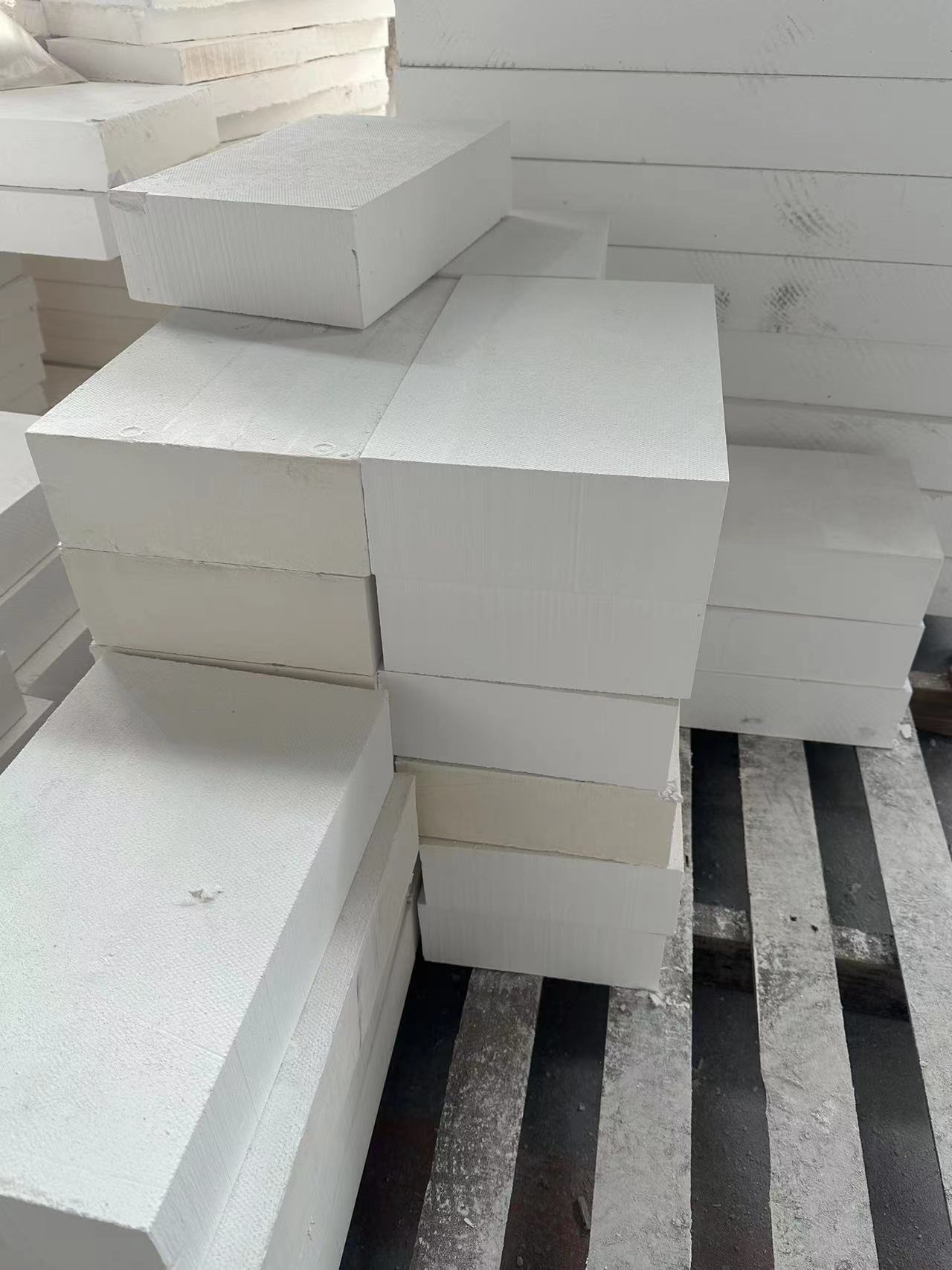
Given the significant quality variations in the market, when purchasing calcium silicate boards, focus on four key aspects: appearance, parameters, feel, and brand. High-quality boards have a flat and smooth surface, uniform color, and neat edges without chipping. The density is typically controlled between 1.2 and 1.5 g/cm³, with a water absorption rate of ≤10%, and a clearly marked A1 fire rating. The boards should feel fine and solid to the touch, and produce a crisp sound when tapped, without any hollow sound. It is recommended to prioritize reputable brands with complete test reports and compliance with national standards (GB/T 25998-2010) to ensure long-term safety and stability.
With their non-combustible, moisture-proof, durable, heat-insulating properties, and excellent processing adaptability, calcium silicate boards have become a highly cost-effective inorganic board option in the construction and industrial sectors. Whether in interior decoration substrates, fire-resistant partitions, or applications requiring higher levels of safety and stability, calcium silicate board demonstrates mature and reliable overall performance, making it a practical material that balances functionality, safety, and environmental protection.
Related Products
Inquiry Now
Please leave your e-mail and we will contact you as soon as possible
+86-15264257623 Jacky Liu
1003, Building 1,The Fortune Zone, No.17 Lian yungang Road,Qingdao,China
For more details, welcome to message us.
Copyright © 2025 Qingdao laurent new materials co.,ltd.All Rights Reserved.
 Powered by HiCheng
contact us
Your satisfaction is our top priority. Whether you have questions, need support, or want to share feedback, our dedicated team is ready to assist you every step of the way.