Main Types and Performance Analysis of Heavy Refractory Bricks for Powder Metallurgy Electric Furnace Linings
The rational selection of refractory materials for powder metallurgy electric furnace linings is a crucial foundation for ensuring stable equipment operation and improving thermal efficiency. In powder metallurgy electric furnace applications, the lining materials are mainly heavy refractory bricks. Common types include clay bricks, high-alumina bricks, corundum bricks, silica bricks, magnesia bricks and magnesia-alumina bricks, silicon carbide products, graphite refractory products, and alumina materials. Different materials have different characteristics in terms of refractoriness, thermal shock stability, and chemical corrosion resistance, making them suitable for different working conditions.
Clay Bricks: A widely used basic refractory material
Clay bricks are one of the commonly used basic heavy refractory bricks in powder metallurgy electric furnaces.
Clay bricks are made from refractory clay or kaolin as the main raw material, sintered at 1300-1400℃, with an Al₂O₃ content generally of 30%-40%. This type of material has good resistance to rapid cooling and heating, a refractoriness of 1610-1750℃, and a maximum service temperature of 1300-1400℃.
Typical applications of clay bricks in electric furnaces include furnace walls, furnace roofs, and furnace bottoms.
They can resist acidic slag corrosion, but have weak resistance to alkaline slag. They are susceptible to corrosion by CO and H₂ under controlled atmospheres, and also pose a corrosion risk to Fe-Cr-Al resistance wires, therefore they are not suitable as resistance wire support materials.
High-Alumina Bricks: Balancing refractoriness and corrosion resistance
High-alumina bricks refer to aluminum-silicate refractory materials with an Al₂O₃ content of more than 48%.
This type of material uses high-alumina bauxite as the raw material, with a firing temperature of approximately 1500℃, a refractoriness of 1750-1790℃, and a load softening start temperature of 1420-1500℃, and has good chemical corrosion resistance.
The re-firing shrinkage characteristics of high-alumina bricks need to be carefully considered when used in high-temperature furnace linings. Especially high-alumina bricks with an Al₂O₃ content of 60% to 75%, if the firing temperature is insufficient, are prone to shrinkage after long-term operation at high temperatures, which may cause the furnace roof to sag or the structure to deform.
Corundum Bricks: High-performance refractory materials suitable for high-temperature electric furnaces
Corundum bricks are high-grade refractory materials with an Al₂O₃ content greater than 98%.According to different production processes, corundum bricks are mainly divided into two types: fused corundum bricks and alumina corundum bricks, which have the characteristics of high refractoriness, good wear resistance, and excellent thermal shock stability.
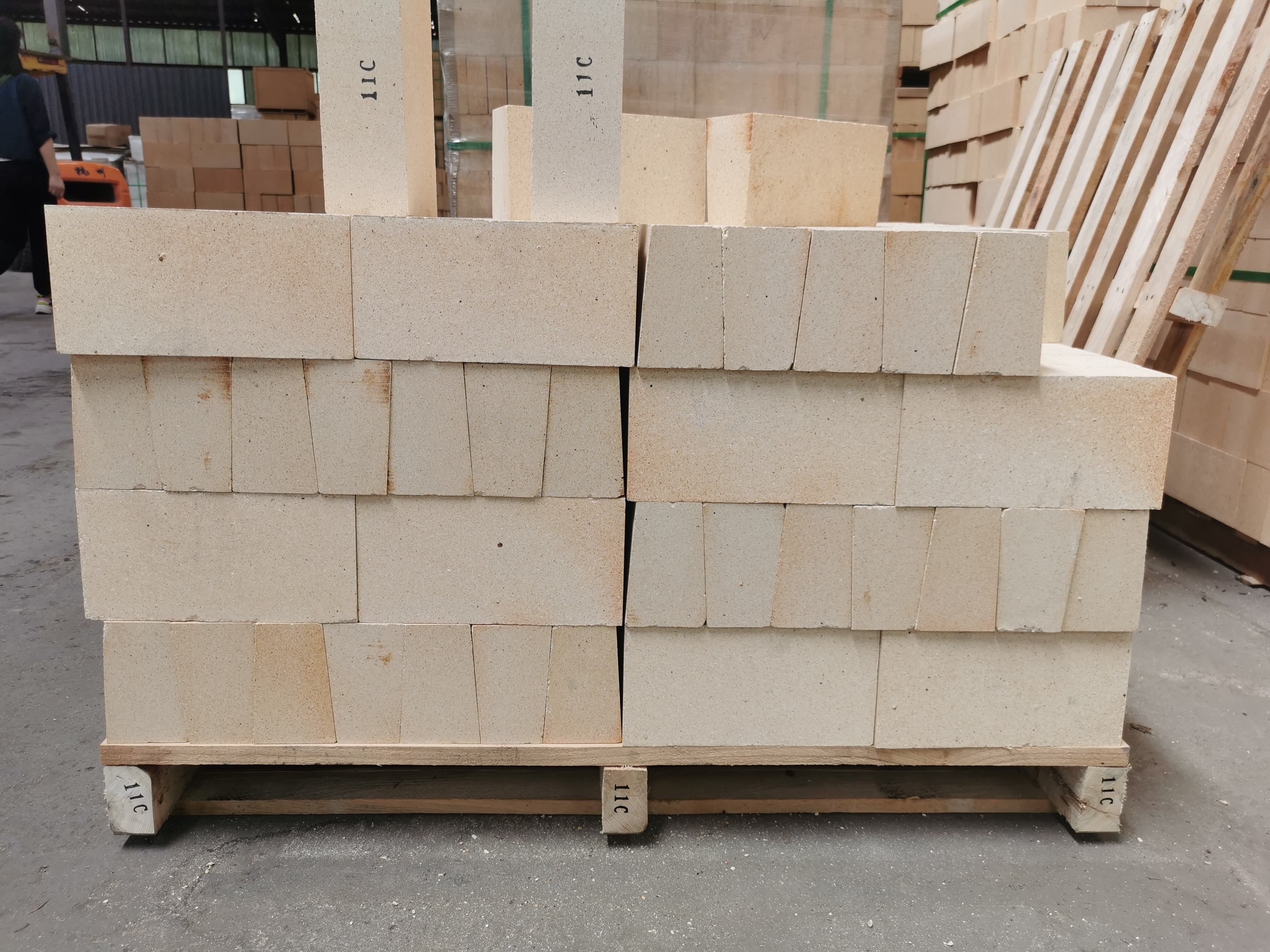
Fused Corundum Bricks
Fused corundum bricks are made from fused corundum sand as the main raw material.Their refractoriness can reach 1950℃, the load softening starting temperature is about 1770℃, the service temperature is 1800-1850℃, the density is 3.1-3.4 g/cm³, and the thermal shock resistance is about 50 cycles. They are suitable for parts such as furnace tubes of high-temperature molybdenum wire furnaces.
Alumina Corundum Bricks
Alumina corundum bricks are fired from high-purity industrial alumina as raw material.Their long-term service temperature is generally 1750-1850℃, and they are widely used in high-temperature electric furnace linings, furnace tubes, and high-temperature kilns.
Silica Bricks: Acidic refractory materials with high load softening temperature
Silica bricks are high-silica refractory materials made from quartzite as raw material.Their SiO₂ content is usually above 93%, the refractoriness is 1710-1730℃, and the load softening starting temperature is close to the refractoriness, which is its significant technical advantage.
Silica bricks have poor thermal shock resistance, and the operating conditions need to be strictly controlled during application.This type of material is suitable for continuously operating high-temperature furnaces, but not for intermittent electric furnaces.
Magnesia Bricks and Magnesia-Alumina Bricks: Typical alkaline refractory materials
Magnesia bricks are alkaline refractory bricks made from calcined magnesite as raw material.Their MgO content is above 80%, the refractoriness can reach 2000℃, and they have good corrosion resistance to alkaline slag and iron oxide, but their thermal shock resistance is poor. Magnesia-alumina bricks improve overall performance by incorporating a magnesium-aluminum spinel structure.
These materials, with 5%–10% Al₂O₃ added to the composition, have a refractoriness of up to 2135℃, and their thermal shock resistance and load softening temperature are superior to ordinary magnesia bricks, making them suitable for high-temperature and highly corrosive conditions.
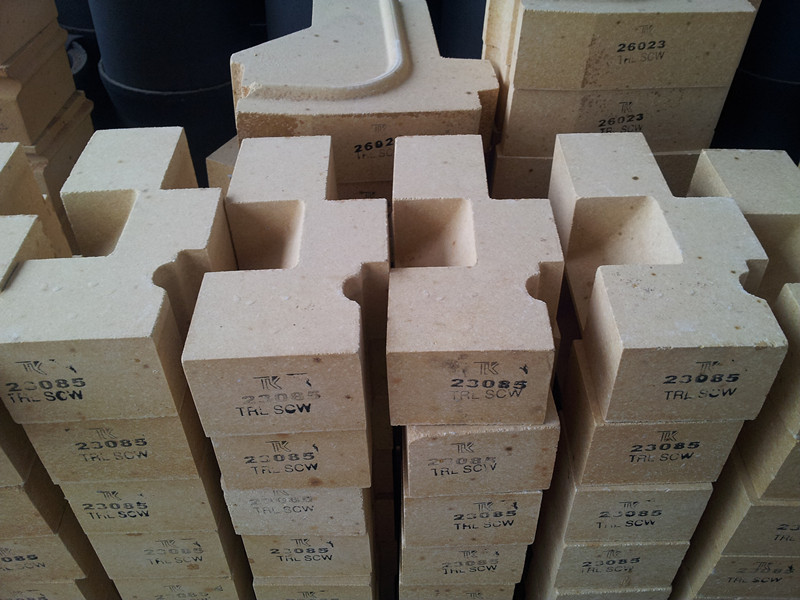
Silicon carbide refractory products: High thermal conductivity and high strength materials
Silicon carbide refractory products are made with silicon carbide as the main raw material.These materials possess high mechanical strength, excellent wear resistance, good resistance to rapid heating and cooling, and high thermal and electrical conductivity, with a load softening point of approximately 1600℃.
The oxidation resistance of silicon carbide materials at high temperatures needs to be carefully considered.
It is prone to oxidation above 1300℃ and may be corroded by alkaline slag. A dense structure helps to improve its oxidation resistance.
Graphite refractory products: Ultra-high refractoriness materials
Graphite refractory products are made with graphite as the main raw material.These materials have a refractoriness of up to 3000℃, a service temperature of approximately 2000℃, and a load softening start temperature of 1800–1900℃, making them suitable for extremely high-temperature conditions.
Alumina materials: Combining refractoriness and thermal insulation
Alumina materials simultaneously perform refractory and thermal insulation functions in powder metallurgy electric furnaces.They have a melting point of 2015℃ and exhibit good chemical stability in both oxidizing and strongly reducing atmospheres, and can be used under various atmospheric conditions below 1900℃.
Alumina materials are used in various forms in high-temperature electric furnaces.In addition to being used as furnace linings, they are also commonly used in electric furnace tubes, flame shields, crucibles, and filling insulation layers, playing a positive role in improving the thermal efficiency of the furnace.The rational selection of heavy-duty refractory bricks is an important guarantee for the safe and efficient operation of powder metallurgy electric furnaces.
In practical applications, the performance characteristics of different refractory materials should be comprehensively evaluated in combination with the furnace structure, operating temperature, furnace atmosphere, and chemical corrosion conditions to achieve long-term stable operation of the furnace lining structure.
Related Products
Inquiry Now
Please leave your e-mail and we will contact you as soon as possible
+86-15264257623 Jacky Liu
1003, Building 1,The Fortune Zone, No.17 Lian yungang Road,Qingdao,China
For more details, welcome to message us.
Copyright © 2025 Qingdao laurent new materials co.,ltd.All Rights Reserved.
 Powered by HiCheng
contact us
Your satisfaction is our top priority. Whether you have questions, need support, or want to share feedback, our dedicated team is ready to assist you every step of the way.