Ceramic Fiber Insulation Blanket: Engineering-Grade Thermal Insulation for High-Temperature Industrial Applications
In modern high-temperature industrial applications, thermal efficiency and structural stability are two of the most critical engineering requirements. Among various refractory insulation materials, ceramic fiber insulation blanket has become a widely adopted solution due to its combination of low thermal conductivity, lightweight structure, and excellent thermal stability under continuous thermal cycling.
Unlike traditional dense refractory bricks, ceramic fiber materials provide a flexible insulation approach that adapts to complex geometries while significantly reducing heat storage and energy loss. In furnace linings, kilns, boilers, and petrochemical heating equipment, ceramic fiber insulation blanket roll products are now standard materials for both new installations and retrofit projects.
Material Structure and Thermal Performance
Ceramic fiber insulation blanket is manufactured using high-purity alumina-silica raw materials processed through high-temperature melting, fiber spinning, and needle-punching techniques. This process forms a uniform three-dimensional fibrous structure that provides both mechanical integrity and thermal insulation performance.
The internal fiber network creates countless micro air pockets, which significantly reduce heat transfer through conduction and convection. As a result, ceramic fiber blanket insulation typically achieves extremely low thermal conductivity values across a wide temperature range.
Depending on the grade and density, ceramic fiber insulation blanket can reliably operate in continuous service environments ranging from approximately 1260°C to 1430°C. Higher-grade products are often used in severe thermal environments such as petrochemical heaters and industrial furnace hot-face linings.
Key performance characteristics include:
Low thermal conductivity and minimal heat storage
Excellent thermal shock resistance under rapid heating and cooling cycles
High flexibility for installation on irregular surfaces
Stable structural integrity under long-term high-temperature exposure
Reduced energy consumption in both batch and continuous furnaces
From an engineering perspective, the most important advantage of ceramic fiber insulation blanket is not only its insulation capability, but also its ability to maintain performance stability under repeated thermal cycling conditions.
Product Forms and On-Site Installation Advantages
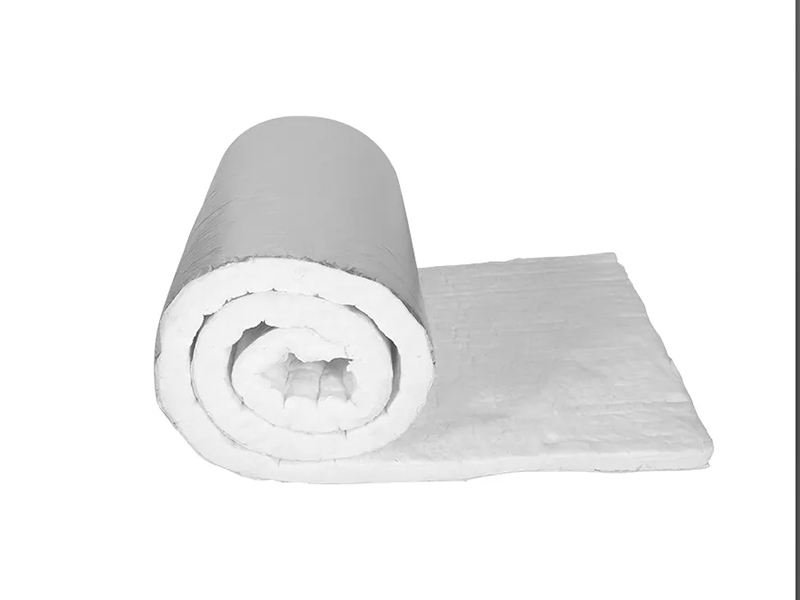
In practical engineering applications, ceramic fiber insulation blanket is typically supplied in roll form. The ceramic fiber insulation blanket roll format is specifically designed for construction efficiency, allowing technicians to cut and install material directly according to actual furnace or equipment dimensions.
Compared with rigid board systems, roll-based ceramic fiber insulation significantly reduces installation time and material waste. It also provides superior adaptability in areas with curved, uneven, or constrained geometries.
However, installation quality plays a decisive role in performance outcomes. Field engineering experience shows that improper installation can lead to thermal bridging, compression loss, or localized heat leakage.
Recommended installation practices include:
Cutting blankets with clean, sharp edges to maintain fiber integrity
Installing with controlled compression to avoid density loss
Using staggered overlapping joints to eliminate heat leakage paths
Applying mechanical anchoring or ceramic pins in vertical and overhead applications
Designing multi-layer insulation for high-temperature or high-load zones
In one industrial furnace retrofit case, insufficient anchoring caused partial detachment of the ceramic fiber insulation blanket roll after repeated thermal cycling. After redesigning the anchor grid and introducing a layered overlap structure, the insulation restored thermal stability and maintained consistent surface temperature performance over long-term operation.
Industrial Application Cases and Performance Results
1. Ceramic Kiln Wall Insulation Upgrade (Southeast Asia)
In a ceramic production facility, traditional refractory brick lining was replaced with a ceramic fiber insulation blanket solution. The installation utilized ceramic fiber insulation blanket roll materials for rapid on-site adaptation to kiln wall geometry.
After commissioning, the kiln demonstrated:
Approximately 25% reduction in heat loss
Faster start-up and cooling cycles
Improved temperature uniformity across the firing chamber
The transition to ceramic fiber blanket insulation also reduced structural load on the kiln shell, extending equipment service life.
2. Petrochemical Heater Insulation Application (Middle East)
In a high-temperature process heater, ceramic fiber insulation blanket was applied to internal ducting and curved flow sections where rigid insulation materials were difficult to install.
The flexibility of ceramic fiber insulation blanket roll allowed precise fitting around flanges, bends, and irregular surfaces. After 12 months of continuous operation, inspection results showed:
No significant fiber degradation
Stable thermal performance
Reduced external surface temperature, improving operator safety
This case demonstrated the long-term reliability of ceramic fiber insulation blanket in chemically aggressive and thermally demanding environments.
3. Boiler Retrofit Efficiency Optimization (Europe)
A boiler insulation retrofit project replaced aging refractory lining with a ceramic fiber insulation blanket solution. The use of ceramic fiber insulation blanket roll significantly reduced installation downtime by nearly 40%.
Post-upgrade performance improvements included:
Improved heat retention efficiency
Reduced fuel consumption under continuous operation
More stable wall temperature distribution
The ceramic fiber blanket insulation also simplified future maintenance and inspection procedures due to its modular installation structure.
Engineering Selection Considerations
Selecting the appropriate ceramic fiber insulation blanket requires a balance between thermal performance, mechanical strength, and installation conditions. Engineers typically evaluate the following parameters:
Temperature rating (classification temperature vs. operating temperature)
Density (impacting both insulation performance and mechanical strength)
Thickness (determined by required heat loss control level)
Installation environment (flat, curved, vertical, or overhead surfaces)
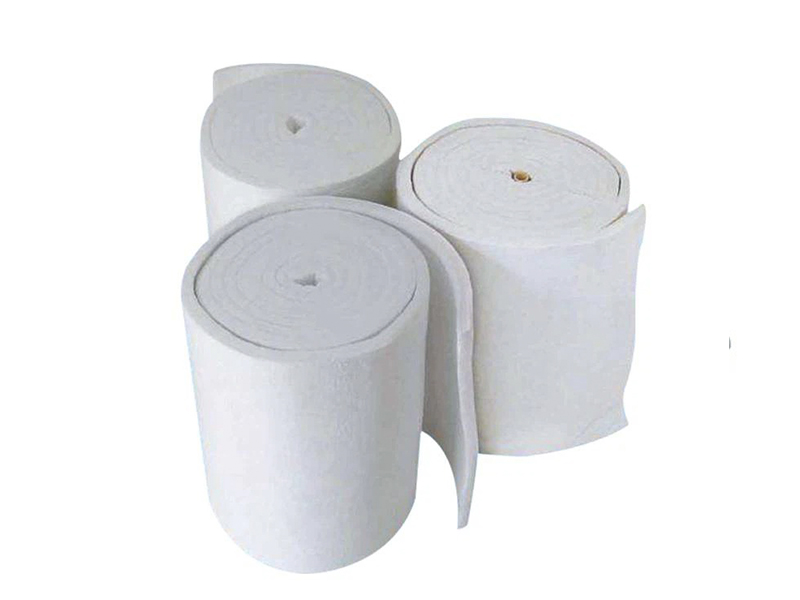
Higher-density ceramic fiber insulation blanket offers improved mechanical stability but may reduce flexibility. For large-area coverage or complex equipment geometries, ceramic fiber insulation blanket roll is generally preferred due to ease of handling and reduced labor requirements.
In multi-layer insulation designs, ceramic fiber blanket insulation is often combined with backing insulation boards or refractory castables to achieve an optimal balance between thermal efficiency and structural durability.
From both design and field application perspectives, ceramic fiber insulation blanket has proven to be one of the most effective high-temperature insulation materials in modern industrial applications. Its combination of low thermal conductivity, lightweight structure, and installation flexibility provides significant advantages over traditional refractory solutions.
With the availability of ceramic fiber insulation blanket roll formats, construction efficiency is greatly improved, while ceramic fiber blanket insulation delivers stable, long-term thermal performance across diverse industrial environments.
When properly selected and correctly installed, ceramic fiber insulation blanket not only reduces energy loss and operating costs but also enhances overall reliability and thermal performance in high-temperature industrial applications.
Related Products
Inquiry Now
Please leave your e-mail and we will contact you as soon as possible
+86-15264257623 Jacky Liu
1003, Building 1,The Fortune Zone, No.17 Lian yungang Road,Qingdao,China
For more details, welcome to message us.
Copyright © 2025 Qingdao laurent new materials co.,ltd.All Rights Reserved.
 Powered by HiCheng
contact us
Your satisfaction is our top priority. Whether you have questions, need support, or want to share feedback, our dedicated team is ready to assist you every step of the way.