Ceramic Fiber Textile: High Temperature Protection Solution with Ceramic Fiber Rope and Ceramic Fiber Cloth
In high-temperature industrial environments, insulation materials need to provide reliable heat resistance, flexibility, and durability under continuous operation. Ceramic fiber textile has become an important choice for thermal protection applications because it combines the excellent insulation performance of ceramic fiber with the flexibility of woven textile products.
Unlike rigid insulation materials, ceramic fiber textile can adapt to complex equipment structures and irregular surfaces. It is commonly used in furnace doors, expansion joints, high-temperature pipes, boiler insulation, welding protection, and heat-resistant sealing applications. Products such as ceramic fiber rope and ceramic fiber cloth help industries solve problems related to heat leakage, equipment protection, and worker safety in extreme temperature environments.
Through years of experience in industrial insulation projects, we have found that selecting the correct textile product is not only about temperature resistance. The working environment, mechanical stress, installation method, and exposure conditions all influence the final performance. A suitable ceramic fiber textile solution can reduce heat loss, improve equipment reliability, and extend maintenance intervals.
The Structure and Advantages of Ceramic Fiber Textile
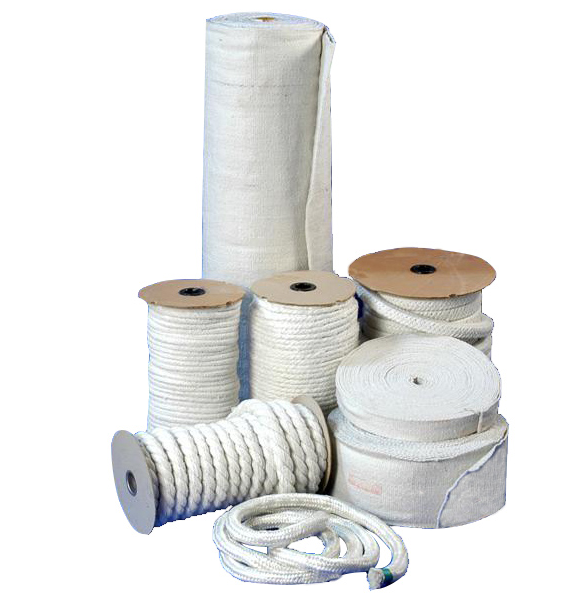
Ceramic fiber textile is manufactured by processing ceramic fiber yarns into different textile forms, including ropes, cloth, tapes, and braided products. The fibers are usually reinforced with glass fiber or alloy wire depending on application requirements, improving mechanical strength while maintaining excellent thermal insulation properties.
The unique fibrous structure allows ceramic fiber textile to provide several important advantages:
High temperature resistance
Ceramic fibers can withstand continuous exposure to high temperatures while maintaining insulation performance. This makes the material suitable for applications where conventional fabrics cannot survive.
Excellent thermal insulation
The low thermal conductivity of ceramic fibers helps reduce heat transfer. When used as sealing or protective material, it effectively minimizes heat loss from equipment surfaces.
Flexible installation
Compared with rigid insulation products, textile materials can be wrapped, tied, or shaped according to different equipment designs. This makes installation easier in narrow spaces and complex structures.
Good thermal shock resistance
Industrial equipment often experiences rapid temperature changes during startup and shutdown. Ceramic fiber textile can handle repeated heating and cooling cycles without cracking.
Lightweight and easy maintenance
The low weight reduces installation difficulty, while damaged sections can be replaced quickly without affecting large areas of insulation.
Applications of Ceramic Fiber Rope in Industrial Insulation
Ceramic fiber rope is one of the most commonly used forms of ceramic fiber textile. Its round or square braided structure provides excellent sealing performance, making it ideal for high-temperature gaps and joints.
In furnace applications, ceramic fiber rope is often installed around furnace doors, access openings, and expansion joints. These areas frequently experience heat leakage because of repeated opening and closing operations. Traditional sealing materials may become brittle after long-term exposure to high temperatures, while ceramic fiber rope maintains flexibility and insulation performance.
For example, a heat treatment furnace manufacturer experienced continuous heat loss around furnace doors due to damaged sealing materials. After replacing the original seals with ceramic fiber rope, the furnace achieved better sealing performance, reduced heat radiation around the working area, and extended the replacement cycle.
Ceramic fiber rope is also widely used in boilers, kilns, and exhaust equipment. In piping applications, it can be wrapped around high-temperature pipes to reduce surface temperature and protect nearby components from excessive heat exposure.
The Role of Ceramic Fiber Cloth in High Temperature Protection
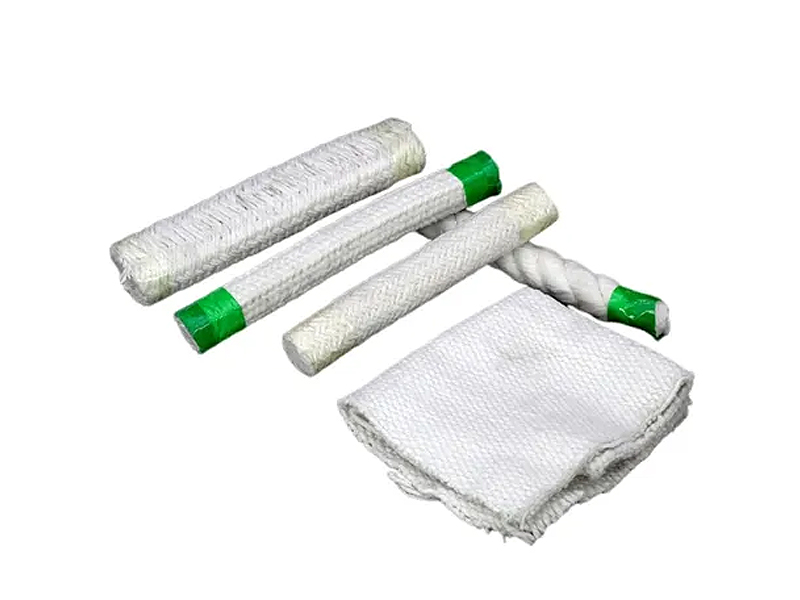
Ceramic fiber cloth provides a larger surface coverage area compared with rope products, making it suitable for thermal shielding and insulation wrapping.
In welding operations, ceramic fiber cloth is often used as a heat-resistant curtain or protective cover. It prevents sparks and high-temperature particles from damaging surrounding equipment while providing thermal protection for workers.
In industrial furnace maintenance, ceramic fiber cloth is commonly used as temporary insulation during repair work. Maintenance teams can wrap heated components quickly, reducing heat exposure during inspection and repair.
A practical example comes from a metal processing plant where workers needed to frequently inspect heated pipelines. The original protective material deteriorated quickly because of direct heat exposure. After introducing ceramic fiber cloth as a removable insulation cover, the maintenance process became safer and the replacement frequency was reduced.
How to Select the Right Ceramic Fiber Textile Product
Choosing the correct ceramic fiber textile requires understanding the actual working conditions.
Temperature rating is the first consideration. Different ceramic fiber grades are designed for different operating temperatures. Selecting a suitable grade ensures long-term stability and prevents premature degradation.
Reinforcement type is another important factor. Standard ceramic fiber textile is suitable for general insulation, while reinforced versions with glass fiber or alloy wire provide better mechanical strength for applications involving tension or movement.
The installation environment should also be evaluated. For sealing gaps, ceramic fiber rope is usually preferred because of its compression and sealing ability. For surface protection or wrapping applications, ceramic fiber cloth provides better coverage.
Chemical exposure should not be ignored. Areas containing corrosive gases or special industrial atmospheres may require higher purity ceramic fiber materials to maintain performance.
Common Problems During Ceramic Fiber Textile Application
Although ceramic fiber textile has excellent performance, incorrect selection or installation may reduce its service life.
One common issue is mechanical damage caused by excessive friction. For example, ceramic fiber cloth installed on frequently moving equipment may require additional reinforcement to prevent wear.
Another issue is selecting a product with insufficient temperature capability. In some furnace applications, users choose materials based only on short-term temperature exposure, but continuous operation at high temperatures requires a more suitable grade.
Installation method also affects performance. Ceramic fiber rope should be installed with proper compression to ensure sealing effectiveness. Excessive tightening may damage the fiber structure, while loose installation may create heat leakage paths.
Professional application experience shows that insulation performance depends on both material quality and correct usage conditions.
Why Choose Ceramic Fiber Textile for High Temperature Applications
Modern industries require insulation materials that are efficient, reliable, and easy to maintain. Ceramic fiber textile provides a practical solution by combining high temperature resistance with excellent flexibility.
Whether used as a sealing material, protective cover, or insulation layer, products such as ceramic fiber rope and ceramic fiber cloth help improve equipment efficiency and reduce heat-related problems.
For industrial users, choosing the right ceramic fiber textile supplier is important because technical support and application experience directly influence the final result. A professional supplier should understand operating temperatures, installation requirements, and specific industrial challenges before recommending suitable products.
With its outstanding thermal performance, flexible design, and wide range of applications, ceramic fiber textile continues to play an important role in high-temperature industries. Proper selection and installation can help companies achieve better insulation performance, safer working conditions, and longer equipment service life.
Related Products
Inquiry Now
Please leave your e-mail and we will contact you as soon as possible
+86-15264257623 Jacky Liu
1003, Building 1,The Fortune Zone, No.17 Lian yungang Road,Qingdao,China
For more details, welcome to message us.
Copyright © 2025 Qingdao laurent new materials co.,ltd.All Rights Reserved.
 Powered by HiCheng
contact us
Your satisfaction is our top priority. Whether you have questions, need support, or want to share feedback, our dedicated team is ready to assist you every step of the way.