Ceramic Fiber Vacuum Shape: Customized High Temperature Insulation Solution for Industrial Applications
Ceramic fiber vacuum shape is a customized high-temperature insulation component manufactured through a vacuum forming process. It is designed for industrial equipment that requires accurate dimensions, excellent thermal insulation performance, and stable operation under extreme temperature conditions.
Compared with traditional ceramic fiber boards and blankets, vacuum formed ceramic fiber products can be produced into various shapes according to equipment drawings and customer requirements. This customized manufacturing process improves fitting accuracy, reduces installation gaps, and helps maintain consistent insulation performance during long-term operation.
Ceramic fiber vacuum shapes are widely used in industrial furnaces, ceramic kilns, heat treatment equipment, burner areas, furnace doors, and other high-temperature applications. They provide reliable insulation performance in areas where standard insulation materials are difficult to install or cannot meet specific design requirements.
For industrial users, selecting suitable high temperature insulation materials is important for reducing heat loss, improving energy efficiency, and extending equipment service life. A properly designed ceramic fiber component can reduce heat radiation, improve temperature stability, and lower maintenance frequency.
Experienced manufacturers focus on raw material selection, fiber distribution, density control, and forming accuracy to ensure reliable product performance in practical applications.
The production quality of a ceramic fiber vacuum shape depends on advanced manufacturing technology and strict quality control.
High-purity ceramic fibers are mixed with appropriate binders and additives to create a uniform slurry. The material is then formed through vacuum filtration using customized molds based on the required product shape.
The main manufacturing process includes:
Ceramic fiber preparation and mixing
Customized mold design
Vacuum forming
Controlled drying
Surface treatment if required
Size inspection and quality testing
The vacuum forming process allows vacuum formed ceramic fiber products to maintain a uniform fiber structure. This structure provides stable thermal insulation performance and improves resistance to thermal stress during repeated heating and cooling cycles.
Density selection is also important for different applications. Lower-density products provide better insulation efficiency and lower heat storage, while higher-density products offer improved mechanical strength for areas exposed to vibration, airflow, or mechanical impact.
For example, burner blocks installed in industrial furnaces usually face direct flame exposure and frequent temperature changes. If the insulation material has insufficient strength, cracks may develop around the burner opening. Selecting the correct density and shape design helps improve service life and reduce replacement frequency.
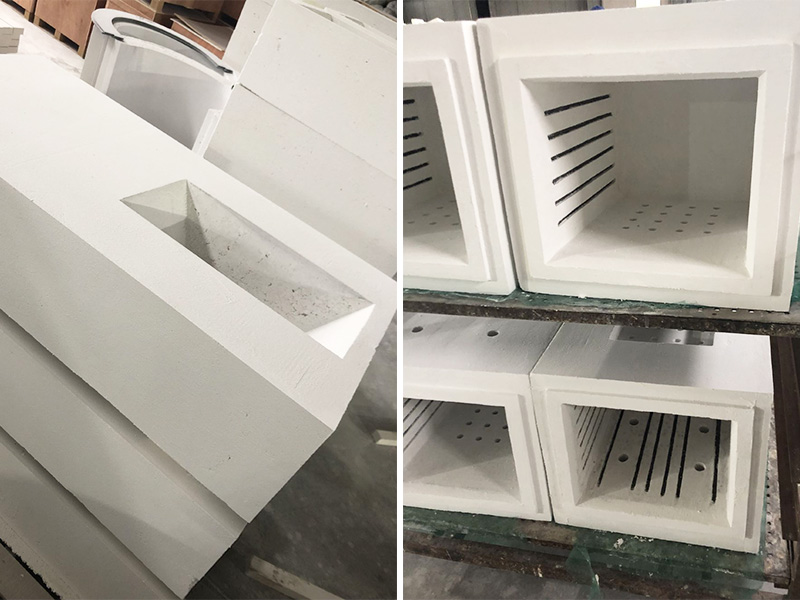
Ceramic fiber vacuum shape products are designed for demanding high-temperature environments. They maintain stable physical properties under continuous heating conditions and provide effective insulation performance.
Depending on application requirements, ceramic fiber materials can be manufactured in different temperature grades, including standard, high-purity, and high-alumina types.
Common applications include:
Industrial furnace insulation
Burner block components
Ceramic kiln insulation parts
Heat treatment equipment
High-temperature sealing applications
The lightweight structure reduces heat storage and allows equipment to reach operating temperatures more efficiently.
A suitable high temperature insulation material helps reduce heat transfer and improve energy efficiency in industrial heating processes.
Ceramic fiber vacuum shapes have a lightweight porous structure with low thermal conductivity. Compared with dense refractory materials, they require less energy during heating and cooling cycles because they store less heat.
In furnace renovation projects, engineers often replace damaged or outdated insulation parts with customized ceramic fiber components. This improvement can reduce surface temperature, decrease heat loss, and create more stable operating conditions.
For example, a heat treatment factory experienced increased heat loss around furnace inspection openings because the original insulation parts had poor fitting accuracy. Small gaps between components caused heat leakage during operation. After installing customized vacuum formed ceramic fiber parts, the furnace achieved better heat retention and improved temperature stability.
One of the major advantages of vacuum formed ceramic fiber is its ability to meet special design requirements.
Industrial equipment often contains complex structures, including:
Burner openings
Furnace door insulation areas
Heating element supports
Special-shaped insulation components
Standard insulation boards usually require additional cutting during installation. Incorrect cutting may create gaps and reduce insulation performance.
Customized ceramic fiber vacuum shapes are manufactured according to technical drawings, ensuring better fitting accuracy and easier installation. This feature is especially useful for equipment manufacturers and maintenance companies that require replacement parts with precise dimensions.
Industrial heating equipment often experiences rapid temperature changes during startup, shutdown, and production adjustments.
Materials with poor thermal shock resistance may crack, shrink, or lose strength after repeated temperature cycles. The flexible fiber structure of ceramic fiber products helps absorb thermal stress and maintain structural stability.
This makes ceramic fiber vacuum shapes suitable for batch furnaces, intermittent heating equipment, and applications with frequent temperature fluctuations.
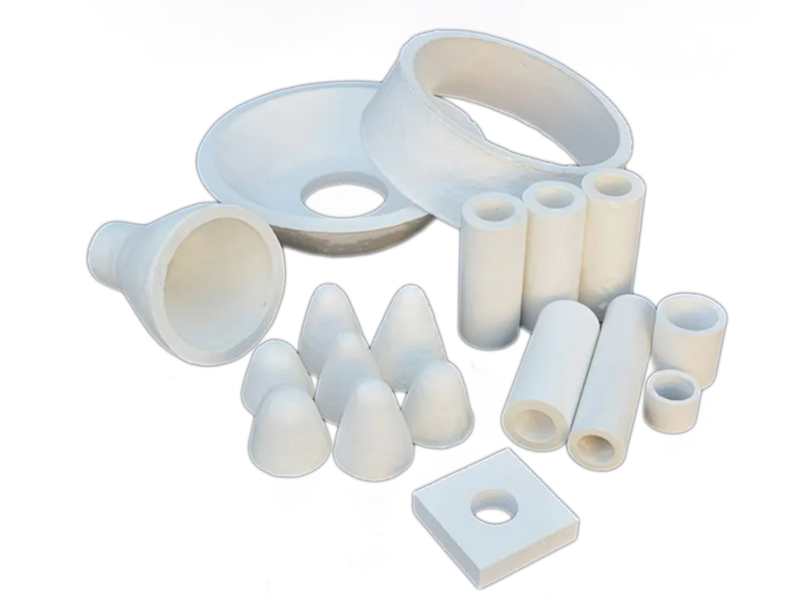
Many metal processing and heat treatment companies use ceramic fiber vacuum shape components around furnace doors, burner areas, and inspection openings.
A heat treatment manufacturer experienced excessive heat loss after traditional insulation components developed cracks during long-term operation. The damaged insulation affected temperature stability and increased energy consumption.
After evaluating the operating temperature and installation conditions, engineers selected customized vacuum formed ceramic fiber components. The improved insulation structure provided better fitting performance, reduced heat leakage, and improved furnace temperature control.
This example shows that proper insulation design is essential for achieving long-term performance.
Ceramic production requires accurate temperature control during firing processes. Uneven temperature distribution can affect product quality and increase energy consumption.
A ceramic manufacturer improved kiln insulation by installing ceramic fiber vacuum shapes around critical heating areas. The customized components reduced heat radiation from exposed sections and helped maintain a more stable firing environment.
This application demonstrates that selecting suitable high temperature insulation materials can improve production consistency and reduce operating costs.
Choosing an experienced supplier is important because product quality directly affects equipment performance and maintenance costs.
A professional ceramic fiber vacuum shape manufacturer should provide:
Customized manufacturing according to drawings
Stable product density
Suitable temperature grades
Technical support for applications
Quality inspection records
Before selecting vacuum formed ceramic fiber products, customers should evaluate:
Working temperature
Installation environment
Mechanical requirements
Heating cycle frequency
Expected service life
The right insulation product should be selected according to actual operating conditions instead of focusing only on initial purchase cost.
| Item | Specification |
| Material | Ceramic Fiber |
| Density | 180–500 kg/m³ |
| Working Temperature | 1000–1600°C |
| Thermal Conductivity | 0.05–0.20 W/m·K |
| Shape | Customized |
| Manufacturing Process | Vacuum Forming |
| Applications | Furnace, Kiln, Burner, Heat Treatment Equipment |
Ceramic fiber vacuum shapes provide a practical insulation solution for industrial applications requiring customized design, high-temperature resistance, and long service life.
Through advanced vacuum forming technology, these products achieve accurate dimensions, uniform fiber distribution, and reliable thermal insulation performance.
For high-temperature equipment, choosing the right vacuum formed ceramic fiber can help reduce heat loss, improve energy efficiency, and extend equipment service life. With professional manufacturing capability and application experience, ceramic fiber vacuum shapes provide dependable performance for furnaces, kilns, and thermal processing equipment.
Related Products
Inquiry Now
Please leave your e-mail and we will contact you as soon as possible
+86-15264257623 Jacky Liu
1003, Building 1,The Fortune Zone, No.17 Lian yungang Road,Qingdao,China
For more details, welcome to message us.
Copyright © 2025 Qingdao laurent new materials co.,ltd.All Rights Reserved.
 Powered by HiCheng
contact us
Your satisfaction is our top priority. Whether you have questions, need support, or want to share feedback, our dedicated team is ready to assist you every step of the way.