Ceramic Fiber Board: Reliable Insulation Material for High-Temperature Applications
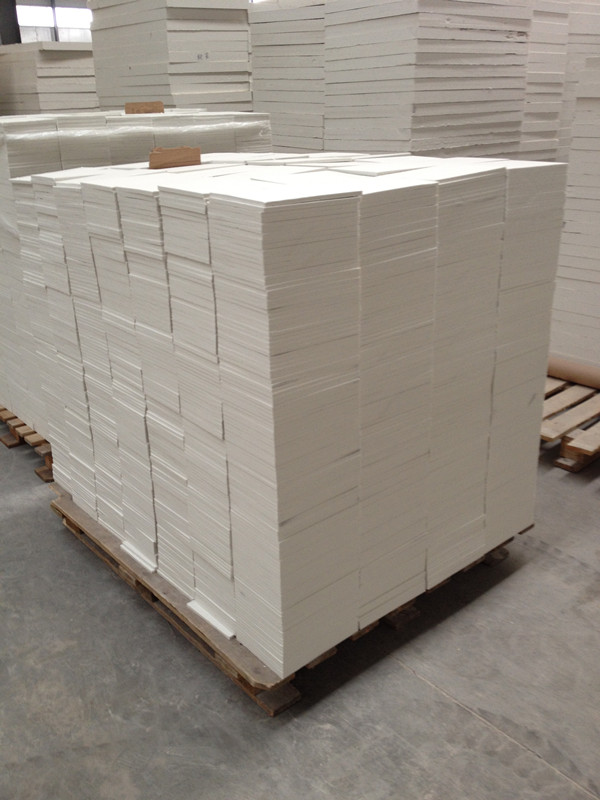
Ceramic fiber board has become a widely adopted solution in modern industrial thermal systems, particularly where weight reduction, thermal efficiency, and installation flexibility are required. As a rigid form of fibrous insulation, Ceramic fiber board is manufactured from high-purity fibres bonded under controlled conditions to create a uniform, low-density structure with excellent insulating performance.
In practical terms, Ceramic fiber board is commonly used as an insulation material for high-temperature applications, including furnace linings, kiln back-up insulation, and thermal barriers in petrochemical and metallurgical processes. Compared with traditional dense refractory materials, it significantly reduces heat storage while maintaining reliable thermal resistance.
From a materials engineering perspective, aluminium silicate ceramic fiber board is composed primarily of alumina (Al₂O₃) and silica (SiO₂), forming a stable structure that can withstand temperatures ranging from 1000°C to 1430°C depending on grade. Its low thermal conductivity, typically between 0.08–0.18 W/m·K, makes it highly effective as an insulation material for high-temperature applications where energy efficiency is critical.
Unlike loose ceramic fiber blankets, Ceramic fiber board offers structural rigidity. This allows it to be machined, cut, and installed with precision, making it suitable for applications where dimensional stability and flat surfaces are required. Many experienced engineers prefer aluminium silicate ceramic fiber board in furnace door linings and burner blocks due to its ability to maintain shape under repeated thermal cycling.
Practical Installation Experience
Based on field installation experience, the performance of Ceramic fiber board depends heavily on proper handling and fitting techniques.
First, accurate cutting is essential. While Ceramic fiber board is relatively easy to machine, rough edges or oversized gaps can lead to heat leakage. Skilled installers typically use specialized cutting tools to achieve tight tolerances, especially when working in confined furnace geometries.
Second, joint design must be carefully considered. In high-temperature zones, joints between aluminium silicate ceramic fiber board panels should be staggered rather than aligned. This reduces direct heat pathways and improves overall insulation efficiency.
Third, fastening methods should avoid excessive compression. Unlike dense refractories, Ceramic fiber board can lose insulating performance if compressed too tightly. Mechanical anchors should be adjusted to hold the board securely without deforming its structure.
In applications where insulation material for high-temperature applications is layered, Ceramic fiber board is often combined with dense refractory or castable materials. This layered system allows the hot face to resist abrasion while the fiber board provides efficient thermal insulation behind it.
Real Industrial Case Study
A steel heat-treatment furnace faced high energy consumption and uneven temperature distribution due to outdated insulation. The original lining consisted of dense refractory bricks, which stored excessive heat and caused slow thermal response.
The solution involved replacing part of the lining with Ceramic fiber board, specifically aluminium silicate ceramic fiber board panels installed as a backup insulation layer. During installation, engineers ensured proper joint staggering and controlled fastening pressure.
After implementation, the results were measurable:
Furnace heat-up time reduced by approximately 25%
Energy consumption decreased by nearly 18%
Temperature uniformity improved, reducing product defects
Maintenance intervals extended due to reduced thermal stress
This case clearly demonstrates how Ceramic fiber board, when used as an insulation material for high-temperature applications, can significantly enhance operational efficiency.
Common Mistakes and Field Observations
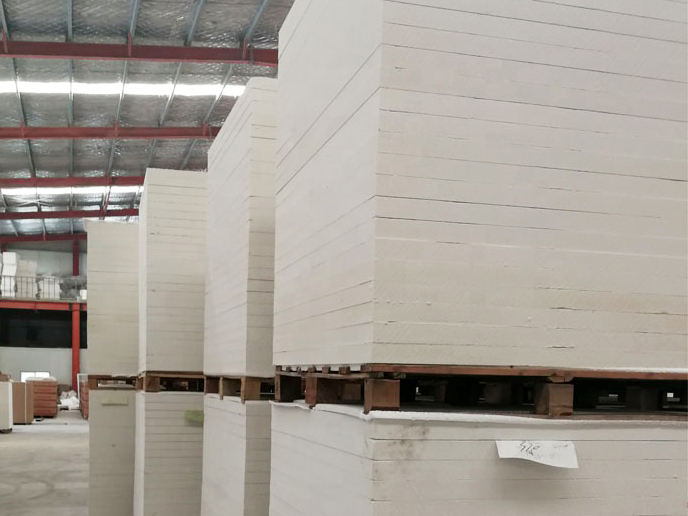
Despite its advantages, several common issues are observed in the use of Ceramic fiber board:
Over-compression during installation, leading to reduced insulation performance
Improper joint alignment, causing heat leakage
Using the board as a direct hot-face material in high-wear zones
Rapid heating without gradual conditioning, resulting in surface cracking
One notable field issue involved cracking caused by direct flame exposure. While aluminium silicate ceramic fiber board has excellent thermal resistance, it is not designed to withstand prolonged mechanical erosion or flame impingement without protective layers.
Industry Trends and Applications
With increasing demand for energy-efficient systems, Ceramic fiber board is gaining wider adoption as an advanced insulation material for high-temperature applications. It is now commonly used in modular furnace designs, lightweight kiln linings, and prefabricated insulation systems.
Modern manufacturing improvements have enhanced the density uniformity and strength of aluminium silicate ceramic fiber board, allowing it to perform reliably even under demanding industrial conditions. Engineers are increasingly integrating it with other insulation materials to create hybrid systems that optimize both durability and thermal efficiency.
Ceramic fiber board is a versatile and high-performance solution for industrial insulation. Its low thermal conductivity, lightweight structure, and ease of installation make it an ideal insulation material for high-temperature applications. From real-world engineering experience, the key to maximizing its performance lies in proper installation, correct application design, and understanding its limitations.
When applied correctly, Ceramic fiber board and aluminium silicate ceramic fiber board provide significant advantages in energy savings, operational stability, and long-term reliability, making them a trusted choice for engineers working in demanding high-temperature environments.
Related Products
Inquiry Now
Please leave your e-mail and we will contact you as soon as possible
+86-15264257623 Jacky Liu
1003, Building 1,The Fortune Zone, No.17 Lian yungang Road,Qingdao,China
For more details, welcome to message us.
Copyright © 2025 Qingdao laurent new materials co.,ltd.All Rights Reserved.
 Powered by HiCheng
contact us
Your satisfaction is our top priority. Whether you have questions, need support, or want to share feedback, our dedicated team is ready to assist you every step of the way.