Why Low Cement Castable Is Better for Some High Temperature Furnace Linings
When an industrial furnace runs at high heat for a long time, the lining choice should not depend only on the max temperature. In many jobs, the amount of cement and water in the castable affects pore count, strength, corrosion resistance, and long-term stability.
This is why low cement castable is often picked for hard furnace linings. The key gain is not only that it uses less cement. The real benefit comes from a denser refractory structure with less extra liquid phase at high heat.
Conventional refractory castable often contains a high amount of calcium-rich cement. The cement gives bond and early strength, but too much also adds more calcium phases to the mix.
At high heat, these phases can form liquid phases that lower hot strength and weaken resistance to corrosion and shape change. Studies on castable mixes show that less cement can improve high-temperature strength as well as wear and corrosion resistance.
A typical low-cement mix uses graded particle sizes and fine powders to fill small voids between larger aggregate particles. This lets the needed ease of placement be reached with far less water.
That difference matters after the lining is installed.
One of the most common problems in castable work is adding water just to make the mix easier to place.
This may seem harmless during install, but extra water leaves more pores after drying. A published study gives a useful example: a fireclay-based low-cement castable reached a cold crushing strength of about 110 MPa with 4--5 wt.% water. When water rose to 6 wt.%, strength fell to about 80 MPa, and at 7 wt.% it dropped to around 50 MPa.
These numbers are not a universal spec for every mix, but they do show an important point: more mix water does not mean better install performance.
For this reason, the water added should be measured, not guessed by the operator.
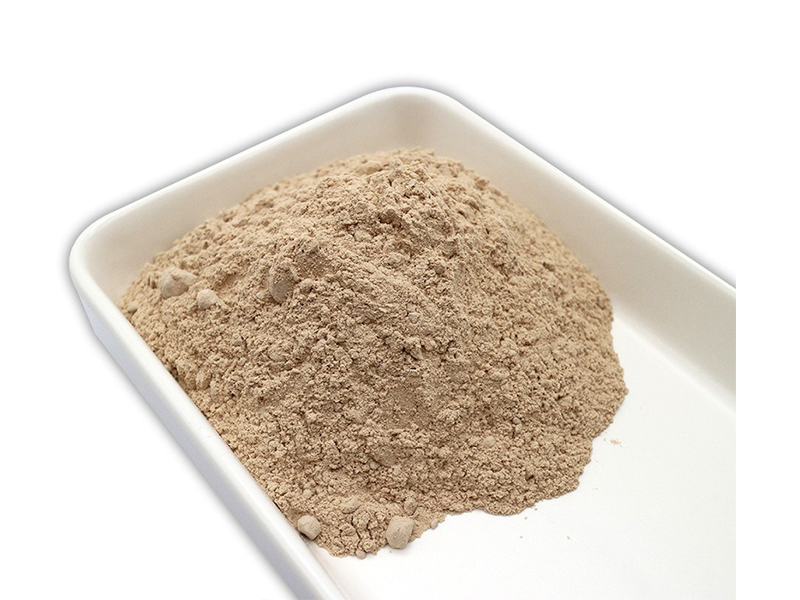
Think about a high-temperature furnace where the lining faces nonstop heating, material impact, and repeated thermal cycling.
A standard castable may seem fine at first. During the first few production cycles, the lining may show good surface strength. But after repeated heating and cooling, areas with more pore space can be more open to dust, molten material, alkali compounds, or corrosive gas.
If the same area also sees impact, wear can speed up.
This is where the choice of low cement castable becomes more useful. Its denser structure can cut paths for entry and offer better resistance to mechanical and chemical attack.
For zones with strong material movement or impact, an abrasion resistant castable may be a better fit than simply choosing more cement. The choice should follow the real failure mode, not the broad label high temperature.
Low cement does not mean every furnace should use the same mix.
During installation, low cement mixes can be less forgiving of wrong water, poor mixing, weak vibration, or uneven placement. Research has also shown that less cement can cut flow, so proper placement matters more.
The drying stage is just as important. Castables hold water after install, and fast heating before enough drying can build internal pressure and cause serious damage. Published research notes that refractory castables must be dried with care before high-temperature use to avoid explosive spalling.
In practice, the material spec and the install method should be treated as one issue.
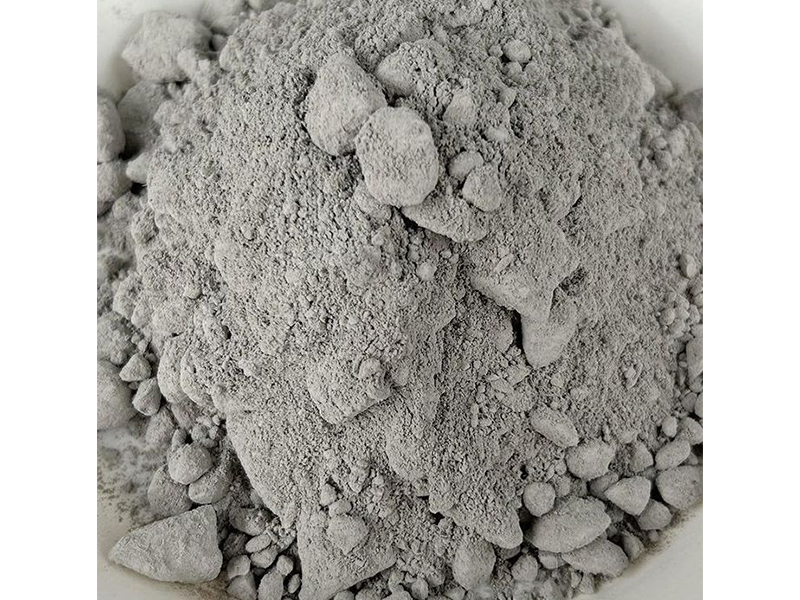
Before selecting a low cement castable, we usually suggest checking four things:
First, temperature. Judge the lining by the real continuous temperature and the swing range, not only by the furnace's short-term peak.
Second, mechanical wear. If the lining is hit or worn by moving material all the time, an abrasion resistant castable may be more suitable.
Third, chemical exposure. Slag, alkali vapors, dust, and other harsh substances can enter a porous lining and speed wear.
Fourth, install conditions. If the contractor cannot control water, mix time, vibration, curing, and drying, even a high-performance castable may not reach its service life.
The most useful lesson from furnace maintenance is that refractory failure rarely has one cause.
If a lining wears fast, just raising strength may not fix the problem. If cracks show up after heating, changing the material without reviewing water addition and drying may lead to the same result again.
For high-temperature furnace linings, low cement castable is useful because its mix can give low porosity, good hot strength, and better resistance to corrosion and wear when it is designed and installed well. But it should be chosen for the real furnace conditions.
Laurel looks at castable selection from the operating side. Temperature, mechanical load, material contact, thermal cycling, lining thickness, and install conditions are reviewed together. The goal is not to choose the most expensive refractory castable, but to pick a mix that addresses the real cause of lining wear.
Contact the Laurel refractory team to review your furnace conditions and choose the right castable for longer service life.
For furnaces with severe wear, an abrasion resistant castable may be needed. For high-temperature areas where corrosion, thermal cycling, and shape stability are the main concerns, a well-designed low-cement mix can offer a better balance of performance and service life.
Related Products
Inquiry Now
Please leave your e-mail and we will contact you as soon as possible
+86-15264257623 Jacky Liu
1003, Building 1,The Fortune Zone, No.17 Lian yungang Road,Qingdao,China
For more details, welcome to message us.
Copyright © 2025 Qingdao laurent new materials co.,ltd.All Rights Reserved.
 Powered by HiCheng
contact us
Your satisfaction is our top priority. Whether you have questions, need support, or want to share feedback, our dedicated team is ready to assist you every step of the way.