When Buying Refractory Bricks, Which Matters More: Refractoriness or Refractoriness Under Load (RUL)?
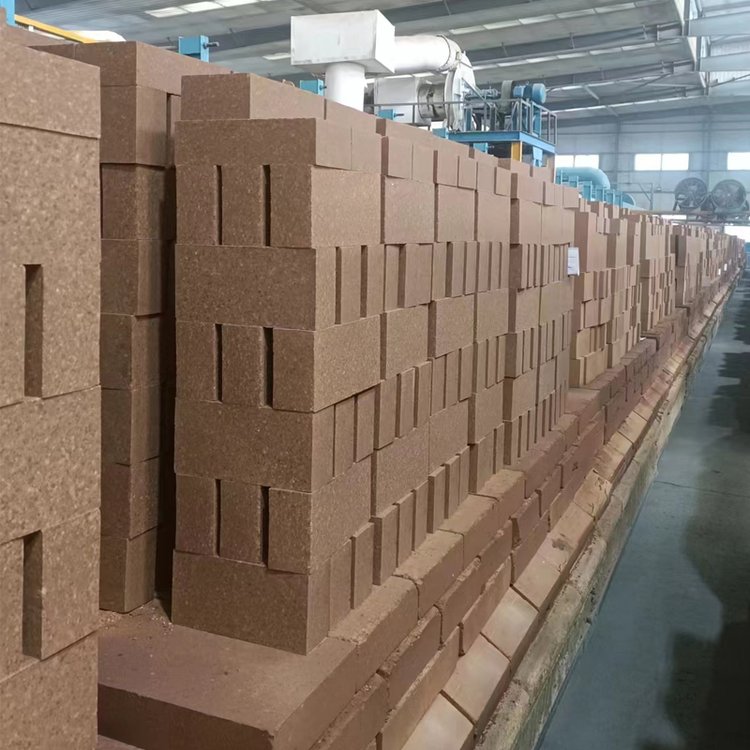
When purchasing refractory bricks, buyers often check various performance indicators such as refractoriness, compressive strength, flexural strength, bulk density, thermal conductivity, thermal expansion coefficient, refractoriness under load (RUL), dimensions, shape, and chemical composition.
Among these indicators, refractoriness and RUL both involve temperature, which often leads to confusion: What is the difference between them? Which one is more important in actual applications?
This article explains both concepts in a clearer, simplified way and helps you understand which indicator to prioritize in different working conditions.
1.What Is Refractoriness?
Refractoriness refers to the temperature at which a refractory material can resist melting or softening without external load. It shows the basic ability of the material to withstand high temperatures.
Key Characteristics of Refractoriness
Refractory materials are made from multiple minerals, so they do not melt at a single fixed point but within a temperature range.
Higher refractoriness means greater thermal stability in a pure high-temperature environment.
The chemical composition, mineral phases, impurities, and bonding conditions all directly affect refractoriness.
Higher purity and fewer fluxing impurities → higher refractoriness.
Refractoriness ≠ Maximum Service Temperature
In real industrial furnaces, materials face not only high temperature but also:
mechanical load
chemical attack
thermal shock
abrasion
Therefore, refractoriness alone cannot determine the maximum use temperature.
Basic Standard
International standards classify inorganic non-metallic materials with refractoriness ≥ 1500°C as refractory materials.
2.What Is Refractoriness Under Load (RUL)?
Refractoriness under load (RUL) is the temperature at which a refractory material begins to deform under a specified mechanical load as temperature rises.
It evaluates the material’s ability to maintain structural integrity under combined conditions of high temperature and pressure.
Factors That Influence RUL
Types and stability of main/secondary crystal phases and matrix.
Amount and viscosity of liquid phase generated at high temperatures.
Microstructure and porosity:
Lower porosity and higher density → higher RUL.
Manufacturing factors: raw material purity, particle grading, forming pressure, firing temperature, and sintering quality.
How RUL Is Measured
A cylindrical sample is heated at a controlled rate under a constant load (e.g., 0.2 MPa for dense bricks).
The temperature at which the sample reaches 0.5%, 1%, 2%, and 5% deformation is recorded as T₀.₅, T₁, T₂, and T₅.
3.Application Scenarios: Which Indicator Matters More?
When Refractoriness Is More Important
Used in environments where:
Temperature is high
Mechanical load is minimal
Typical cases:
Inner linings of laboratory furnaces
High-temperature zones without structural load
Here, the main concern is simply whether the material can withstand the heat.
When RUL Is More Important
Used in environments where materials face:
High temperature
Continuous mechanical load or pressure
Typical applications:
Blast furnace and hot blast stove (steel industry)
Cement rotary kiln (burning zone, transition zone)
Glass furnace regenerator chambers
Any area that supports furnace burden or structural weight
If RUL is too low, the refractory brick will soften and deform under load, leading to lining collapse or structural failure.
In most industrial furnaces, RUL is more critical than refractoriness.
4.A Simple and Practical Conclusion
If you only want to know whether the material can resist high temperature → check the refractoriness.
If the material must maintain strength and shape while carrying load in high temperature → RUL is the key indicator.
In real industrial applications, especially in metallurgy, cement, and glass industries, RUL is often the more decisive performance index.
Related Products
Inquiry Now
Please leave your e-mail and we will contact you as soon as possible
+86-15264257623 Jacky Liu
1003, Building 1,The Fortune Zone, No.17 Lian yungang Road,Qingdao,China
For more details, welcome to message us.
Copyright © 2025 Qingdao laurent new materials co.,ltd.All Rights Reserved.
 Powered by HiCheng
contact us
Your satisfaction is our top priority. Whether you have questions, need support, or want to share feedback, our dedicated team is ready to assist you every step of the way.