Analysis of Common Problems in Refractory Castables: Detailed Explanation of the Causes of Efflorescence, Powdering, Shrinkage, and Bleeding
Refractory castable is a widely used type of unshaped refractory material, belonging to the hydraulic refractory material system. Castables typically consist of refractory aggregates, refractory powders, binders, and various additives. During construction, water is added and mixed, then poured into molds and compacted using a vibrator. They are widely used in high-temperature industrial furnace linings in metallurgy, building materials, power generation, and chemical industries.
In actual construction, if some refractory castables are not properly dried in a furnace after demolding and are left in the air for a period of time, the surface is prone to developing a "white fuzz" or "white frost," followed by gradual sanding and powdering, with noticeable sand falling off when touched. This phenomenon is commonly referred to as efflorescence in the industry.
The fundamental reason for efflorescence is related to the alkaline substances contained in the raw materials of the castable. The aggregates, powders, calcium aluminate cement, and additives such as dispersants, water reducers, and accelerators often contain small amounts of alkali metal oxides, such as Na₂O, K₂O, and Fe₂O₃. After the castable is mixed with water, some of these alkaline substances dissolve in the water and migrate to the surface with the free water. When these alkaline components reach the surface, they react with carbon dioxide in the air to form carbonates, thus forming white deposits on the surface of the castable, which look like "white fuzz" or "white frost."
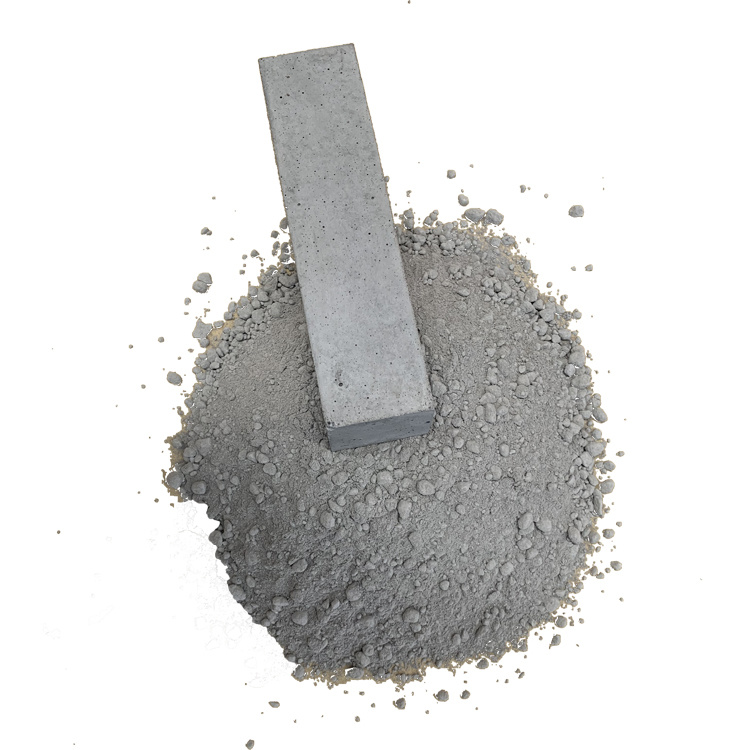
It should be noted that efflorescence generally does not significantly affect the overall refractory performance of the castable, but it can cause surface looseness and roughness, affecting the appearance quality, and in severe cases, may lead to surface powdering. For aluminate-based refractory castables, surface powdering usually has two causes: one is surface looseness caused by the migration of alkaline impurities, and the other is the carbonation reaction of cement hydration products in the air. These reactions are prone to recurring in humid environments; therefore, proper curing and timely furnace drying are crucial.
Refractory castables may also experience shrinkage problems during use, especially shrinkage during the low-temperature stage. If the rate of change in the castable lining is too large, it can damage the furnace lining structure, leading to cracks and even spalling, thus shortening its service life. Castable shrinkage mainly occurs in two stages: first, during the drying process after demolding, the internal free water and crystalline water are gradually expelled, causing volume changes; second, during high-temperature use, chemical reactions or phase transformations occur within the material, leading to linear changes. These problems are often related to an unreasonable mix ratio of the castable material.
In actual production, optimizing the castable matrix composition can effectively reduce shrinkage. For example, introducing silicon metal, kyanite powder, or andalusite powder into the formula can improve high-temperature linear change performance to a certain extent. Among these, silicon metal has the most significant compensatory shrinkage effect at high temperatures, effectively counteracting the high-temperature shrinkage of the castable at 1400℃, reducing cracking problems during use. However, due to the high cost of silicon metal, a reasonable balance between performance and cost is usually required.
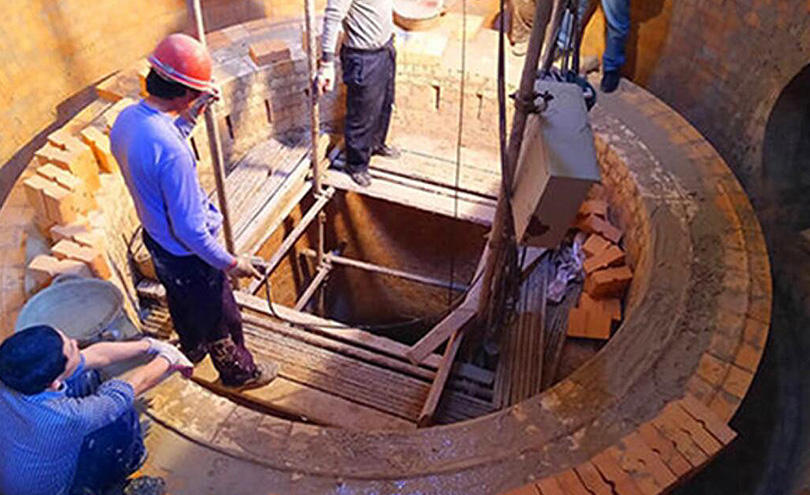
In addition, castables may experience bleeding after construction. Refractory castables are made by mixing aggregates, powders, binders, and additives with water. Ideally, all components are uniformly and stably distributed, but in some cases, water may rise and separate, a phenomenon known as bleeding. Based on the state of water in the castable, it can be divided into bound water, wetting water, and free water. Free water is weakly bound to the solid material and easily migrates upward along the pore channels, which is the main cause of bleeding.
Bleeding forms a slurry layer on the surface of the castable. When this slurry layer loses water, its strength is insufficient, easily leading to surface cracks; internally, the rising water forms bleeding channels and local voids, making the material structure uneven and affecting the overall performance of the castable. Many factors affect bleeding, including raw material selection, particle size distribution, density difference, castable viscosity, and construction process. Generally, the larger the particles, the greater the density difference, and the lower the viscosity, the more pronounced the bleeding phenomenon.
The vibration method during construction also significantly affects bleeding. Excessive vibration time can cause the castable to be in an over-fluidized state, making it easier for free water to separate. Therefore, vibration should be controlled within an appropriate range, ideally to the point where surface bleeding and air bubbles are largely eliminated, avoiding excessive vibration. Furthermore, improper control of setting time can also exacerbate bleeding; slow setting can lead to particle settling and water separation. By rationally selecting dispersants and accelerating systems, while ensuring proper workability, the problem of bleeding in castable refractories can be effectively reduced.
Related Products
Inquiry Now
Please leave your e-mail and we will contact you as soon as possible
+86-15264257623 Jacky Liu
1003, Building 1,The Fortune Zone, No.17 Lian yungang Road,Qingdao,China
For more details, welcome to message us.
Copyright © 2025 Qingdao laurent new materials co.,ltd.All Rights Reserved.
 Powered by HiCheng
contact us
Your satisfaction is our top priority. Whether you have questions, need support, or want to share feedback, our dedicated team is ready to assist you every step of the way.