Overview of Manufacturing Processes and Engineering Applications of Refractory Ceramic Fiber Boards
Refractory ceramic fiber boards, as a new type of composite panel material combining traditional ceramic materials with fiber reinforcement technology, are providing higher strength, greater toughness, and superior energy efficiency solutions for the building decoration and industrial engineering fields. With the development of building ceramics and thermal materials towards lightweight, large-format, and high-performance characteristics, these materials demonstrate significant value in improving structural safety, reducing energy consumption, and expanding application scenarios.
The development trends and technological challenges of the building ceramics industry have driven the continuous research and development of new materials. Globally, building ceramics have long maintained high production volumes and widespread applications, but traditional ceramic panels generally suffer from high energy consumption, heavy weight, and brittleness. As thin, large-format ceramic panels and porcelain slabs are increasingly used in building facades and interior decoration, problems such as deformation, fracture, and impact damage during transportation, processing, and installation are becoming more prominent, placing higher demands on the mechanical properties and structural stability of ceramic products.
Research on high-strength and high-toughness ceramic materials mainly focuses on densification strengthening, introduction of reinforcing phases, prestressing strengthening, and phase transformation toughening. These methods have been proven in experimental research and some engineering applications to effectively improve the flexural strength and fracture toughness of ceramics, but they still face problems such as high cost, complex processes, or limited high-temperature stability in actual industrialization, limiting their large-scale promotion in the building ceramics field.
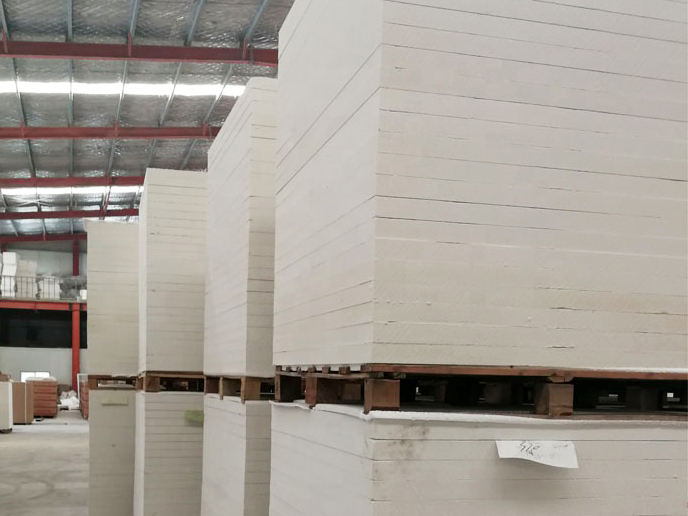
The technical characteristics of the manufacturing process of refractory ceramic fiber boards provide a new solution to the structural defects of traditional ceramics, which are "hard and brittle." This material is based on conventional ceramic mineral raw materials such as clay, kaolin, and quartz sand. After high-temperature melting, micron-sized glass fibers are prepared using a high-temperature drawing process, and a fiber network structure is formed through non-woven fabric weaving. Subsequently, through multi-layer stacking and room-temperature curing processes, the glass fibers are compounded with organic resin materials to form a refractory ceramic fiber board with a layered reinforced structure, significantly improving overall toughness and impact resistance while maintaining the heat resistance and durability characteristics of ceramics.
The structural composition and material properties of refractory ceramic fiber boards provide a basis for their application in multiple fields. The material is primarily composed of silicon dioxide, zirconium dioxide, and various alkali and alkaline earth metal oxides. Depending on the alkali content, it can be manufactured into alkali-free, medium-alkali, and high-alkali glass fiber systems. In the board structure, an inorganic bonding system enhances the adhesion between fiber layers, ensuring stable performance in terms of mechanical properties, electrical insulation, chemical corrosion resistance, and processing adaptability.
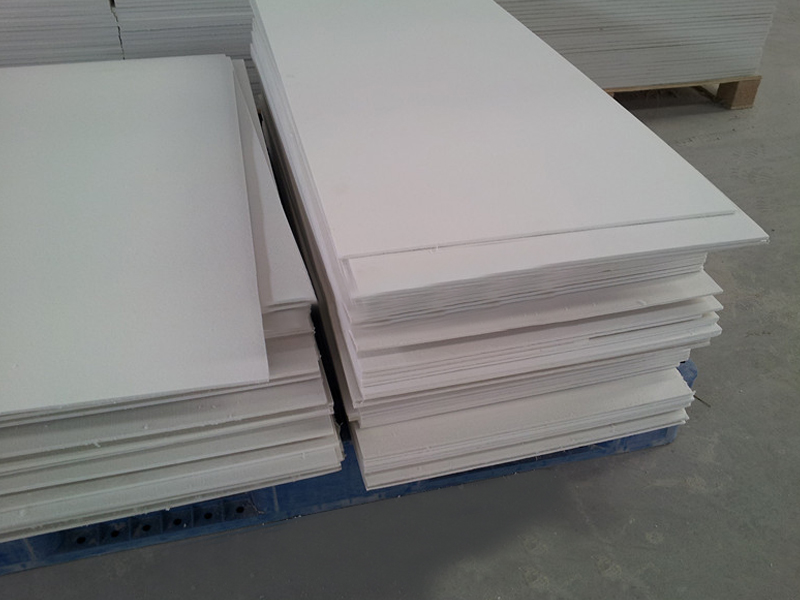
Test results and comprehensive performance of the refractory ceramic fiber board show a bulk density of approximately 2.4–2.76 g/cm³, a tensile strength of 6.3–6.9 MPa, and excellent strength retention at medium and high temperatures. The material also exhibits low water absorption, good flame retardancy, and strong resistance to chemical media. It supports various processing methods such as cutting and drilling, meeting the needs of complex engineering conditions.
The application prospects of refractory ceramic fiber boards are expanding from the building and decoration field to electrical engineering, industrial equipment, and composite building materials. In curtain wall systems and large-format panel applications, this material can significantly improve the bending, cracking, and impact resistance of large panels; in electrical engineering, its excellent insulation and heat resistance make it suitable for heat-resistant structural components; and in cement-based and special composite materials, the fiber-reinforced structure shows the potential to replace traditional reinforcing materials. With the continuous maturation of manufacturing technology, refractory ceramic fiber boards are expected to become an important technological path for promoting the structural upgrading and application expansion of ceramic materials.
Related Products
Inquiry Now
Please leave your e-mail and we will contact you as soon as possible
+86-15264257623 Jacky Liu
1003, Building 1,The Fortune Zone, No.17 Lian yungang Road,Qingdao,China
For more details, welcome to message us.
Copyright © 2025 Qingdao laurent new materials co.,ltd.All Rights Reserved.
 Powered by HiCheng
contact us
Your satisfaction is our top priority. Whether you have questions, need support, or want to share feedback, our dedicated team is ready to assist you every step of the way.