Comprehensive Winter Construction Guide for Refractory Castable
Refractory castable is a key lining material widely used in industrial furnaces, kilns, ladles, and other high-temperature thermal equipment. The construction quality of refractory castable directly determines furnace service life, thermal efficiency, and operational safety. During winter construction, low ambient temperatures significantly affect the hydration reaction, workability, and strength development of refractory castable. If improper measures are adopted, freezing damage, strength loss, cracking, and anchoring failure may occur. This comprehensive winter construction guide for refractory castable systematically introduces preparation work, raw material control, temperature management, construction procedures, curing methods, and emergency measures to ensure stable performance of refractory castable under cold conditions.
Winter construction of refractory castable is generally defined when the average daily ambient temperature remains below 5°C for five consecutive days. Under low-temperature conditions, the hydration reaction of refractory castable slows down significantly. When the temperature drops below 0°C, free water inside the refractory castable freezes and expands by approximately 9%, generating internal stress and damaging the forming structure. At around -15°C, hydration reactions of refractory castable nearly stop completely, resulting in irreversible strength loss. In addition, low temperatures reduce the flowability of refractory castable, making mixing and vibration more difficult, increasing the risk of voids, segregation, surface whitening, edge cracking, and weakened bonding strength with anchors.
To ensure proper performance of refractory castable during winter construction, strict temperature control is mandatory. The construction environment temperature should not be lower than 5°C, the refractory castable temperature at placement should be no lower than 10°C, and the temperature of contact surfaces should remain above 5°C. For refractory castable bonded with ordinary Portland cement, the mixing water temperature must not exceed 60°C, while for calcium aluminate cement refractory castable, the water temperature must not exceed 30°C to avoid flash setting or abnormal hardening behavior.
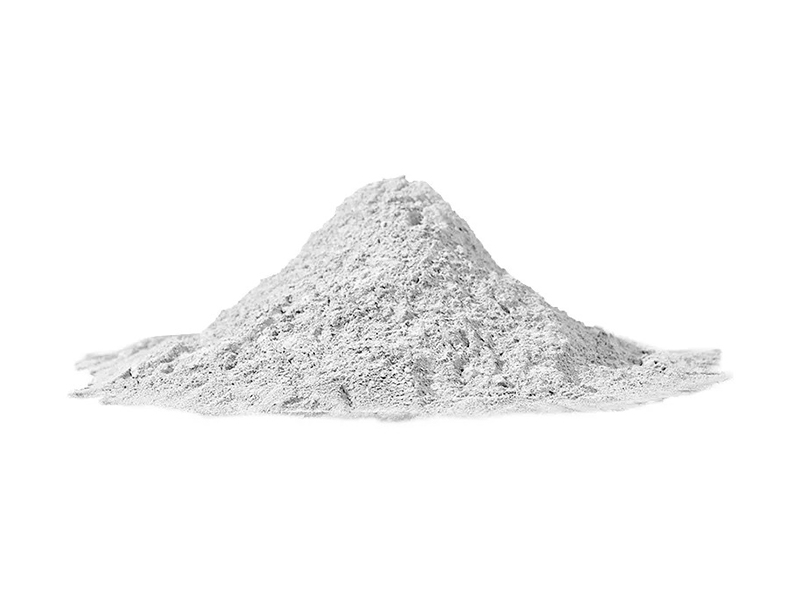
Adequate pre-construction preparation is the foundation of successful winter refractory castable installation. Thermal calculations must be carried out for the entire process of mixing, transportation, placement, and curing to determine heat loss and insulation requirements. Enclosed and insulated mixing sheds should be installed, with internal temperatures maintained above 15°C using hot-air heaters. Heated water tanks with precise temperature control, insulated aggregate storage, and sealed furnace shells are essential to prevent heat loss and cold air intrusion. All refractory castable materials must be stored in dry, enclosed warehouses, protected from moisture and freezing, and different batches or manufacturers must never be mixed.
Raw material control is particularly critical for winter refractory castable construction. Cement, aggregates, and fine powders must meet strict quality requirements, with zero frozen lumps and controlled moisture content. Mixing water should be preheated first, and aggregates may be heated if necessary, but direct flame heating is strictly prohibited. All preheated refractory castable materials should be used immediately to minimize temperature loss. Mix design adjustments may include controlled use of accelerators with manufacturer approval, strict limitation of water content, and prohibition of unauthorized additives. Trial mixing is strongly recommended to verify the winter performance of refractory castable before large-scale application.
During construction, refractory castable must be mixed using forced mixers inside heated shelters. The standard process involves dry mixing of aggregates and powders followed by two-stage water addition, with a total mixing time of 3–5 minutes. The discharge temperature and placement temperature of refractory castable must be continuously monitored. Transportation should be completed as quickly as possible using insulated containers, and placement should ideally be finished within 15 minutes to prevent temperature loss or premature setting.
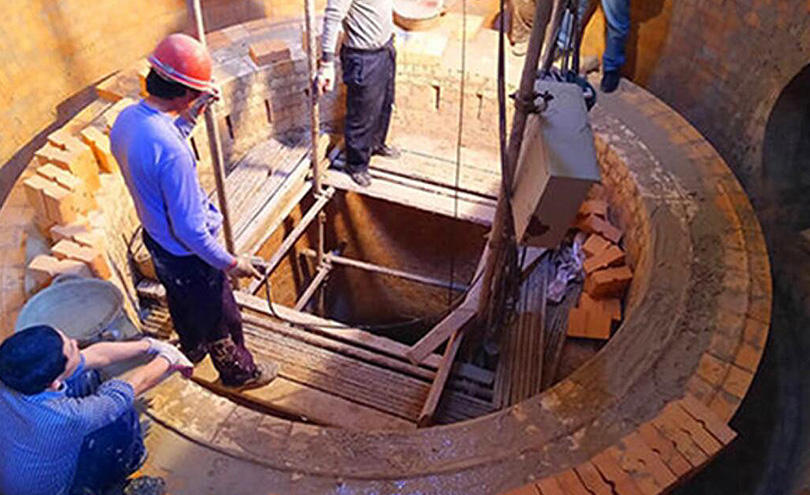
Proper vibration is essential to ensure the density and integrity of refractory castable. The layer thickness should not exceed 300 mm, vibration should be uniform to eliminate air pockets, and corners and anchor areas must be fully compacted. Adding extra water to improve workability is strictly forbidden, as it severely weakens refractory castable performance. For special structures such as furnace roofs, arches, and complex shapes, spraying or specialized forming methods may be adopted, with preheating of the substrate to ensure proper bonding of refractory castable.
After placement, refractory castable must be immediately protected using insulation blankets, electric heating cables, or hot-air systems to maintain curing temperatures above 5°C until sufficient early strength is achieved. Rapid cooling, freezing, or exposure to cold air must be avoided. If construction is interrupted, exposed refractory castable surfaces must be insulated, and any frozen or damaged surface layer must be removed before resuming work.
In conclusion, winter construction of refractory castable is a highly technical process requiring strict temperature control, careful material management, and disciplined execution. From raw material selection and preheating to mixing, placement, vibration, and curing, every step directly affects the final performance of refractory castable. By implementing proper insulation measures, optimized mix designs, and continuous temperature monitoring, refractory castable can achieve excellent strength, durability, and service life even under severe winter conditions.
Related Products
Inquiry Now
Please leave your e-mail and we will contact you as soon as possible
+86-15264257623 Jacky Liu
1003, Building 1,The Fortune Zone, No.17 Lian yungang Road,Qingdao,China
For more details, welcome to message us.
Copyright © 2025 Qingdao laurent new materials co.,ltd.All Rights Reserved.
 Powered by HiCheng
contact us
Your satisfaction is our top priority. Whether you have questions, need support, or want to share feedback, our dedicated team is ready to assist you every step of the way.