Benefits of Vacuum Formed Ceramic Fiber in Furnace Insulation
Industrial furnaces require reliable insulation to maintain stable temperatures and reduce heat loss. However, not every furnace area has a flat surface or a standard structure. Some parts need insulation materials with special shapes and dimensions.
This is where vacuum formed ceramic fiber becomes useful. It can be manufactured into different shapes to fit specific equipment requirements. With its lightweight structure and thermal insulation properties, it is widely considered for industrial furnace and kiln applications.
In this article, we explain how ceramic fiber vacuum shapes work, where they are used, and what buyers should consider when selecting the right product.
Vacuum formed ceramic fiber is a shaped insulation product made from ceramic fiber materials through a vacuum forming process.
During production, ceramic fibers are mixed with water and other suitable components to form a slurry. The mixture is then shaped using a mold and vacuum equipment. After forming and drying, it becomes a solid insulation component with a specific shape and size.
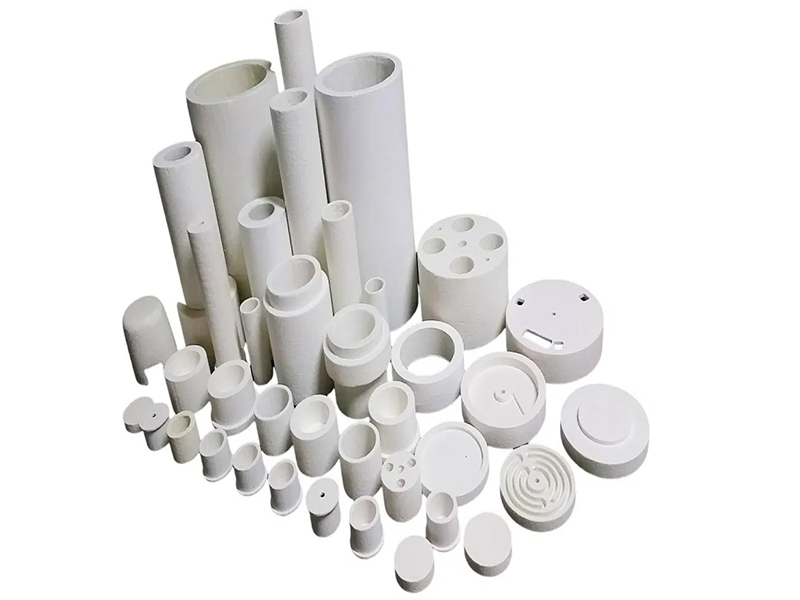
Unlike ceramic fiber blankets, which are mainly supplied in flexible rolls, vacuum formed products can be made into boards, tubes, cones, rings, and other custom shapes.
The final product can be designed according to equipment drawings, samples, or application requirements. This makes vacuum formed ceramic fiber suitable for furnace areas where standard insulation materials are difficult to install.
The main purpose of furnace insulation is to reduce heat transfer from the hot interior to the surrounding environment. Ceramic fiber materials contain fine fibers and air spaces that help limit heat transfer.
Vacuum formed ceramic fiber uses this material structure in a shaped component. It can be installed around specific furnace parts, helping cover areas that may be difficult to insulate with standard products.
Its lightweight structure also helps reduce the load on furnace components. For equipment with complex shapes, custom-made insulation parts can improve fitting and reduce the need for extensive cutting at the installation site.
Actual insulation performance depends on several factors, including fiber grade, density, thickness, operating temperature, and installation quality. Buyers should review the technical data for the selected product before use.
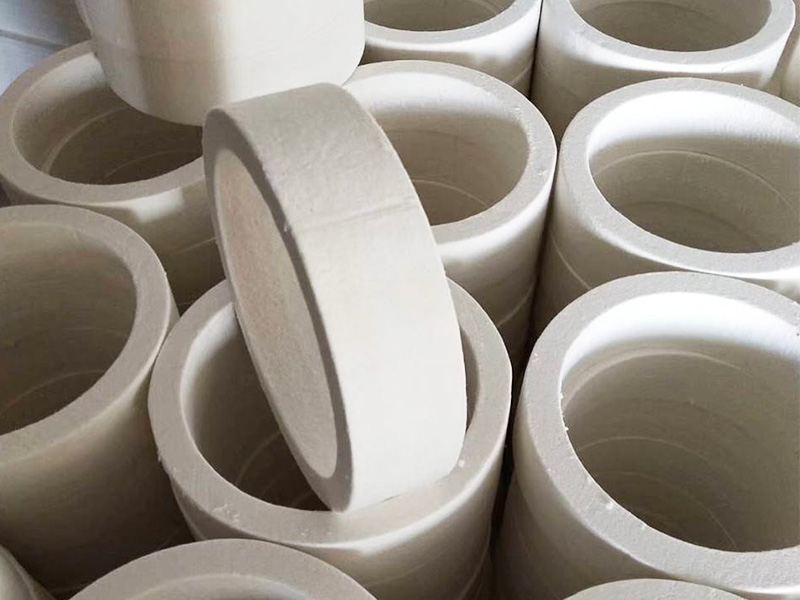
One important feature is design flexibility. Manufacturers can produce ceramic fiber vacuum shapes in different dimensions and forms. This is useful for components such as burner openings, furnace doors, pipes, and other special structures.
The products are also lightweight compared with many traditional refractory materials. This makes handling and installation more convenient, especially when insulation parts need to be fitted into limited spaces.
Thermal insulation performance is another important consideration. Suitable ceramic fiber grades can be selected for different temperature requirements. The product should be matched to the actual working temperature and furnace atmosphere rather than selected by maximum temperature rating alone.
In addition, pre-shaped components can help reduce on-site processing. When dimensions are confirmed before production, the finished parts can be supplied to match the equipment design more closely.
Vacuum formed ceramic fiber is used in different high-temperature applications where shaped insulation components are required.
In industrial furnaces, it can be used around burner areas, openings, doors, and other special structures. These locations may require insulation parts that fit specific dimensions.
In ceramic and sanitary ware kilns, shaped ceramic fiber components can be used in selected areas of heating equipment. Their design can be adjusted according to the kiln structure and insulation requirements.
Metal processing and heat treatment equipment may also use vacuum formed products around heating sections and other high-temperature components.
Other possible applications include glass processing equipment, petrochemical heating equipment, and industrial burners. The suitable product shape and material grade depend on the equipment design and operating conditions.
Both products are used for high-temperature insulation, but they serve different installation needs.
| Comparison | Vacuum Formed Ceramic Fiber | Ceramic Fiber Blanket |
|---|---|---|
| Product form | Rigid or semi-rigid shaped components | Flexible blanket rolls |
| Shape | Custom shapes and dimensions | Mainly supplied in rolls |
| Installation | Designed for specific equipment parts | Cut and fitted at the installation site |
| Main advantage | Fits special structures and complex areas | Covers large surfaces with flexible installation |
| Typical use | Burner blocks, rings, tubes, and shaped inserts | Furnace walls, roofs, and general lining insulation |
A ceramic fiber blanket is often a practical choice for covering large furnace surfaces. Vacuum formed ceramic fiber is more suitable when the insulation needs a specific shape or dimension.
In some furnace projects, both products can be used together. The choice depends on the equipment structure, insulation design, and installation requirements.
Choosing the right product requires more than checking its maximum temperature rating. Buyers should consider the actual working conditions and product specifications.
First, confirm the operating temperature and furnace atmosphere. These details help determine the suitable ceramic fiber grade.
Next, provide the required shape and dimensions. Drawings, samples, or clear measurements can help the manufacturer understand the product design. For custom orders, dimensional tolerances should also be confirmed before production.
Density and mechanical strength are also important. The product should have suitable properties for handling, installation, and its intended operating position.
Finally, compare the manufacturer's production capability, quality inspection, packaging, and delivery schedule. Clear communication about technical requirements can help reduce errors in custom production.
Vacuum formed ceramic fiber is a useful option for furnace insulation projects that require lightweight, shaped components. Its flexible design allows manufacturers to produce different forms and dimensions for specific equipment structures.
Compared with standard ceramic fiber blankets, it offers more options for special-shaped insulation parts. The right choice depends on operating temperature, furnace conditions, product dimensions, and installation requirements.
Laurel supplies ceramic fiber insulation products for industrial applications. If you need custom vacuum formed ceramic fiber, contact us with your drawings, samples, or technical requirements to discuss a suitable product
Related Products
Inquiry Now
Please leave your e-mail and we will contact you as soon as possible
+86-15264257623 Jacky Liu
1003, Building 1,The Fortune Zone, No.17 Lian yungang Road,Qingdao,China
For more details, welcome to message us.
Copyright © 2025 Qingdao laurent new materials co.,ltd.All Rights Reserved.
 Powered by HiCheng
contact us
Your satisfaction is our top priority. Whether you have questions, need support, or want to share feedback, our dedicated team is ready to assist you every step of the way.