Configuration and application progress of amorphous refractory materials in new dry process cement kilns
Different parts of cement kiln systems face different heat, wear, and chemical attack. When choosing refractory materials, the type must fit the job. Raw mix, fuel, plant layout, and operating habits also change the need. This article reviews the main problems with castables in new dry-process cement kilns and gives a practical setup guide.
Most of the refractory materials used in the front and rear kiln mouths of rotary kilns are castables, especially the refractory materials at the front mouth. They must handle heat above 1400℃, plus stress and chemical attack from sulfur, chlorine, and alkali. Common faults are low wear resistance, easy peeling, and short life. Service life is usually 4 to 8 months.
The castables for coal injection pipes must handle 1400℃, thermal cycling, and dust flow. The front section often cracks, cokes, and peels because the temperature changes fast and the gap is large. The lining life is usually 3 to 7 months.
The top of the kiln head hood sees hot dusty gas. The side walls also take clinker wear. If baking is poor after build, the lining can burst. Service life is usually 6 to 12 months.
The first stage of the grate cooler faces strong heat shock. Its low walls take long wear from hot clinker and also stress from heat and machine load. The second stage is cooler, but the build is still hard. If baking is poor, the lining can burst. Wear is heavy and life is usually 6 to 12 months.
The kiln calcining system mainly includes 1- to 5-stage cyclones, feed pipes, calciner cones, and smoke chambers. The cyclone is mainly affected by the slow release and condensation of harmful parts such as alkali, chlorine, and sulfur in the cement raw mix. These parts recirculate and build up, so the castables get strong chemical attack and "alkali cracking".
The discharge pipe, calciner cone, and smoke chamber are also affected by low-grade raw mix, waste, and poor fuel coal powder in the cement production process. This raises the level of chlorine, sulfur, and alkali in the whole system.
The 4th and 5th stage cyclone cones, the 4th and 5th stage discharge pipes, the calciner cones, and the smoke chambers are prone to crusting. People then use air cannons and water guns often. That is risky, hurts normal production, and lowers the running rate of the cement kiln system.
The dust-laden tertiary air in the tertiary air duct is 800-1000℃, and the wind speed is about 25 m/s. The elbows, gates, and other lined parts can spall or break. Service life is often only 3 to 6 months. If the lining wears through, the gate or elbow must be replaced and the kiln must stop.
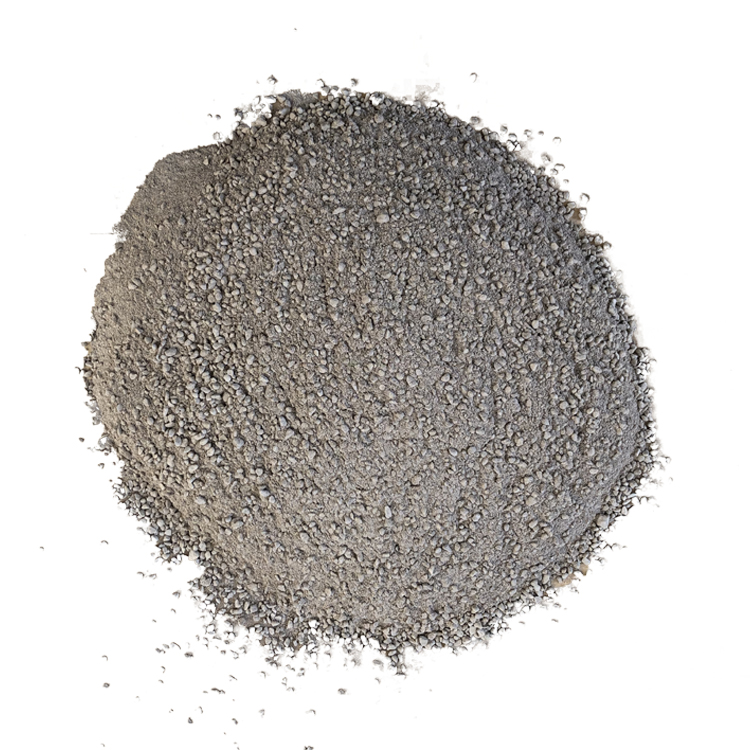
Refractory Monolithic
Front kiln mouth: JD-80AS low-expansion thermal-shock-resistant kiln-mouth castable for 5,000 t/d and below.
Front kiln mouth: JD-85AS high-performance wear-resistant castable for 5,000 t/d and above.
Rear kiln mouth: JD-75M corundum-mullite wear-resistant castable.
These products offer strong wear resistance, alkali resistance at high heat, corrosion resistance, thermal shock resistance, and good spalling resistance.
Because the coal pipe temperature changes fast and the gap is large, the front end is easy to crack, peel, coke, and suffer sulfur build-up. Use JD-80AS low-expansion thermal-shock-resistant coal pipe castable for 5,000 t/d and below, or JD-85AS high-performance wear-resistant castable for 5,000 t/d and above. These products give better thermal shock stability and erosion resistance.
The kiln head hood needs a castable that can handle hot dusty gas on top and clinker wear on the sides. If the lining is not baked in place after construction, it can burst. JD-75M corundum-mullite wear-resistant castable is a good choice because it holds volume well at high heat, resists peeling, and stands up to wear.
For the high-heat zone of the first stage, use JD-M20-65 mullite high-strength wear-resistant castable. For the second stage of the grate cooler, use JD-16F high-alumina high-strength wear-resistant castable.
The low wall can use JD-M20-70 grate cooler low-wall castable or JDY-M70 special wear-resistant precast bricks. The precast brick option is easy to lay, lasts a long time, and can be replaced fast, so it should be used more often.
Because the outside-kiln system has a high level of alkali, sulfur, and chlorine, and the 4th and 5th cyclone cones, feed pipes, calciner cones, and smoke chambers tend to crust, use the following:
JD-13NL high-strength alkali-resistant castable for the 1st, 2nd, and 3rd preheater stages.
JD-16 high-alumina high-strength castable for the 4th and 5th preheater stages, the calciner, and the straight section of the tertiary air duct.
Silicon carbide anti-scaling castable for the smoke chamber and feed pipe.
Special wear-resistant precast bricks can also be used for the smoke chamber.
JD-17MF high wear-resistant, corrosion-resistant castable can be used for tertiary air duct elbows. Precast tertiary air duct gates can be used for the duct. These parts are cast and fired at the factory, so they can be installed at once. That makes lifting and use easier and gives them a longer life.
In emergency repairs, refractory spray coatings are also useful. They need no mold, spray fast, and resist blowout. JD-PT-M45 mullite spray coating can be used for preheaters, calciner furnaces, kiln head hoods, tertiary air ducts, and grate coolers. JD-PT-50S anti-scaling spray coating can be used for smoke chambers and calciners.
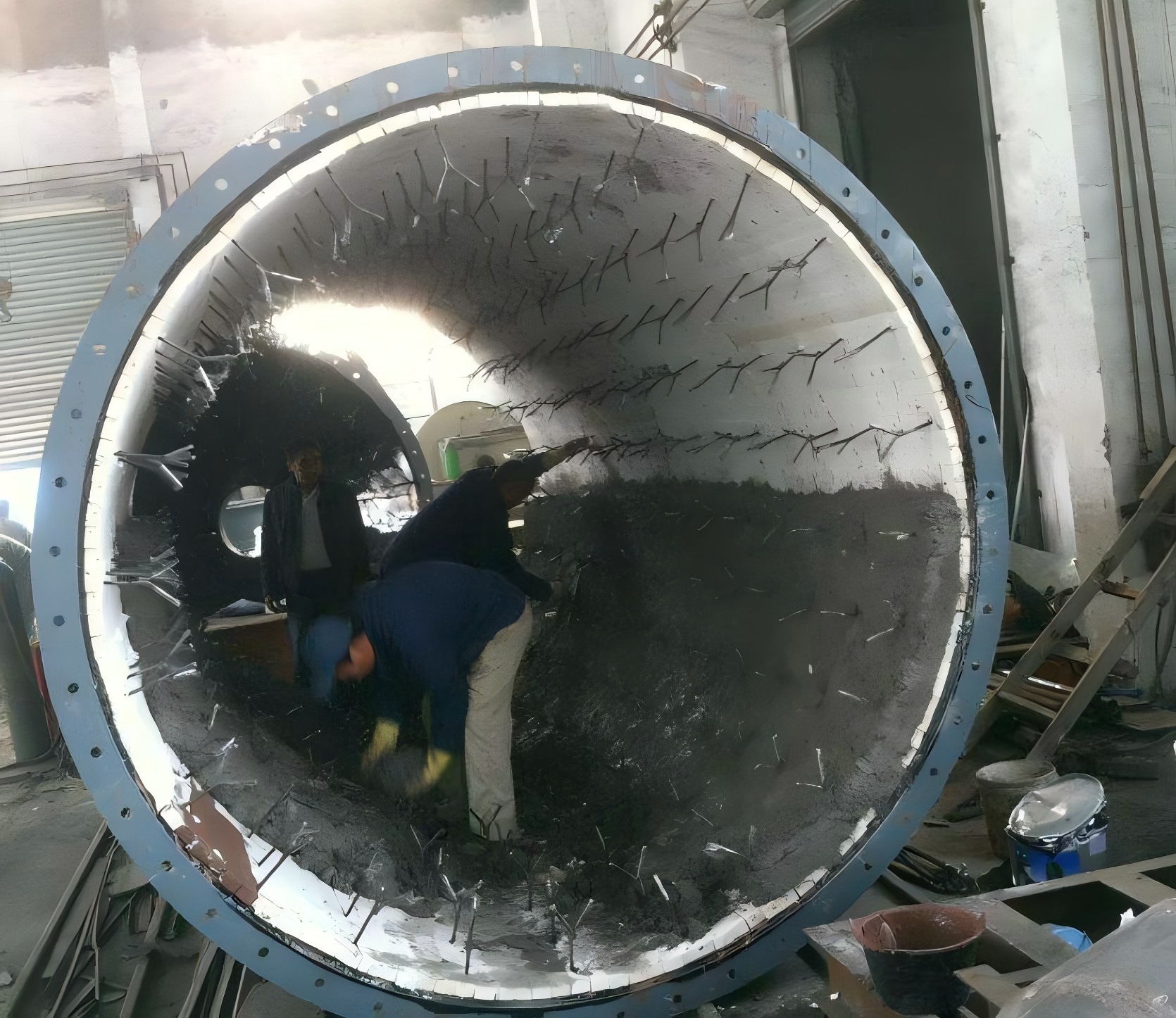
Castable refractory lining
Except for a small number of precast bricks, such as wear-resistant quick-change low-wall bricks and special wear-resistant smoke-chamber bricks, which can be assembled and laid on site, and spray coating materials that can be sprayed on site, most of the amorphous refractory materials used in cement kilns are refractory castables. These are bulk materials that must be cast and formed at the plant site.
The water amount, build time, pouring method, and vibration method all change with the material and the job site. Build quality directly affects the life of the lining. So when you build castables, follow the maker's process and baking schedule closely.
The water amount for mixing should meet the build needs. Less water is better, but the mix still has to work well. Use the mix within 30 minutes. Do not use refractory material that has already reacted or started to set.
Use a clean forced mixer. Mix the aggregate, powder, and binder well. Add about 80% of the clean water first, then add the rest until the mix flows right.
Vibrate the poured castable evenly. Do not stay in one spot too long, or the mix may separate. Do not hit the anchor metal parts or the light insulation layer. When slurry appears and the bubbles drop, pull the vibrating rod out slowly.
For large pours, work in blocks of about 1.5 m². Leave expansion joints as the designer asks.
Remove the form only after the surface of the cast lining has hardened and the strength has reached more than 70% of the target.
After stripping the formwork, inspect the lining at once. If you find peeling, holes, or honeycombs, repair them with the same grade of castable. The finished surface should be smooth and clean, with no pits.
The new dry-process cement kiln system has advantages that wet-process and older dry-process cement kilns cannot match. The best refractory setup depends on each plant's equipment, fuel, and raw mix. Plants should follow the maker's build guide so the lining lasts as planned. That cuts shutdowns and repair time, lifts the running rate, and supports stable, low-energy production.
Question: Why do different parts of a new dry-process cement kiln need different amorphous refractory materials?
Short answer: Each part faces different heat, dust flow, clinker wear, thermal shock, chemical attack, and machine stress. Kiln mouths must resist heat above 1400℃ and attack from sulfur, chlorine, and alkali. Tertiary air duct elbows must handle fast dust-laden gas at 800-1000℃. Because the damage is different in each place, the lining must match the work conditions.
Question: What most often causes short life in castables used in cement kiln systems?
Short answer: Common causes include poor wear resistance, attack by alkali, sulfur, and chlorine, fast temperature swings, thermal shock, machine stress, crusting, peeling, coking, and poor baking after build. In some places, such as kiln head hoods and grate coolers, poor build quality can also cause burst damage.
Question: Which refractory materials are recommended for kiln mouths and coal injection pipes?
Short answer: For the front kiln mouth and coal injection pipe, use JD-80AS low-expansion thermal-shock-resistant castable for 5,000 t/d and below, and JD-85AS high-performance wear-resistant castable for 5,000 t/d and above. For the rear kiln mouth, use JD-75M corundum-mullite wear-resistant castable. These choices focus on wear resistance, corrosion resistance, thermal shock resistance, and spalling resistance.
Question: Why are precast bricks and spray coatings useful in some kiln areas?
Short answer: Precast bricks can be assembled on site and are easy to lay, last a long time, and can be replaced fast. Spray coatings are useful for emergency repairs because they need no mold, spray fast, and resist blowout. Both can reduce downtime compared with cast-in-place work.
Question: What construction steps matter most for refractory castables?
Short answer: Use the right water amount, mix with a clean forced mixer, pour and vibrate evenly, divide large pours into blocks, wait for enough strength before demolding, and inspect the lining right after the form is removed. If defects appear, repair them at once with the same grade of castable.
Related Products
Inquiry Now
Please leave your e-mail and we will contact you as soon as possible
+86-15264257623 Jacky Liu
1003, Building 1,The Fortune Zone, No.17 Lian yungang Road,Qingdao,China
For more details, welcome to message us.
Copyright © 2025 Qingdao laurent new materials co.,ltd.All Rights Reserved.
 Powered by HiCheng
contact us
Your satisfaction is our top priority. Whether you have questions, need support, or want to share feedback, our dedicated team is ready to assist you every step of the way.