Common Problems with Refractory Calcium Silicate Board and How to Solve Them
Refractory calcium silicate board is widely used in industrial furnace insulation, kiln lining, heat insulation walls, and high-temperature equipment. It is lightweight, easy to cut, and suitable for many insulation applications.
However, problems may occur during installation or after a period of operation. Boards may crack, absorb moisture, break at the edges, or lose their original shape. These problems can affect insulation performance and increase maintenance costs.
Understanding why these problems happen is important. In many cases, damage is related not only to the board itself but also to storage, installation, operating temperature, and the surrounding environment.
Cracking is one of the most common problems with calcium silicate insulation boards. Some boards develop cracks during installation, while others crack after the equipment has been operating for some time.
Common causes include excessive mechanical stress, uneven support, incorrect fixing methods, and thermal expansion. If the board is fixed too tightly or cannot move slightly with temperature changes, stress may build up and cause cracks.
How to solve it:
Check whether the supporting surface is flat and stable.
Avoid excessive tightening of screws or fixing parts.
Allow suitable joints between boards according to the installation design.
Use the correct cutting tools to avoid damage during processing.
Replace boards with serious cracks, especially when they affect insulation or structural stability.
For furnace lining applications, the installation structure should be designed according to the working temperature and expansion conditions.
Calcium silicate board is relatively lightweight, but it can break when subjected to excessive impact or bending stress. Damage often occurs during transportation, handling, cutting, or installation.
Thin boards and unsupported sections are more likely to break when workers lift them incorrectly or apply force to a small area. Damaged corners and edges can also make installation more difficult.
How to solve it:
Handle boards carefully during loading, unloading, and installation. Support the board properly when cutting, and avoid lifting large boards from only one corner. For large-size boards, use suitable support during installation.
If the edges are slightly damaged and the affected area does not interfere with installation, the board may still be usable depending on the application. However, severely damaged boards should be replaced rather than forced into position.
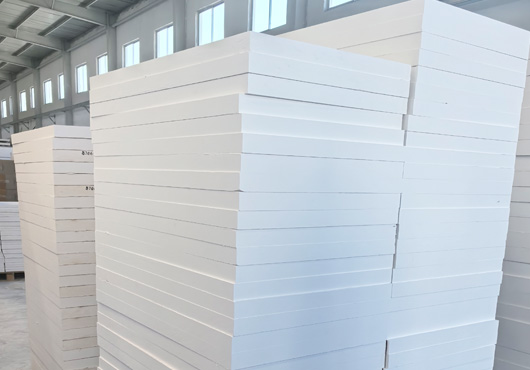
Calcium silicate board may absorb moisture when stored in humid environments or exposed to water. Moisture absorption can increase the board's weight and may affect its strength, surface condition, or insulation performance.
This problem is more likely when boards are stored outdoors, placed directly on wet floors, or exposed to rain before installation.
How to solve it:
Store boards in a dry, ventilated indoor area.
Keep them off the ground using pallets or suitable supports.
Use waterproof covers when temporary outdoor storage is unavoidable.
Avoid direct contact with rainwater or standing water.
Check the board condition before installation if it has been exposed to moisture.
If the board becomes wet, it should be evaluated and dried under suitable conditions before use. Boards that show serious deformation, softening, or damage should not be installed without checking their condition.
When refractory calcium silicate board is used in high-temperature equipment, shrinkage or deformation may occur if the selected grade is unsuitable for the operating conditions.
Different products have different temperature ratings and thermal stability. Long-term exposure to temperatures near or above the suitable operating range may cause dimensional changes. Uneven heating can also create stress within the board.
How to solve it:
Confirm the actual operating temperature before selecting the board. Do not choose a product based only on its maximum classification temperature. Consider continuous operating temperature, temperature fluctuations, heating rate, and the location of the insulation layer.
For areas exposed to higher temperatures, select a suitable high-temperature grade and confirm its technical specifications with the manufacturer.
Gaps may develop between boards after installation. These gaps can allow heat to pass through the lining and reduce the overall insulation performance.
Common reasons include inaccurate cutting, incorrect board dimensions, poor installation, movement of the supporting structure, and thermal expansion.
How to solve it:
Measure the installation area before cutting. Make sure the board dimensions match the construction drawings. Use suitable joint arrangements and insulation materials where required by the lining design.
For furnace walls, corners, doors, and irregular areas, pay special attention to joint positions. Avoid leaving open gaps around pipes, metal supports, and equipment connections.
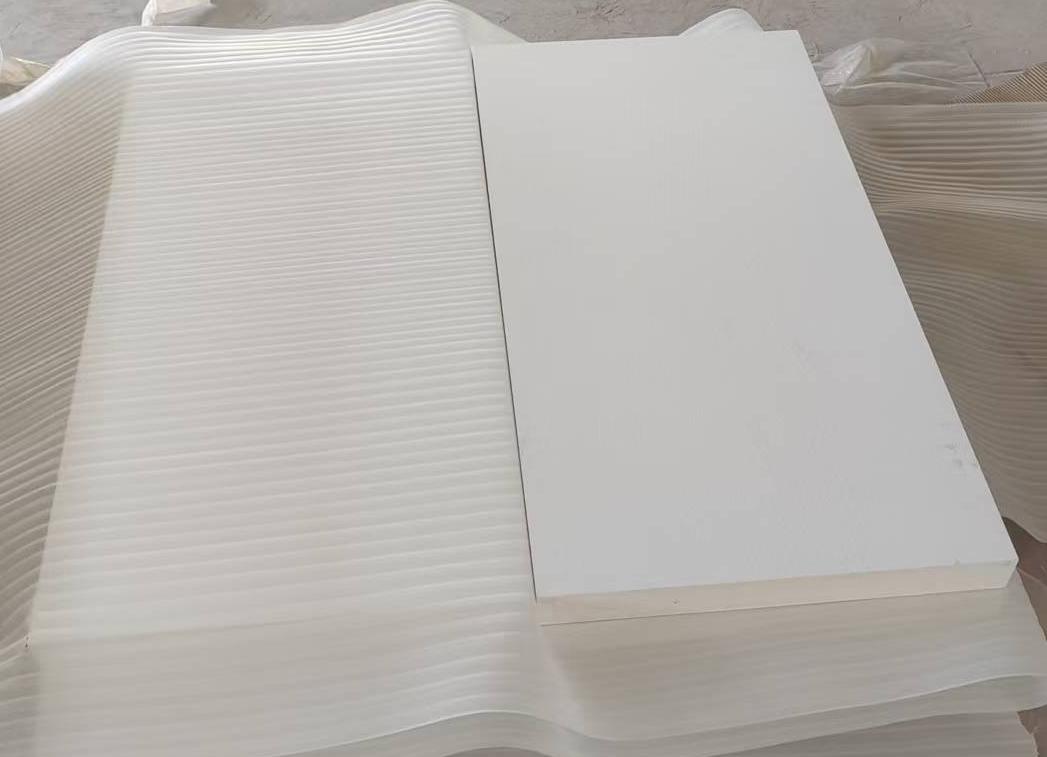
Some calcium silicate boards may show surface deterioration, powdering, or material loss after long-term use.
This can be caused by excessive temperature, moisture exposure, chemical attack, surface abrasion, or unsuitable operating conditions. Not all calcium silicate boards are designed for the same environment.
How to solve it:
First, identify the actual cause of surface damage. Check the working temperature, furnace atmosphere, water exposure, and whether the board is subject to friction or direct impact.
If the material is used in an area with chemical exposure or strong airflow, confirm whether the selected board is suitable for those conditions. Replace severely deteriorated sections and improve protection where necessary.
Sometimes calcium silicate board is installed correctly, but the equipment still loses too much heat. This does not always mean the board quality is poor.
Insulation performance can be affected by board thickness, density, thermal conductivity, installation gaps, supporting structures, and the overall insulation design. Metal components passing through the insulation may also create heat transfer paths.
How to solve it:
Check the installed thickness and confirm that the product matches the original specifications. Inspect board joints, corners, openings, and connections for gaps.
If heat loss remains high, review the complete insulation structure rather than replacing the board without checking the cause. In some applications, a combination of different insulation materials may be more suitable.
When replacing damaged boards or purchasing new insulation materials, buyers should consider the actual application rather than focusing only on price.
Important specifications include:
Working temperature and temperature fluctuations
Board thickness and dimensions
Density and compressive strength
Thermal conductivity
Moisture conditions
Installation method and supporting structure
Different industrial applications require different board specifications. A board used for furnace insulation may have different requirements from one used for equipment insulation or building-related thermal protection.
When comparing calcium silicate board manufacturers, ask for technical data sheets, product dimensions, temperature ratings, and information about quality control. Confirm that the selected product is suitable for the intended operating environment.
For buyers looking for calcium silicate board price, the cost may depend on thickness, density, size, temperature grade, order quantity, and packaging. Comparing products with the same technical specifications is more useful than comparing prices alone.
Problems with refractory calcium silicate board, such as cracking, moisture absorption, edge damage, shrinkage, and surface deterioration, are often related to installation methods or operating conditions.
Before replacing damaged boards, identify the cause of the problem. Selecting the correct grade, controlling moisture during storage, improving installation, and checking the insulation structure can help reduce repeated damage.
If you are looking for refractory calcium silicate board for industrial insulation, contact Laurel with your required dimensions, working temperature, and application details. Our team can help you review suitable board specifications for your project.
Related Products
Inquiry Now
Please leave your e-mail and we will contact you as soon as possible
+86-15264257623 Jacky Liu
1003, Building 1,The Fortune Zone, No.17 Lian yungang Road,Qingdao,China
For more details, welcome to message us.
Copyright © 2025 Qingdao laurent new materials co.,ltd.All Rights Reserved.
 Powered by HiCheng
contact us
Your satisfaction is our top priority. Whether you have questions, need support, or want to share feedback, our dedicated team is ready to assist you every step of the way.