Refractory Brick Firing Process: Kiln Loading, Firing, and Unloading Procedures
The refractory brick firing process is a critical stage in refractory material manufacturing, directly affecting product density, strength, dimensional stability, and thermal performance. The process generally includes three main procedures: kiln loading, high-temperature firing, and kiln unloading. Proper control of each stage ensures the final refractory bricks meet industrial performance requirements for applications in metallurgy, petrochemical processing, and high-temperature furnaces.
Overview of the Refractory Brick Firing Process
The refractory brick firing process begins with the preparation and arrangement of semi-finished brick bodies inside a kiln. During firing, a series of physical and chemical reactions occur that densify the material structure and increase mechanical strength. After firing and cooling, the finished refractory bricks are removed from the kiln through controlled unloading operations.
Each stage of the refractory brick firing process plays a significant role in determining product quality and production efficiency.
Kiln Loading in the Refractory Brick Firing Process
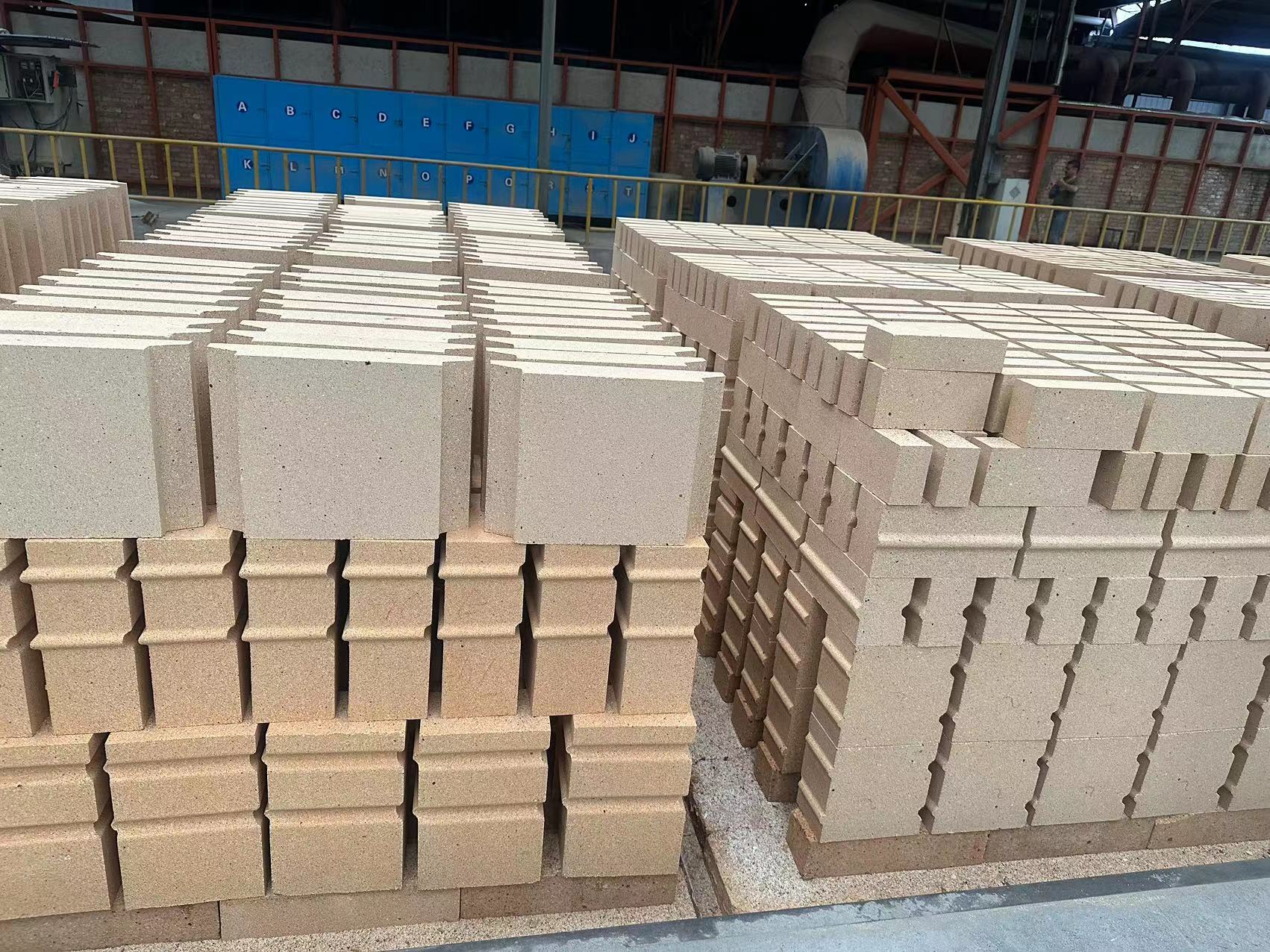
Kiln loading in the refractory brick firing process refers to the operation of arranging unfired brick bodies in the kiln according to the kiln structure and required firing conditions. In tunnel kiln systems, this operation is also referred to as kiln car loading.
The loading height and stacking method vary depending on the brick type:
Magnesia bricks and high-grade high-alumina bricks: loading height typically 1–1.1 m
Silica bricks: loading height typically 1–1.7 m
Fireclay bricks: intermediate loading height between the above two types
Different brick shapes also influence stacking methods. Standard bricks are generally stacked flat, silica bricks are often placed vertically, and clay bricks may be stacked sideways.
For efficient kiln utilization, shaped bricks and standard bricks are often loaded in a ratio of approximately 4:6. Standard bricks are usually placed in lower layers, while shaped bricks are placed in upper layers.
To prevent sticking between bricks during firing, a layer of filling sand with particle sizes 0.5–3 mm is evenly spread between brick layers. The sand type depends on brick composition:
Fireclay and high-alumina bricks: silica sand, bauxite fragments, or rice husk ash
Silica bricks: waste silica brick sand or silica sand
Magnesia bricks: magnesia sand or chromite sand
Proper kiln loading ensures stable brick stacks and minimizes deformation or adhesion during high-temperature firing.
Heating and Sintering Stage
The heating stage in the refractory brick firing process begins when the bricks enter the kiln or when the kiln ignition starts, and continues until the firing temperature reaches the maximum designed level.
As temperature increases, several physical and chemical reactions occur:
Formation of liquid phases
Solid-state reactions and phase synthesis
Diffusion and mass transfer processes
These reactions allow particles to move closer together under surface tension forces, leading to material densification, strength improvement, volume shrinkage, and reduced porosity. This stage ultimately results in the sintering of refractory bricks.
High-Temperature Holding Stage
The holding stage in the refractory brick firing process occurs when the kiln reaches its maximum firing temperature. During this stage, reactions within the brick body approach completion and the quantity of liquid phase increases.
Crystalline phases continue to grow, enabling the brick structure to achieve full densification. It is essential that both the surface and the internal structure of the brick reach the same firing temperature. Because heat transfer within the kiln is gradual, sufficient holding time is required.
Large bricks and higher kiln loading densities require longer soaking periods to ensure temperature uniformity throughout the kiln.
Cooling Stage
The cooling stage in the refractory brick firing process begins after the maximum firing temperature is reached and continues until the kiln temperature drops to a safe unloading level.
During early cooling, several structural changes occur within the refractory bricks, including:
Crystallization of certain phases
Crystal structure transformations
Solidification of glass phases
Formation of microcracks
The cooling schedule significantly influences final product properties such as mechanical strength and thermal shock resistance. Controlled cooling is therefore essential to maintaining product quality.
Kiln Unloading Procedures
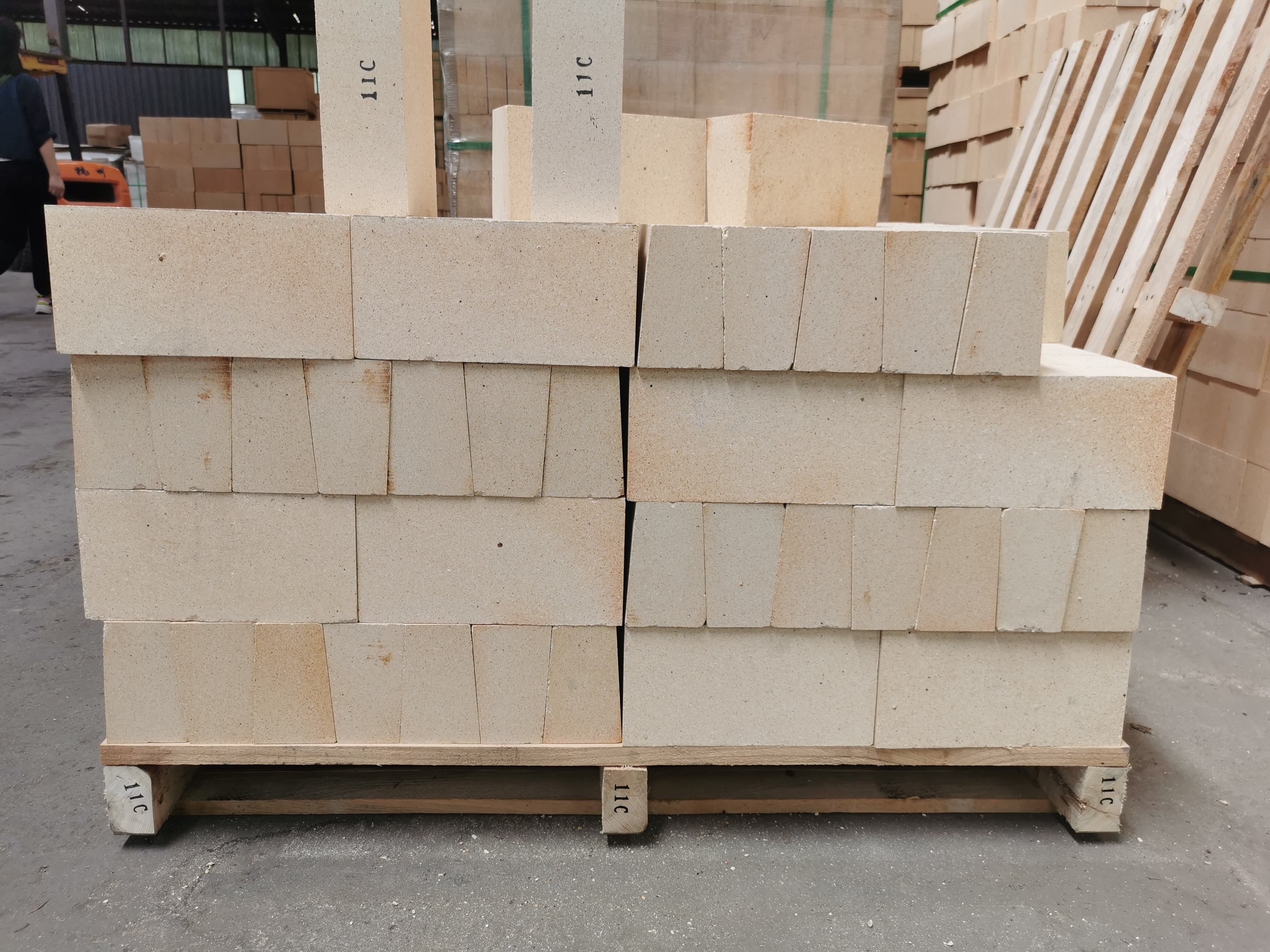
Kiln unloading in the refractory brick firing process involves removing cooled bricks from the kiln or unloading them from kiln cars. Proper unloading operations directly influence the appearance quality of finished refractory bricks.
Key operational requirements include:
Bricks should be handled carefully to prevent damage or surface defects during unloading.
Bricks of different specifications must be stacked separately to avoid confusion during inspection and sorting.
Auxiliary kiln tools such as setter bricks and support bricks should be collected and organized for reuse in the next loading cycle.
Safety procedures and proper labor protection must be strictly followed during unloading and transportation operations.
The refractory brick firing process requires strict control over kiln loading, heating schedules, holding time, and cooling conditions. A well-designed firing system based on both theoretical guidance and practical experience ensures stable product quality while reducing defect rates.
By optimizing kiln operations and maintaining proper unloading procedures, refractory manufacturers can improve production efficiency and deliver reliable high-temperature materials for industrial furnace applications.
Related Products
Inquiry Now
Please leave your e-mail and we will contact you as soon as possible
+86-15264257623 Jacky Liu
1003, Building 1,The Fortune Zone, No.17 Lian yungang Road,Qingdao,China
For more details, welcome to message us.
Copyright © 2025 Qingdao laurent new materials co.,ltd.All Rights Reserved.
 Powered by HiCheng
contact us
Your satisfaction is our top priority. Whether you have questions, need support, or want to share feedback, our dedicated team is ready to assist you every step of the way.