Production Process and Storage Guidelines for Calcium Silicate Board
Calcium silicate board is widely used in modern industrial and commercial construction due to its fire resistance, moisture resistance, and long service life. Manufactured through high-temperature and high-pressure steam curing using inorganic mineral fibers and calcium-silica cementitious materials, calcium silicate board has become an important alternative to traditional gypsum-based panels. Understanding the production process and proper storage and transportation requirements is essential to ensuring product performance and structural reliability during application.
Overview of Calcium Silicate Board Manufacturing Technology
Calcium silicate board manufacturing is based on inorganic mineral fiber reinforcement combined with silica and calcium materials as the primary bonding system. Through pulping, forming, and accelerated curing under saturated steam conditions, calcium silicate hydrate structures are generated, forming durable board products.
Compared with conventional gypsum boards, calcium silicate board provides improved fireproof performance, moisture resistance, and extended service life, making it suitable for ceilings and partition systems in industrial and commercial buildings.
Raw Material Preparation
Calcium silicate board production begins with the preparation of raw materials. Key materials include:
Wet grinding and slurry preparation of quartz sand;
Crushing and digestion of quicklime;
Grinding and pulping of wood fibers used as reinforcement materials.
Proper preparation ensures uniform particle distribution and stable chemical reactions during subsequent processing stages.
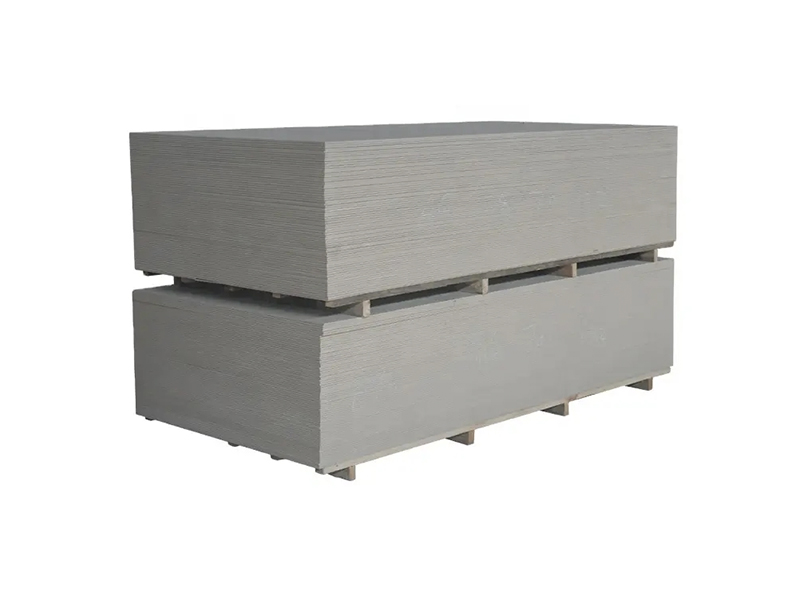
Slurry Preparation Process
Calcium silicate board slurry preparation involves mixing processed wood fiber pulp with hydrated lime, cement, and quartz powder in a counter-current mixer. After thorough mixing, a slurry with controlled concentration is produced.
The slurry is pumped into a storage tank and further homogenized using refining equipment before entering the flow-on sheet forming machine at controlled flow rate and consistency, ensuring uniform board structure.
Board Forming and Sheet Production
Calcium silicate board forming occurs when slurry flows evenly from the headbox onto a moving industrial felt where water filtration and dehydration take place. A thin layer forms and is continuously wound around a forming cylinder.
Multiple layers are accumulated until the required thickness is achieved, after which an automated cutting system trims the green board to design dimensions. The forming system uses a 1600 mm diameter press, and trimmed panels are stacked using a steel-mold stacking method.
Pressing and Densification
Calcium silicate board densification is achieved by pressing the molded boards under a 7000-ton press for approximately 30 minutes at 23.5 MPa pressure. This process removes excess moisture while increasing density and mechanical strength, improving the overall structural performance of the finished board.
Pre-Curing and Demolding
Calcium silicate board pre-curing takes place in a curing chamber before demolding. Wet boards are maintained at temperatures between 50–70℃ for 4–5 hours until sufficient strength is achieved for safe removal from molds.
This stage stabilizes the board structure prior to high-pressure curing.
Autoclave Steam Curing
Calcium silicate board autoclaving is a critical step that determines final material performance. After demolding, boards undergo steam curing in an autoclave for 24 hours at approximately 190℃ and 1.2 MPa pressure.
During this process, hydration reactions generate crystalline phases such as tobermorite and xonotlite, which directly influence strength, dimensional stability, and moisture resistance.
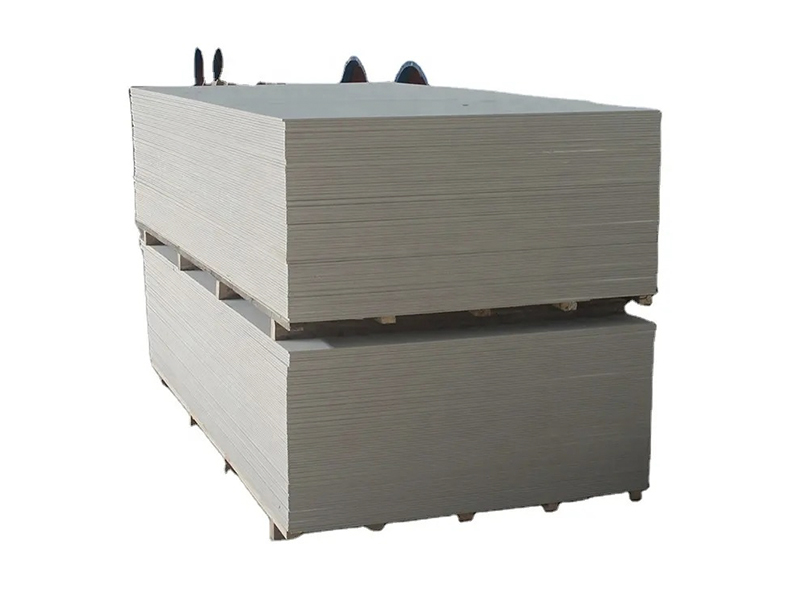
Storage and Transportation Precautions
Calcium silicate board storage and transportation must follow specific handling procedures to prevent damage and maintain product integrity:
Avoid collision during loading and unloading; transportation platforms must remain flat and boards securely fixed to prevent shifting.
During lifting or forklift handling, stacked boards should remain aligned to avoid edge damage from lifting equipment.
When handling boards manually, debris between sheets must be removed to prevent cracking or deformation under pressure.
Boards should be carried vertically by two people holding both sides; horizontal lifting is not recommended.
Boards must be stacked on level ground or supported by dedicated wooden pallets; loose boards should not be stored upright against walls.
Indoor storage is recommended. If outdoor storage is unavoidable, boards should be covered with protective tarpaulins.
Calcium silicate board applications continue to expand in industrial and commercial construction due to their durability and fireproof characteristics. Standardized production processes combined with proper storage and transportation practices are essential to maintaining product quality and ensuring long-term performance in building systems.
Related Products
Inquiry Now
Please leave your e-mail and we will contact you as soon as possible
+86-15264257623 Jacky Liu
1003, Building 1,The Fortune Zone, No.17 Lian yungang Road,Qingdao,China
For more details, welcome to message us.
Copyright © 2025 Qingdao laurent new materials co.,ltd.All Rights Reserved.
 Powered by HiCheng
contact us
Your satisfaction is our top priority. Whether you have questions, need support, or want to share feedback, our dedicated team is ready to assist you every step of the way.