Ceramic Fiber Module Advantages in Multi-Industry High-Temperature Applications
In modern high-temperature industries, the performance of furnace lining materials directly affects energy consumption, equipment lifespan, and operational costs. Traditional refractory materials often struggle to meet the increasing demand for high efficiency, energy savings, and long-term reliability.
Ceramic fiber module systems have emerged as an advanced insulation solution for industrial furnaces. With their lightweight structure, excellent thermal insulation, and strong resistance to chemical attack, ceramic fiber modules are redefining high-temperature insulation standards across multiple industries.
Material Innovation: Composite Structure of Ceramic Fiber Modules
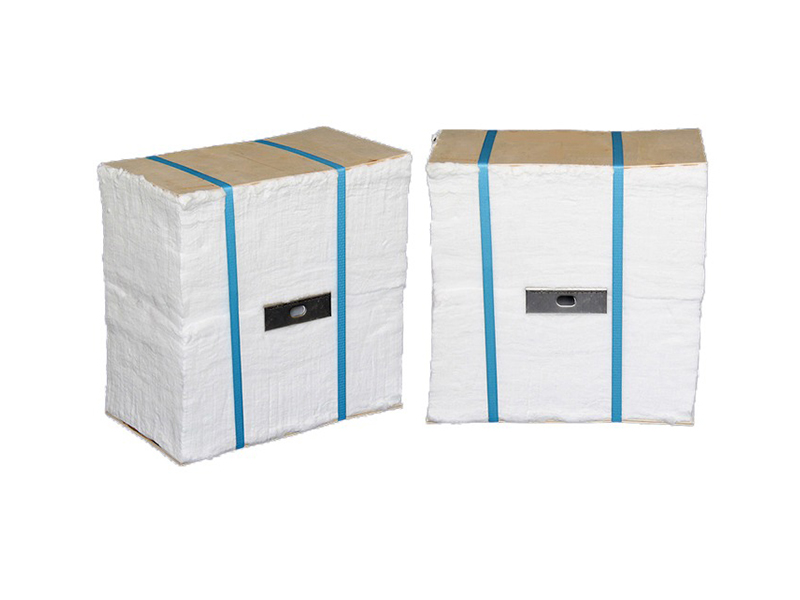
A ceramic fiber module can be engineered using a composite structure that combines different grades of ceramic fiber blankets through layered design and pre-compression technology.
Typically, the composite module integrates:
Zirconia-containing ceramic fiber blanket
1500-grade high-temperature ceramic fiber blanket
The zirconia ceramic fiber layer provides excellent thermal stability at continuous service temperatures of 1200–1250 °C. The addition of zirconia significantly improves thermal shock resistance and chemical stability, especially in reducing atmospheres and alkaline environments.
Meanwhile, the 1500-grade ceramic fiber blanket increases the temperature capability of the module. It offers a continuous operating temperature of around 1350 °C and can withstand short-term exposure up to 1500 °C. More importantly, it delivers strong resistance to sulfides, acidic gases, and alkaline slag corrosion.
By combining these materials, the ceramic fiber module structure achieves a balanced performance profile suitable for demanding high-temperature industrial environments.
Performance Advantages of Ceramic Fiber Modules
Superior Thermal Insulation
One of the key benefits of a ceramic fiber module lining system is its outstanding thermal performance.
At 1000 °C, the thermal conductivity remains below 0.26 W/(m·K). The low heat storage capacity allows furnaces to heat up and cool down more quickly, which greatly improves operational efficiency.
Compared with traditional refractory brick linings, ceramic fiber modules can reduce energy consumption by approximately 30%, delivering significant energy-saving benefits for industrial furnaces.
Excellent Chemical Corrosion Resistance
Industrial furnaces often operate in environments containing sulfur compounds, acidic gases, and alkaline vapors. Under such conditions, traditional refractory materials may deteriorate rapidly.
The composite design of ceramic fiber modules offers excellent resistance to sulfur corrosion, alkali attack, and chemical erosion, making them ideal for harsh environments such as petrochemical cracking furnaces and waste incineration systems.
This corrosion resistance can extend furnace lining service life by several times, reducing unexpected shutdowns and maintenance costs.
Improved Mechanical Strength and Structural Stability
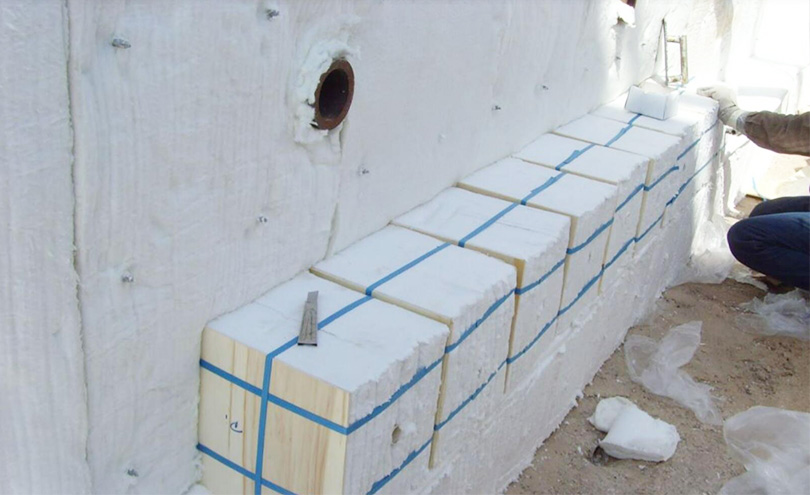
The pre-compressed ceramic fiber module design ensures tight installation and expansion after mounting, creating a seamless furnace lining structure. This eliminates thermal bridges that commonly occur in traditional brick-lined furnaces.
Additionally, the long-fiber spinning process used in ceramic fiber manufacturing increases tensile strength by about 30%, while also providing strong resilience and resistance to airflow erosion.
As a result, ceramic fiber modules can withstand rapid temperature fluctuations and strong gas flow impacts, maintaining structural integrity under demanding operating conditions.
Efficient Installation and Maintenance
Another major advantage of ceramic fiber module linings is their installation efficiency.
The modular design allows furnace lining installation to be more than 50% faster compared with traditional refractory brick construction. The lightweight density, typically 200–250 kg/m³, reduces the load on furnace steel structures and allows more flexible furnace design.
Maintenance is also simplified. If part of the lining becomes damaged, individual ceramic fiber modules can be replaced without dismantling the entire lining, significantly reducing downtime and maintenance expenses.
Industrial Applications of Ceramic Fiber Modules
Due to their excellent thermal insulation and chemical resistance, ceramic fiber modules are widely used across multiple high-temperature industries.
Petrochemical Industry
In equipment such as ethylene cracking furnaces and hydrogen reforming furnaces, operating temperatures are extremely high and process atmospheres are complex. Ceramic fiber modules provide reliable thermal insulation and ensure stable long-term furnace operation.
Environmental Protection and Waste Incineration
Waste incinerators and hazardous waste treatment furnaces often produce acidic gases and corrosive atmospheres. The corrosion resistance of ceramic fiber modules effectively protects furnace linings and extends maintenance cycles.
Metallurgical Industry
Equipment such as ladle covers and aluminum melting furnaces experiences rapid heating and cooling cycles. The excellent thermal shock resistance of ceramic fiber modules helps maintain lining integrity under these extreme conditions.
Ceramics and Glass Industry
High-temperature kilns such as tunnel kilns and roller kilns benefit greatly from ceramic fiber module insulation. Improved thermal uniformity enhances product quality while reducing fuel consumption.
As industrial technology continues to move toward higher temperatures, greater efficiency, and environmental sustainability, the role of advanced insulation materials becomes increasingly important.
With their lightweight structure, superior thermal insulation, strong chemical resistance, and easy installation, ceramic fiber modules are becoming essential materials for modern high-temperature industrial furnaces.
The growing adoption of ceramic fiber module technology not only represents a major advancement in thermal insulation engineering but also reflects the industrial sector’s commitment to efficiency, reliability, and environmental responsibility.
Related Products
Inquiry Now
Please leave your e-mail and we will contact you as soon as possible
+86-15264257623 Jacky Liu
1003, Building 1,The Fortune Zone, No.17 Lian yungang Road,Qingdao,China
For more details, welcome to message us.
Copyright © 2025 Qingdao laurent new materials co.,ltd.All Rights Reserved.
 Powered by HiCheng
contact us
Your satisfaction is our top priority. Whether you have questions, need support, or want to share feedback, our dedicated team is ready to assist you every step of the way.