High Alumina Fire Bricks: A Durable Refractory Choice for High-Temperature Industrial Systems
In high-temperature industrial environments, the performance of furnace linings directly affects production stability, energy efficiency, and equipment lifespan. High alumina fire bricks are widely recognized as a reliable refractory material designed to withstand extreme heat, mechanical stress, and chemical attack. With increasing demands on thermal equipment across industries, high alumina fire bricks continue to play a critical role in modern furnace engineering.
High alumina fire bricks are manufactured from high-quality bauxite and other alumina-rich raw materials, with alumina (Al₂O₃) content typically ranging from 45% to over 90%. Through precise proportioning, high-pressure forming, and high-temperature firing, these bricks develop a dense and stable microstructure. This structure allows high alumina fire bricks to maintain strength and dimensional stability under prolonged exposure to elevated temperatures.
.One of the key advantages of high alumina fire bricks is their excellent refractoriness. Compared with standard fireclay bricks, high alumina fire bricks offer significantly higher softening temperatures under load. This makes them suitable for furnace zones operating at temperatures above 1500°C, where ordinary refractories may fail or deform. Their ability to resist creep under continuous heat ensures long-term structural reliability.
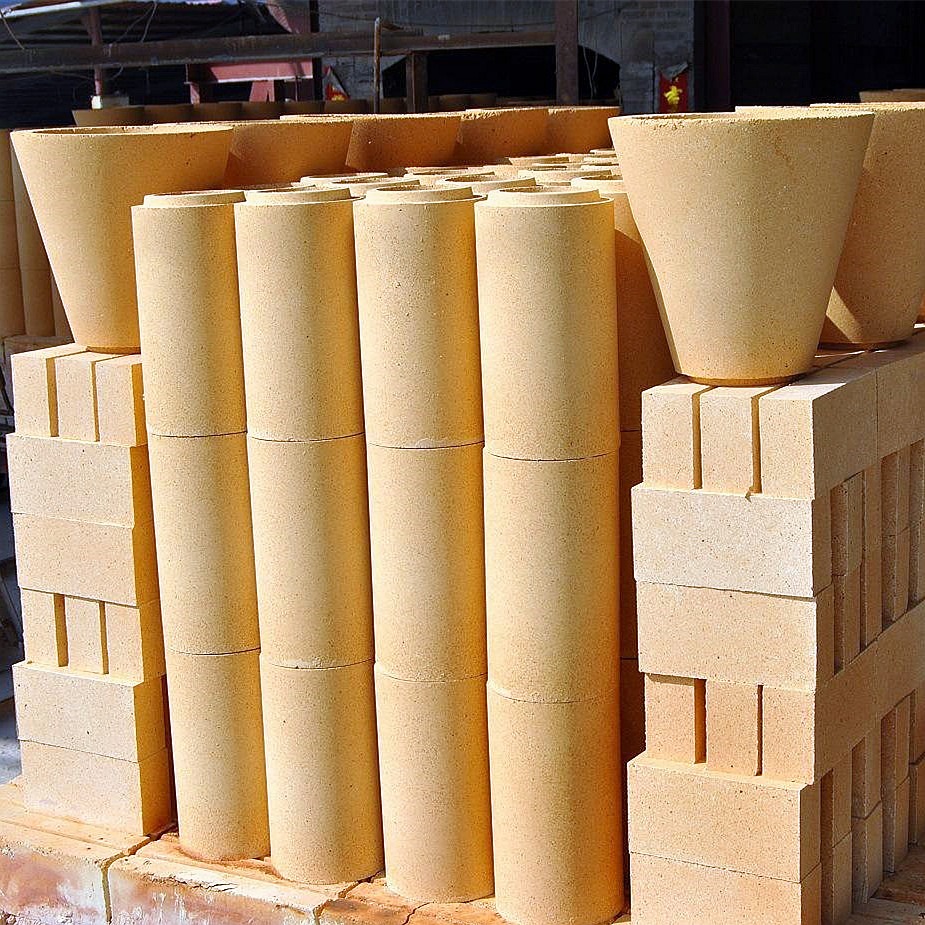
High alumina fire bricks also demonstrate strong resistance to chemical corrosion. The high alumina content provides improved resistance to acidic slags, molten metals, and corrosive gases commonly present in metallurgical and industrial furnaces. This chemical stability reduces slag penetration and surface erosion, helping to extend the service life of furnace linings and reduce maintenance frequency.
Mechanical strength is another important characteristic of high alumina fire bricks. Their dense crystalline structure enables them to withstand mechanical abrasion, impact, and heavy load conditions. This makes high alumina fire bricks particularly suitable for kilns, rotary furnaces, and industrial reactors where mechanical stress is unavoidable during operation.
Thermal shock resistance further enhances the versatility of high alumina fire bricks. While not as lightweight as insulation materials, they tolerate temperature fluctuations better than many dense refractories. This property allows high alumina fire bricks to perform reliably in furnaces that experience intermittent operation, startup and shutdown cycles, or localized temperature variations.
In practical applications, high alumina fire bricks are widely used in steelmaking furnaces, cement rotary kilns, lime kilns, glass furnaces, and non-ferrous metal processing equipment. In steel and iron production, high alumina fire bricks are installed in reheating furnaces, soaking pits, and hot blast stoves. In cement production, they are commonly applied in transition zones and cooler sections where both thermal and mechanical stress are present.

From a furnace design perspective, high alumina fire bricks are often combined with insulation layers such as ceramic fiber products or insulating fire bricks. This layered refractory system helps reduce heat loss while maintaining structural strength at the hot face. Proper brick selection and installation play a critical role in achieving optimal performance.
Installation and commissioning practices are especially important for high alumina fire bricks. Correct mortar selection, uniform joint thickness, and controlled heating schedules help prevent cracking and premature failure. When installed correctly, high alumina fire bricks offer consistent performance over long operational cycles.
Environmental and economic considerations also support the continued use of high alumina fire bricks. Their long service life reduces the frequency of furnace relining, lowering material consumption and downtime. Improved thermal efficiency contributes to reduced energy usage, aligning with modern sustainability goals in industrial production.
In long-term operation, high alumina fire bricks provide a balanced solution between performance and cost. While they may represent a higher initial investment compared to lower-grade refractories, their durability and reliability often result in lower overall operating costs. For industries operating under extreme thermal conditions, high alumina fire bricks remain a trusted and proven refractory solution.
Overall, high alumina fire bricks continue to be an essential material in high-temperature industrial systems. Their combination of high refractoriness, chemical resistance, mechanical strength, and thermal stability ensures their relevance in demanding applications. As industrial processes evolve toward higher efficiency and reliability, high alumina fire bricks will remain a key component in advanced furnace and kiln designs worldwide.
Related Products
Inquiry Now
Please leave your e-mail and we will contact you as soon as possible
+86-15264257623 Jacky Liu
1003, Building 1,The Fortune Zone, No.17 Lian yungang Road,Qingdao,China
For more details, welcome to message us.
Copyright © 2025 Qingdao laurent new materials co.,ltd.All Rights Reserved.
 Powered by HiCheng
contact us
Your satisfaction is our top priority. Whether you have questions, need support, or want to share feedback, our dedicated team is ready to assist you every step of the way.