Fireclay Brick: Practical Refractory Material with Proven Field Performance
In industrial furnace construction and maintenance, fireclay brick remains a core material that engineers rely on for stable and predictable performance. Unlike more specialized refractories, fire clay refractory bricks are widely adaptable across different furnace types, including rotary kilns, tunnel kilns, reheating furnaces, and boilers. In many medium-to-high temperature zones, high temperature fireclay provides sufficient resistance to heat, mechanical stress, and operational fluctuations without introducing unnecessary cost pressure.
Product Characteristics from a Practical Perspective
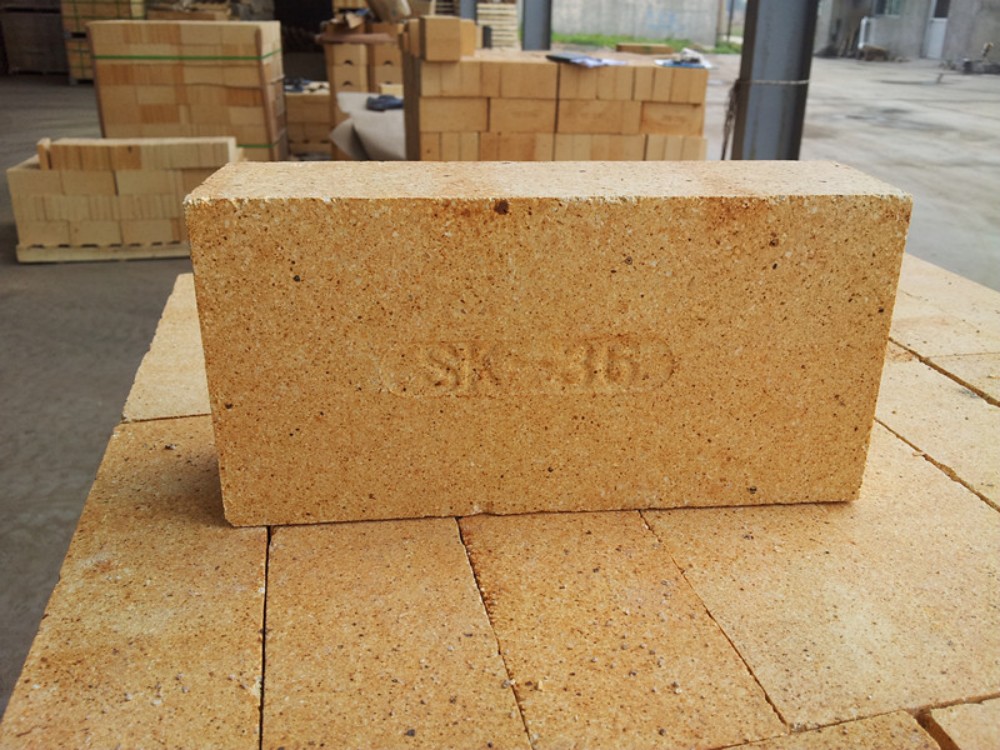
Fireclay brick is manufactured using refractory clay with controlled alumina content, typically ranging from 30% to 48%. After high-temperature firing, the internal structure of fire clay refractory bricks forms stable mineral phases such as mullite, which directly contribute to heat resistance and dimensional stability. In actual furnace operation, high temperature fireclay materials are valued less for theoretical maximum temperature and more for their ability to maintain shape and strength over time.
In repeated production cycles, especially in intermittent kilns, fireclay brick demonstrates consistent resistance to thermal fatigue. Compared to more brittle materials, fire clay refractory bricks can tolerate gradual expansion and contraction without significant cracking. This is particularly important in facilities where shutdowns and restarts are frequent, as high temperature fireclay reduces maintenance frequency and unexpected downtime.
Installation Experience That Directly Affects Performance
From on-site experience, improper installation often reduces the service life of fireclay brick more than material defects. One of the most critical factors when working with fire clay refractory bricks is joint control. In several furnace repair projects, joints exceeding 4 mm led to visible cracking after only a few heating cycles. By reducing joint thickness to 2–3 mm and ensuring even mortar distribution, the same high temperature fireclay lining performed reliably for over a year without structural issues.
Another frequently overlooked detail is cutting and fitting. When shaping fireclay brick on-site, rough or inaccurate cuts can create stress concentration points. Skilled workers typically pre-arrange fire clay refractory bricks before final placement, minimizing the need for excessive cutting and ensuring tight alignment. This improves the overall integrity of the high temperature fireclay lining and reduces air gaps that can lead to heat loss or localized overheating.
The drying and heating process is equally important. In one boiler lining project, rapid heating caused internal moisture in fireclay brick to expand too quickly, resulting in surface cracks. After adjusting the heating schedule and allowing gradual moisture release, the same batch of fire clay refractory bricks performed normally. Controlled heating is essential for any high temperature fireclay installation, especially in newly constructed furnaces.
Real Project Applications and Observations
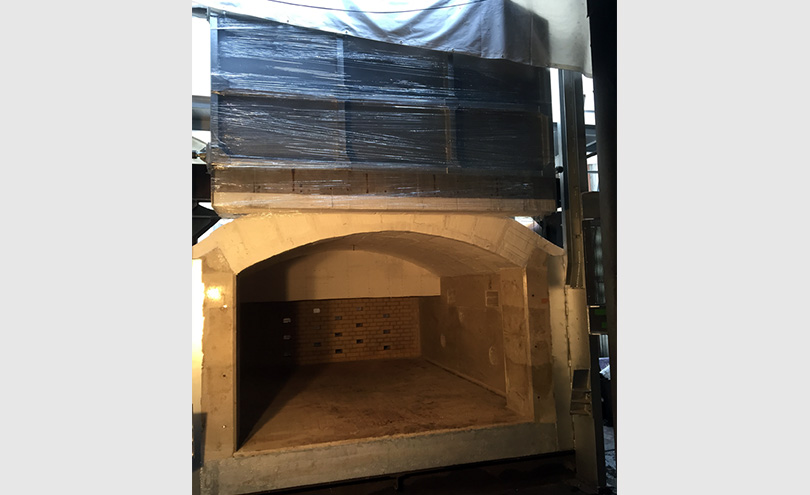
In a ceramic factory tunnel kiln in Southeast Asia, fireclay brick was selected for the main lining due to its balance between cost and durability. During the initial phase, inconsistent workmanship caused uneven joints, which led to localized spalling. After reinstallation using higher-density fire clay refractory bricks and stricter supervision, the kiln operated continuously for over 18 months. The improved performance of high temperature fireclay in this case was directly linked to better installation practices rather than a change in material type.
In another project involving a steel reheating furnace, engineers initially used higher-grade materials across all zones. However, they observed that fireclay brick in medium-temperature sections showed comparable durability with significantly lower cost. By replacing part of the lining with fire clay refractory bricks, the plant optimized its material allocation. Over time, the high temperature fireclay sections required fewer repairs than expected, particularly in areas with moderate flame exposure and stable temperature distribution.
In smaller industrial furnaces, such as batch kilns, fireclay brick is often preferred because it is easier to handle and install. Workers reported that fire clay refractory bricks are less sensitive to minor installation errors compared to more rigid materials. This flexibility allows high temperature fireclay to perform reliably even in less controlled construction environments, which is a practical advantage in remote or resource-limited projects.
Selection Considerations Based on Field Experience
Choosing the right fireclay brick involves more than checking specifications. In practice, density and firing quality are two indicators that directly affect performance. Higher-density fire clay refractory bricks tend to resist slag penetration better, while evenly fired products show more consistent behavior under heat. For applications involving fluctuating temperatures, high temperature fireclay with stable thermal expansion characteristics is preferred.
Dimensional accuracy also plays a significant role. Poorly sized fireclay brick increases installation time and leads to uneven joints, which can weaken the overall structure. Experienced procurement teams often inspect batches of fire clay refractory bricks before shipment to ensure consistency. This reduces installation adjustments and helps maintain the integrity of the high temperature fireclay lining once in operation.
Ongoing Performance in Industrial Use
Over extended operation periods, fireclay brick continues to show stable wear patterns rather than sudden failure. In many furnaces, fire clay refractory bricks gradually erode in predictable ways, allowing maintenance teams to plan repairs in advance. This predictable behavior is one reason why high temperature fireclay remains widely used despite the availability of more advanced materials.
In environments where temperature, load, and atmosphere remain relatively stable, fireclay brick can achieve service cycles that exceed initial expectations. Maintenance records from several plants show that properly installed fire clay refractory bricks often last longer than poorly installed high-grade alternatives. This reinforces the importance of combining material selection with correct handling of high temperature fireclay during construction and operation.
Related Products
Inquiry Now
Please leave your e-mail and we will contact you as soon as possible
+86-15264257623 Jacky Liu
1003, Building 1,The Fortune Zone, No.17 Lian yungang Road,Qingdao,China
For more details, welcome to message us.
Copyright © 2025 Qingdao laurent new materials co.,ltd.All Rights Reserved.
 Powered by HiCheng
contact us
Your satisfaction is our top priority. Whether you have questions, need support, or want to share feedback, our dedicated team is ready to assist you every step of the way.