Ceramic Fiber Board Sees Broader Use in High-Temperature Industrial Systems
Ceramic fiber board is increasingly used as an insulation material for high-temperature applications across multiple industries. As thermal systems become more complex, engineers are turning to ceramic fiber board and aluminium silicate ceramic fiber board solutions to achieve stable insulation performance. The demand for insulation material for high-temperature applications continues to grow, and ceramic fiber board is becoming a standard choice in both new installations and system upgrades.
In industrial furnaces, ceramic fiber board is widely applied as a rigid insulation layer. Furnace structures often require materials that combine low thermal conductivity with mechanical strength. Ceramic fiber board provides a stable surface that can withstand high temperatures without significant deformation. Aluminium silicate ceramic fiber board is particularly effective in maintaining structural integrity while reducing heat loss. Engineers install ceramic fiber board in furnace walls, roofs, and doors to create a consistent thermal barrier.
Steel and non-ferrous metal processing facilities rely on ceramic fiber board for insulation in reheating furnaces and heat treatment systems. These environments involve rapid temperature changes and continuous operation. Ceramic fiber board performs well under these conditions due to its resistance to thermal shock. Aluminium silicate ceramic fiber board helps maintain uniform temperature distribution, which is critical for product quality. As an insulation material for high-temperature applications, ceramic fiber board supports efficient energy use in metal processing.
In the petrochemical industry, ceramic fiber board is used to insulate reactors, ducts, and processing units. These systems operate under high temperatures and require reliable insulation materials. Aluminium silicate ceramic fiber board offers resistance to both heat and chemical exposure. Technicians use ceramic fiber board to line equipment surfaces, ensuring stable operation. The use of ceramic fiber board as an insulation material for high-temperature applications helps reduce energy consumption and improve safety in petrochemical plants.
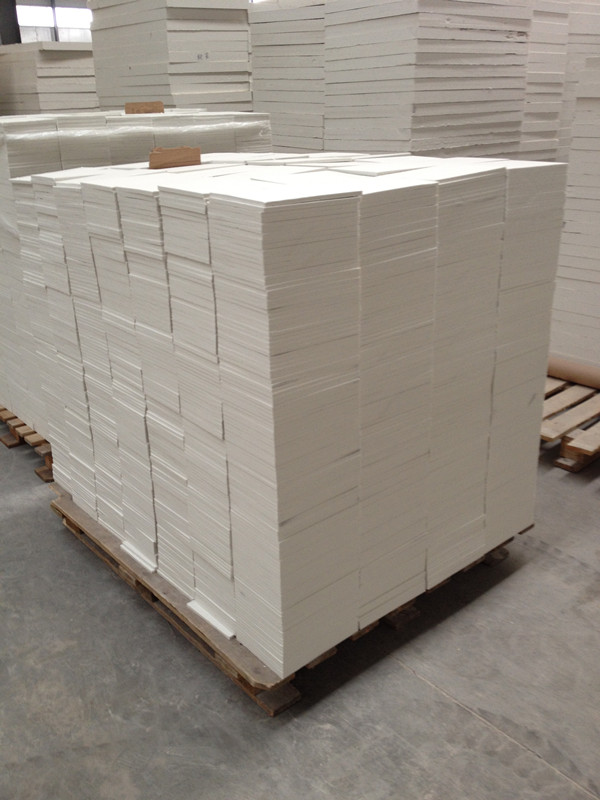
Power generation facilities also incorporate ceramic fiber board into their insulation systems. Boilers, turbines, and heat recovery units require materials that can maintain performance over long operating periods. Ceramic fiber board provides consistent insulation and supports efficient heat management. Aluminium silicate ceramic fiber board is often used in areas where rigid support is needed in addition to thermal protection. As an insulation material for high-temperature applications, ceramic fiber board contributes to improved efficiency in power plants.
Ceramic fiber board is also widely used in kiln systems for ceramics and refractory production. Kilns require precise temperature control to ensure consistent results. Ceramic fiber board helps maintain stable conditions by minimizing heat loss. Aluminium silicate ceramic fiber board can be cut and shaped to fit complex kiln designs. Its use as an insulation material for high-temperature applications allows manufacturers to optimize firing processes and improve product quality.
In environmental and waste treatment systems, ceramic fiber board is applied in incinerators and thermal processing units. These systems operate under harsh conditions with high temperatures and corrosive gases. Ceramic fiber board provides a durable insulation layer that protects equipment from damage. Aluminium silicate ceramic fiber board resists thermal shock and maintains performance over time. As an insulation material for high-temperature applications, ceramic fiber board supports stable operation in waste management facilities.
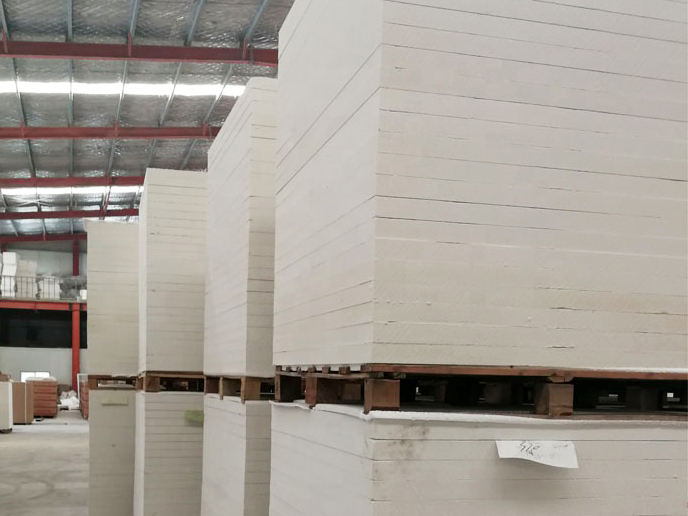
The manufacturing process of ceramic fiber board involves high-purity raw materials and controlled forming techniques. Aluminium silicate ceramic fiber board is produced by compressing fibers into rigid panels with uniform density. This process ensures that ceramic fiber board delivers consistent thermal and mechanical properties. Quality control measures include testing for thermal conductivity, strength, and dimensional stability. These factors make ceramic fiber board a reliable insulation material for high-temperature applications.
Installation flexibility is another advantage of ceramic fiber board. Technicians can cut, drill, and shape ceramic fiber board using standard tools. Aluminium silicate ceramic fiber board can be installed using mechanical fasteners or adhesives, depending on the application. This adaptability allows ceramic fiber board to be used in a wide range of industrial systems. As an insulation material for high-temperature applications, ceramic fiber board simplifies installation and reduces labor requirements.
Maintenance considerations also support the use of ceramic fiber board. Damaged sections can be replaced without affecting the entire insulation system. Aluminium silicate ceramic fiber board maintains its performance over long periods, reducing the need for frequent repairs. Operators rely on ceramic fiber board to ensure continuous operation and minimize downtime. Its durability makes it a practical insulation material for high-temperature applications.
Market demand for ceramic fiber board continues to increase as industries focus on efficiency and reliability. Aluminium silicate ceramic fiber board is being adopted in new projects as well as retrofitting existing systems. Engineers recognize ceramic fiber board as an effective insulation material for high-temperature applications due to its balance of performance and ease of use. As industrial processes evolve, ceramic fiber board remains an essential component in modern thermal management systems.
Related Products
Inquiry Now
Please leave your e-mail and we will contact you as soon as possible
+86-15264257623 Jacky Liu
1003, Building 1,The Fortune Zone, No.17 Lian yungang Road,Qingdao,China
For more details, welcome to message us.
Copyright © 2025 Qingdao laurent new materials co.,ltd.All Rights Reserved.
 Powered by HiCheng
contact us
Your satisfaction is our top priority. Whether you have questions, need support, or want to share feedback, our dedicated team is ready to assist you every step of the way.