Why Do Ceramic Fiber Modules Shrink During Furnace Operation?
Ceramic fiber modules are widely used in industrial furnaces, kilns, and heat treatment equipment. They provide lightweight insulation and help reduce heat loss during operation. However, after a period of use, some furnace linings develop gaps between modules. The insulation may also become thinner or lose its original shape.
Why does this happen? Is it caused by poor product quality, excessive temperature, or incorrect installation?
In fact, some shrinkage is a normal characteristic of ceramic fiber materials at high temperatures. However, excessive shrinkage and visible gaps may indicate that the material grade, furnace conditions, or installation design needs attention.
Understanding these causes can help users improve furnace insulation and reduce maintenance problems.
High temperature is one of the main reasons ceramic fiber modules shrink during furnace operation.
Ceramic fibers are generally made from alumina-silica materials. At elevated temperatures, the fiber structure may undergo physical and chemical changes, including sintering, crystallization, and changes in the internal structure.
As these changes occur, the fibers gradually become more compact. This can cause the material to contract and reduce its original dimensions.
The amount of shrinkage depends on the fiber composition, temperature, and exposure time. A module exposed to a higher temperature for a longer period may experience more dimensional change than one operating under milder conditions.
It is important to understand that classification temperature is not the same as recommended continuous operating temperature. A product should not be selected based only on its maximum temperature rating.
Ceramic fiber modules may not show obvious shrinkage immediately after installation. However, dimensional changes can become more noticeable after long-term operation.
Industrial furnaces often experience repeated heating and cooling cycles. During these cycles, the insulation and supporting structures expand and contract at different rates.
Repeated temperature changes can affect the stability of the lining. If the module installation does not provide enough compression or suitable joint arrangements, small gaps may gradually become visible.
Long operating periods at elevated temperatures can also increase permanent shrinkage. This is why the service history of the furnace is important when investigating insulation problems.
For equipment that operates continuously or frequently starts and stops, both operating temperature and heating cycles should be considered when selecting ceramic fiber insulation modules.
Not all ceramic fiber modules have the same temperature resistance or thermal stability.
Different fiber compositions are designed for different temperature ranges. For example, standard alumina-silica fiber and zirconia-containing fiber products have different material properties and application ranges.
If a module is selected for a temperature that is too close to or above its suitable continuous operating range, shrinkage may become more serious.
Another common mistake is choosing a product only by its classification temperature without checking its recommended operating temperature and linear shrinkage data.
How to avoid this problem:
Confirm the maximum continuous furnace temperature.
Check the temperature near burners and other local hot spots.
Review the product's linear shrinkage test data.
Select a suitable fiber grade for the actual working environment.
Consider temperature fluctuations and exposure time.
Before purchasing a ceramic fiber insulation module, buyers should request technical data and confirm that the material matches the furnace conditions.
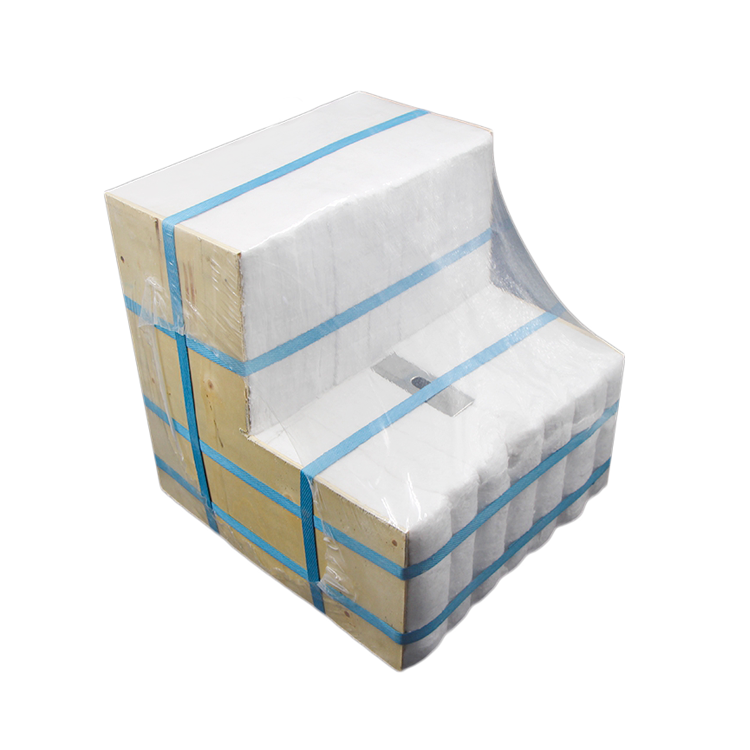
Installation design has a direct effect on how ceramic fiber modules perform after heating.
Many ceramic fiber modules are manufactured in a compressed state. After installation, the modules expand against each other and form a continuous insulation lining.
This stored compression helps compensate for the natural shrinkage of ceramic fibers during high-temperature operation.
If the modules are installed without sufficient compression, the lining may not have enough expansion allowance to compensate for dimensional changes. As a result, gaps may appear between adjacent modules after the first heating cycle.
On the other hand, excessive compression is also not recommended because it may damage the fiber structure or create uneven stress.
The correct compression level depends on module construction, thickness, installation direction, and furnace design. Installation should follow the manufacturer's technical recommendations.
Even when the material grade is suitable, poor installation can lead to gaps in the furnace lining.
Common installation problems include:
Incorrect spacing between modules
Uneven compression across the lining
Poor fitting around furnace corners and openings
Incorrect module arrangement
Gaps around anchors or supporting structures
These problems may become more noticeable after the furnace reaches operating temperature.
Once gaps develop, hot gases can pass through the insulation lining and reach the backup layer or furnace shell. This may increase local shell temperatures and reduce insulation efficiency.
To reduce this risk, installers should follow the approved module layout and pay special attention to joints, corners, doors, and other irregular areas.
The furnace atmosphere can also affect ceramic fiber module stability.
Some industrial processes contain alkaline vapors, metal oxides, dust, or other chemical substances. Under high-temperature conditions, these substances may react with ceramic fibers and change their properties.
Chemical attack can weaken the fiber structure and contribute to surface deterioration or loss of strength. Strong gas flow and dust erosion may further damage the hot face of the lining.
These conditions are different from normal thermal shrinkage. If the module surface becomes powdery, brittle, or visibly eroded, the problem may involve more than dimensional contraction.
When selecting refractory insulating modules, buyers should provide information about the furnace atmosphere, gas flow, and possible chemical exposure.
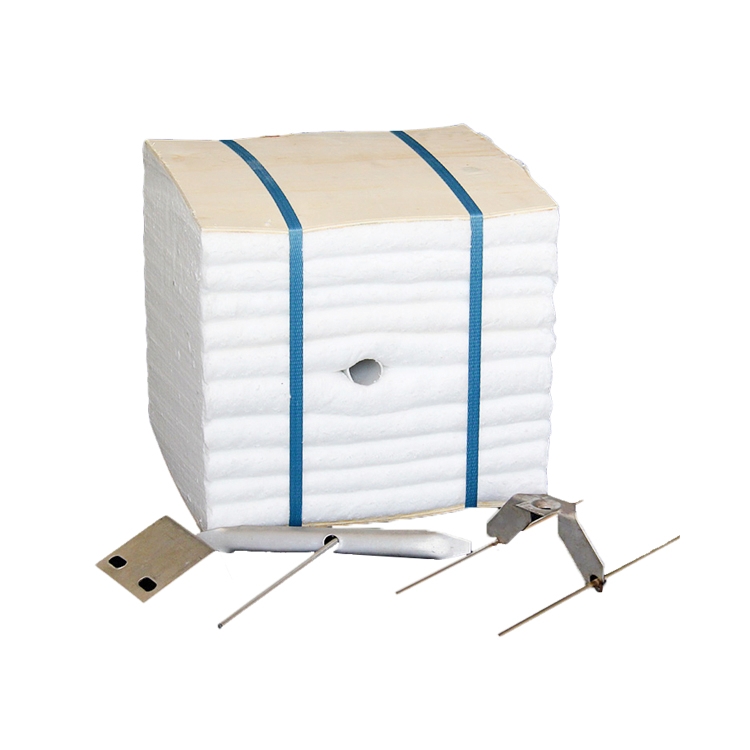
When gaps appear in a furnace lining, it is important to inspect the entire insulation structure instead of focusing on one damaged area.
The following points can help identify the possible cause:
| Inspection Item | What to Check |
|---|---|
| Module joints | Look for open gaps or separation between modules |
| Hot face | Check for surface shrinkage, cracking, or fiber deterioration |
| Module position | Check whether modules have moved or become loose |
| Anchors | Inspect for corrosion, deformation, or failure |
| Furnace shell | Check for abnormal hot spots during operation |
| Operating records | Review actual temperature and heating cycles |
Thermal imaging can help identify abnormal hot areas on the furnace shell. However, a hot spot does not always mean that module shrinkage is the only problem. Anchor failure, damaged backup insulation, and other lining defects should also be considered.
Natural high-temperature shrinkage cannot always be completely eliminated. However, proper material selection and installation can reduce its impact on furnace insulation.
First, select the correct ceramic fiber module grade according to the actual operating temperature. Do not rely only on the classification temperature.
Second, check the module construction, density, dimensions, and linear shrinkage data before purchasing. These details help determine whether the product is suitable for the application.
Third, make sure the installation design provides suitable compression and joint arrangements. The module layout should account for expected dimensional changes during operation.
Finally, inspect the lining regularly. If gaps appear, identify their cause before carrying out repairs. Small gaps may sometimes be repaired with compatible ceramic fiber materials according to the lining design. However, severely deteriorated modules, damaged anchors, or large areas of displacement may require replacement.
Simply filling gaps without checking the cause may only provide a temporary repair.
When replacing damaged modules, buyers should not focus only on price or the original product dimensions.
The following information should be confirmed:
Classification temperature and recommended operating temperature
Fiber composition and temperature grade
Module density and dimensions
Linear shrinkage after heating
Module compression and construction
Anchor material and fixing method
Furnace atmosphere and operating conditions
For projects involving refractory insulating modules, it is also important to check whether the replacement product is compatible with the existing lining structure.
If the original modules shrank too much, choosing the same specification may not solve the problem. The actual cause should be identified first.
When looking for a ceramic fiber insulation module, buyers can provide furnace drawings, operating temperatures, module dimensions, and photographs of the existing lining. This information helps the manufacturer evaluate the application and recommend suitable specifications.
Ceramic fiber modules shrink during furnace operation mainly because of high-temperature changes in the fiber structure. Long-term exposure, repeated heating and cooling, incorrect material selection, and insufficient installation compression can make the problem more noticeable.
Some shrinkage is a normal material characteristic, but visible gaps and excessive dimensional changes should be investigated. Proper module selection, suitable compression, correct joint arrangements, and regular inspection can help maintain a more stable furnace lining.
Laurel supplies ceramic fiber insulation products for industrial furnace applications. If you are planning a new furnace lining or replacing damaged modules, contact Laurel with your operating temperature, module dimensions, and application details to discuss suitable ceramic fiber module options.
Alkegen, Anchor-Loc® 2 Ceramic Fiber Modules – Product Information Sheet. Provides product specifications, recommended operating temperatures, and thermal shrinkage information.
Zircar Ceramics, 1700°C Rapid Cycle Furnace Design. Discusses thermal shrinkage of fibrous ceramic insulation and the effects of elevated temperatures on fiber structure.
Heat Treat Today, Heat Treat Radio #118: Saving Dollars with Ceramic Fiber Insulation. Discusses shrinkage compensation and furnace module installation considerations.
Related Products
Inquiry Now
Please leave your e-mail and we will contact you as soon as possible
+86-15264257623 Jacky Liu
1003, Building 1,The Fortune Zone, No.17 Lian yungang Road,Qingdao,China
For more details, welcome to message us.
Copyright © 2025 Qingdao laurent new materials co.,ltd.All Rights Reserved.
 Powered by HiCheng
contact us
Your satisfaction is our top priority. Whether you have questions, need support, or want to share feedback, our dedicated team is ready to assist you every step of the way.