What Determines Ceramic Fiber Module Price?
Ceramic fiber modules are widely used to insulate industrial furnaces, kilns, and other high-temperature equipment. They help reduce heat loss and support stable furnace operation. However, the ceramic fiber module pricecan vary between products and suppliers.
The price depends on several factors, including fiber grade, module density, dimensions, production method, and order quantity. Understanding these factors helps buyers compare products and select suitable insulation materials.
Raw materials are one of the main factors affecting ceramic fiber module price.
Ceramic fiber products are available in different grades. Their chemical composition and fiber properties affect temperature resistance and insulation performance. Some products are designed for general industrial insulation, while others are made for higher-temperature applications.
Common factors to compare include:
Alumina and silica content
Fiber classification temperature
Chemical composition
Thermal stability
Resistance to shrinkage at high temperatures
A module designed for a higher operating temperature may require more specialized raw materials and processing. This can increase its production cost.
ASTM C892 provides specifications for high-temperature fiber blanket insulation, including requirements related to temperature classification and physical properties. Although it is not a dedicated standard for ceramic fiber modules, it can serve as a reference when evaluating the properties of related fiber materials.
Density and size also affect ceramic fiber module price.
Ceramic fiber modules are commonly supplied in different bulk densities and dimensions. Higher-density modules contain more fiber per unit volume, which can increase material consumption and cost.
Module dimensions also influence the total amount of material required. Large modules or non-standard sizes may need adjustments to the production process.
Before requesting a quotation, buyers should confirm:
Required bulk density
Module length, width, and thickness
Installation direction
Folding or stacking design
Quantity of modules required
ISO 10635 describes test methods for ceramic fiber products. Its testing scope provides a useful reference for evaluating properties such as density and permanent linear change. These properties help buyers compare product specifications and understand how the material may perform under heating conditions.
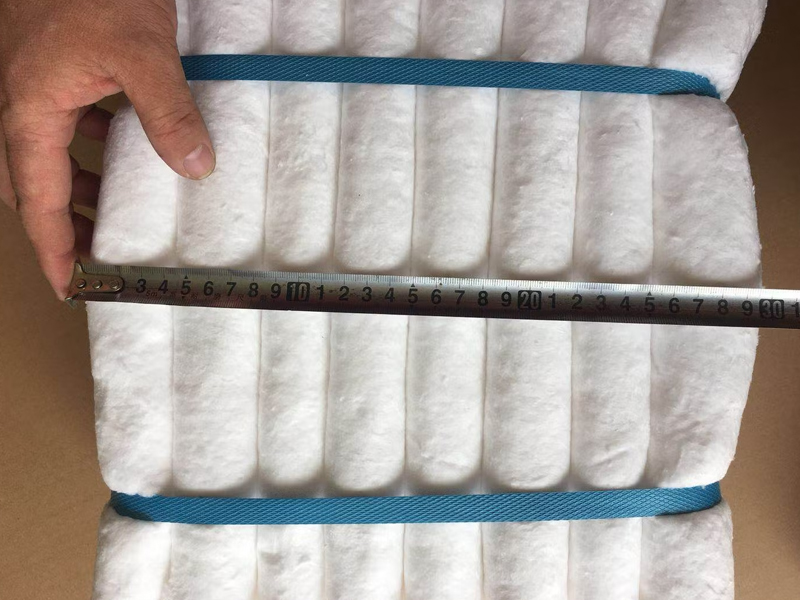
Ceramic fiber modules are available in different structures, such as folded and stacked designs. The structure affects installation, fiber arrangement, and overall material use.
The anchor design is another important factor. Anchors hold the modules in place and help secure the furnace lining. Their material, shape, and position should match the furnace structure and operating conditions.
Stainless steel anchors are used in some applications, while other high-temperature conditions may require different materials or designs.
A high quality ceramic fiber module should have a suitable structure and reliable fixing method. Buyers should compare the module body and anchoring components rather than looking at the fiber material alone.
Production requirements can also affect the final price.
Standard modules are usually easier to manufacture than products with special dimensions or installation requirements. Custom orders may involve additional cutting, folding, assembly, or anchor processing.
For example, a project may require modules with different thicknesses, special shapes, or specific anchor positions. These details can increase production time and processing costs.
If the modules are intended for an existing furnace, buyers should provide drawings or measurements. This helps the ceramic fiber module supplier understand the installation requirements and reduce errors during production.
Order quantity has a direct effect on the quotation.
Large orders may reduce the average production and packaging cost per module. Small orders, however, may have a higher unit cost because some production and handling expenses remain fixed.
Packaging should also be considered. Ceramic fiber modules need suitable protection during storage and transportation. Export orders may require stronger packaging to reduce damage during long-distance shipping.
When comparing quotations, check whether the price includes packaging, loading, and other related costs.
Shipping is another part of the total purchasing cost, especially for international buyers.
The final delivered cost may depend on:
Order volume and total shipment weight
Shipping method
Destination port or delivery address
Packaging dimensions
Delivery terms, such as FOB or CIF
A lower product price does not always mean a lower total purchasing cost. Buyers should compare the product specification, shipping terms, and total quotation together.
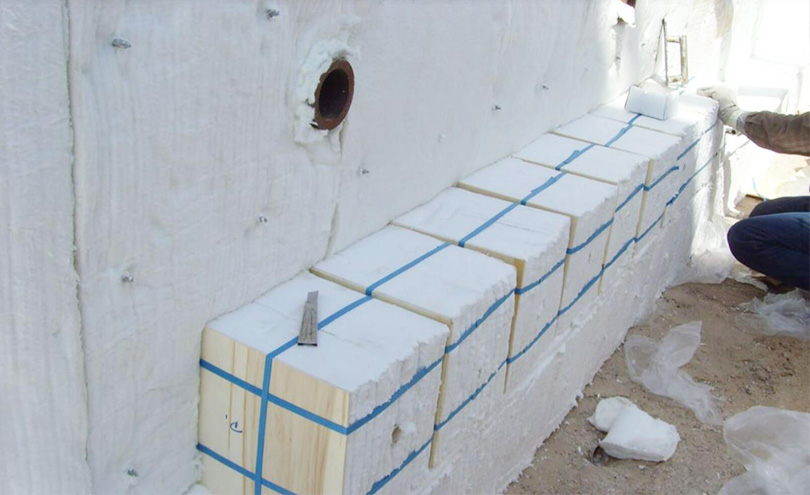
Choosing a reliable ceramic fiber module supplier is important for both product quality and project costs.
Do not compare suppliers based on price alone. Check whether their products match your technical requirements and whether they can provide clear product information.
Before placing an order, ask for:
Product specifications and technical data sheets
Fiber grade and temperature classification
Bulk density and module dimensions
Anchor material and design details
Available test reports
Production lead time and export packaging details
A supplier should be able to explain how the product matches your furnace conditions. Clear specifications also make it easier to compare quotations from different manufacturers.
The insulation performance of ceramic fiber modules can affect furnace heat loss and energy consumption. Proper material selection and installation help maintain the required thermal conditions.
The National Institute of Standards and Technology (NIST) provides technical guidance on energy management for furnaces, kilns, and ovens. This resource explains the role of insulation and furnace operation in energy management.
However, actual energy savings depend on furnace design, operating temperature, lining thickness, installation quality, and operating conditions. Buyers should evaluate insulation materials based on the requirements of their own equipment.
Ceramic fiber module price is affected by raw material grade, temperature rating, density, dimensions, module structure, customization, order quantity, and shipping costs.
For industrial buyers, the best approach is to compare products based on the same technical specifications. A high quality ceramic fiber module should meet the required operating conditions and installation needs without unnecessary material costs.
Laurel supplies ceramic fiber insulation products for industrial applications. Contact us with your required temperature, module dimensions, density, and order quantity to discuss product options and request a quotation.
[1] ASTM International. ASTM C892-19(2024), Standard Specification for High-Temperature Fiber Blanket Thermal Insulation.
[2] International Organization for Standardization. ISO 10635, Refractory Products – Methods of Test for Ceramic Fibre Products.
[3] National Institute of Standards and Technology (NIST). Energy Management for Furnaces, Kilns, and Ovens.
Related Products
Inquiry Now
Please leave your e-mail and we will contact you as soon as possible
+86-15264257623 Jacky Liu
1003, Building 1,The Fortune Zone, No.17 Lian yungang Road,Qingdao,China
For more details, welcome to message us.
Copyright © 2025 Qingdao laurent new materials co.,ltd.All Rights Reserved.
 Powered by HiCheng
contact us
Your satisfaction is our top priority. Whether you have questions, need support, or want to share feedback, our dedicated team is ready to assist you every step of the way.