Magnesia Brick: A Core Refractory Material for High-Temperature Metallurgical Applications
Magnesia brick is a basic refractory material widely used in high-temperature industrial furnaces where resistance to alkaline slag, high heat load, and severe chemical corrosion is required. With magnesium oxide (MgO) as its main component, magnesia brick has become an essential lining material in steelmaking, non-ferrous metallurgy, and other heavy industries that operate under extreme thermal and chemical conditions.
The raw material for magnesia brick is high-purity magnesite or fused magnesia, which is processed through calcination, crushing, grading, forming, and high-temperature firing. This manufacturing process creates a dense crystal structure dominated by periclase, giving magnesia brick its characteristic high refractoriness and excellent stability at elevated temperatures. Well-produced magnesia brick can operate reliably at temperatures above 1700°C without significant deformation.
One of the most important performance advantages of magnesia brick is its outstanding resistance to alkaline slags and iron-rich melts. In steel furnaces, molten steel and slag contain high levels of CaO, FeO, and MgO, which rapidly erode acidic or neutral refractories. Magnesia brick, however, maintains chemical compatibility with these environments, reducing slag penetration and chemical reaction. This makes magnesia brick especially suitable for basic oxygen furnaces, electric arc furnaces, and ladle linings.

Magnesia brick also offers strong mechanical performance under high thermal load. Its dense microstructure provides high cold crushing strength and good resistance to abrasion caused by molten metal flow and solid material impact. In working zones where both temperature and mechanical stress fluctuate, magnesia brick helps maintain lining integrity and furnace shape over long operating cycles.
Thermal stability is another defining feature of magnesia brick. The material exhibits a high melting point and stable volume at elevated temperatures, which is critical for furnace areas exposed to continuous heat. While traditional magnesia brick may have limited thermal shock resistance, modern formulations improve performance through optimized grain size distribution and the addition of stabilizing components. This allows magnesia brick to better tolerate temperature fluctuations during furnace start-up and shutdown.
Magnesia brick is widely applied across the iron and steel industry, including converters, electric arc furnaces, ladles, and tundishes. It is also used in non-ferrous metal smelting, cement rotary kilns, and glass furnaces where alkaline environments dominate. In many of these applications, magnesia brick is combined with other refractory materials to form multi-layer lining systems that balance insulation, strength, and chemical resistance.
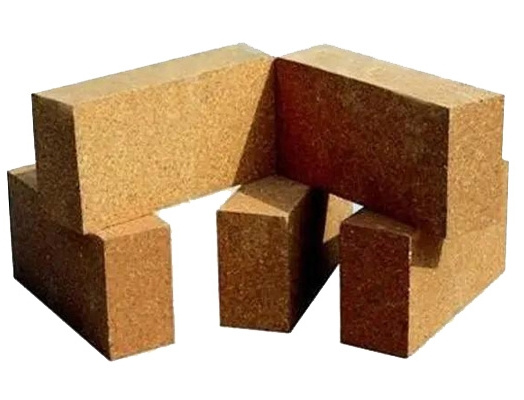
Proper installation and maintenance are essential for maximizing the service life of magnesia brick. Using compatible basic refractory mortar, controlling joint thickness, and following correct drying and heating procedures help minimize thermal stress and premature damage. When applied under suitable operating conditions, magnesia brick delivers long service life and stable furnace performance.
As industrial processes continue to demand higher efficiency and longer campaign life, magnesia brick remains a critical refractory solution. Its combination of high-temperature resistance, chemical stability, and mechanical strength ensures that magnesia brick continues to play a vital role in modern high-temperature furnace engineering.
Related Products
Inquiry Now
Please leave your e-mail and we will contact you as soon as possible
+86-15264257623 Jacky Liu
1003, Building 1,The Fortune Zone, No.17 Lian yungang Road,Qingdao,China
For more details, welcome to message us.
Copyright © 2025 Qingdao laurent new materials co.,ltd.All Rights Reserved.
 Powered by HiCheng
contact us
Your satisfaction is our top priority. Whether you have questions, need support, or want to share feedback, our dedicated team is ready to assist you every step of the way.